

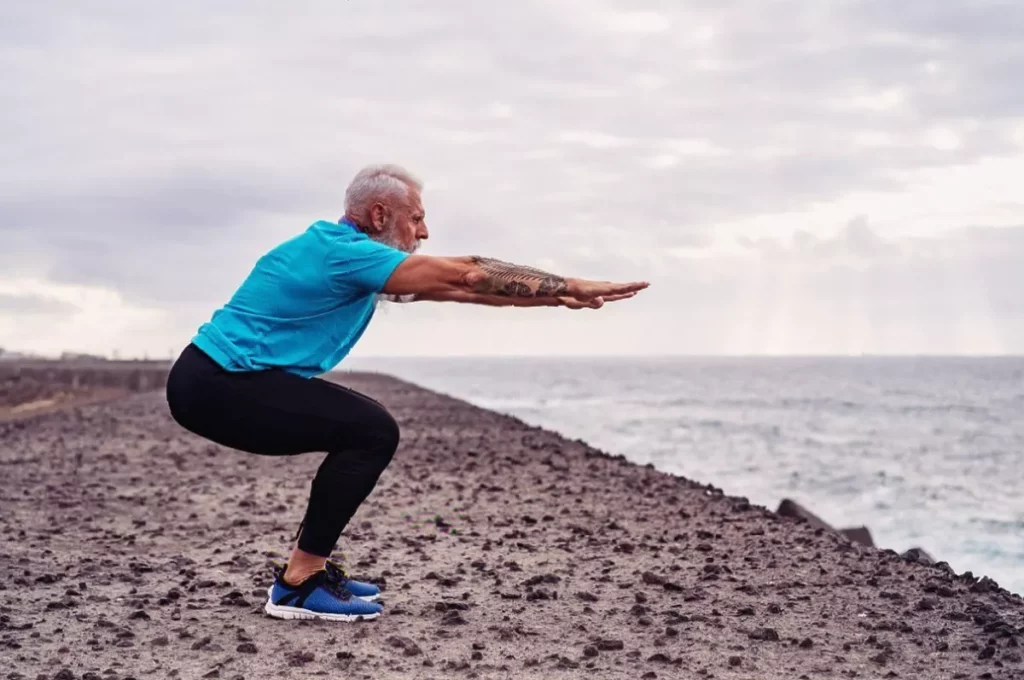
Resistance exercise — not necessarily the kind that involves barbells, dumbbells or gym memberships — is the cornerstone of a longer, healthier life, according to a leading physical therapist. Dr Caroline Packard, a doctor of physical therapy with more than 15 years of clinical experience specialising in pelvic floor health and rehabilitation, argues that the science is clear: strength training, understood broadly, outperforms other forms of exercise when it comes to longevity.
“I define strength training more broadly than most people do,” she said.
The premier choice: progressive resistance training
Among all exercise categories, progressive resistance training stands alone in its ability to develop and preserve bone density — a benefit that is particularly critical for women. Dr Packard described it as “one of the most effective tools we have to slow that process.” The stakes are high. Osteoporosis affects an estimated 3.5 million people in the UK, according to the Royal Osteoporosis Society. Half of women and 20% of men over the age of 50 will experience fractures due to low bone strength. In England and Wales, osteoporosis leads to around 180,000 fractures in women each year, including 70,000 hip fractures. The mortality rate within a year of a hip fracture is about 20%, and up to 50% of those who survive suffer permanent disability. The cost of osteoporotic fractures to the UK healthcare system was estimated at £4.4 billion in 2022.
Bone density naturally peaks in a person’s 30s and begins to decline from the 40s onwards. For women, the decline accelerates sharply in the first few years after menopause due to falling oestrogen levels. This age-related loss increases the risk of fragility fractures — bones breaking from minimal force, such as a fall from standing height or picking up shopping.
Dr Packard highlighted the trajectory for women in particular: “A woman who fractures a hip at 75 faces a very different trajectory than one who doesn’t.” By enhancing strength and stability, resistance training reduces the likelihood of falls and improves the ability to recover balance if a stumble occurs.
Weight-bearing and muscle-strengthening exercises are the most effective for building and maintaining bone density. Weight-bearing activities — where the feet touch the ground, such as walking, jogging or dancing — stimulate bone growth by encouraging calcium deposits and activating bone-building cells. Muscle-strengthening (resistance) exercise works differently: when muscles contract, they pull on bones, creating mechanical stress that prompts bone remodelling and increases bone mineral density. The Royal Osteoporosis Society recommends a combination of weight-bearing impact and muscle-strengthening exercises for optimal bone health. Research shows that consistent resistance training can produce significant improvements in bone mineral density, particularly in the lumbar spine and femur, which are common sites of osteoporotic fracture. Even low-load, high-repetition resistance exercises can help slow bone loss.

Functional movements: independence skills that build bone
Dr Packard’s definition of strength training goes far beyond conventional gym equipment. She emphasises “functional patterns” that preserve independent living: squatting, stepping, carrying, balancing, rising from the floor and ascending stairs. These are not merely exercises, she said; they are skills for independence.
“A sit-to-stand is a squat. A step-up is stair training. A bridge teaches the glutes and hamstrings to support the pelvis and spine,” she explained. “These aren’t just exercises; they’re independence skills.” She added: “Ultimately, it’s the ability to rise from a chair or maintain balance while carrying shopping bags that truly matters for ageing well.”
Such movements are directly linked to everyday tasks. The sit-to-stand movement, for instance, is a fundamental squat that people perform dozens of times a day. Step-ups mimic climbing stairs. Bridges target the glutes and hamstrings, which play a crucial role in supporting the pelvis and spine. For adults over 40, balance training becomes increasingly important, as it helps prevent falls — a leading cause of fractures. Exercises such as single-leg squats, yoga, tai chi and Pilates can improve balance and flexibility.
But performing these movements correctly is essential. Dr Packard stressed that “strength has to be usable. It has to include breath, core, hips and pelvic floor working together.” Her clinical approach, grounded in evidence-based rehabilitation, focuses on the whole body — including breath mechanics, pressure management and core-pelvic floor coordination. She warned that weighted vests, despite widespread marketing claims about bone health, fail to trigger genuine bone remodelling in the same way as progressive resistance training or plyometric exercise. “The most overrated longevity trends right now are the obsession with longevity hacks, including vests, vibration plates and complicated biohacking protocols that promise to game the system,” she said. “Muscle activation and circulation already happen when you move your body. You don’t need a machine to do that for you.”
Progressive strength training and plyometric exercise demand that muscles, bones, joints and the nervous system adapt collectively to genuine physical demands — something that passive or gimmicky devices cannot replicate.
Consistency above all
While the type of exercise matters, the overriding factor for longevity is consistency, especially with basic functional movements. “The single habit that delivers the biggest longevity payoff is consistency, especially through basic functional movements like squats, sit-to-stands, set-ups, bridges and hinges,” Dr Packard said. “What matters far more than the perfect rep range is that you show up and you challenge the load in your body.”
She added: “What most people get wrong is overthinking it. They switch programs every few weeks, chasing better results, when the real results come from staying the course. Basic and boring work. It’s always worked.”
Emerging research supports the importance of variety alongside consistency. A study published in BMJ Medicine found that regularly engaging in a diverse range of physical activities is associated with a nearly 20% lower risk of death from all causes compared with doing the same exercise repeatedly. Meanwhile, evidence is mounting that prolonged sitting and inactivity harm skeletal health, even in people who exercise regularly. Reducing sedentary time and increasing overall physical activity is crucial for protecting against bone loss and fractures across all ages.
For those looking to start or refine their routine, research on exercise parameters offers guidance. Studies suggest that resistance training at 50–85% of a person’s one-repetition maximum, with 5–12 repetitions per set, performed two to three times a week for three to 12 months, can improve bone mineral density in people with osteoporosis. An alternative recommendation suggests light to moderate loads (30–70% of one-repetition maximum) with 8–12 repetitions per set, at least two sets per exercise, and one to three minutes of rest between sets. More intense impact and muscle-strengthening exercise may improve bone strength, but moderate impact is advised for individuals with vertebral fractures.
Dr Packard, who is also a certified yoga instructor and lifelong athlete, founded Connect Pelvic Floor Fitness after personally experiencing and healing from pelvic floor dysfunction following childbirth. Her approach integrates pelvic floor health with progressive strength training, and she has built a following of more than 425,000 on Instagram where she shares educational content on women’s health. “Common doesn’t mean normal,” she said, emphasising that many issues such as incontinence, pain and instability can be addressed through evidence-based rehabilitation that includes breath, core and pelvic floor coordination.
Ultimately, the evidence points to one conclusion: for longevity, resistance exercise — defined not by gym equipment but by functional, progressive movement — is the premier choice. And what matters most is not the sophistication of the programme but the simple, stubborn act of showing up.