


Visitors to the British Heart Foundation’s website must first give their consent to load Google Custom Search before they can use the site’s search function – a digital gate that mirrors the charity’s own difficult recalibration as it prepares to close around 150 of its 640 high-street shops across the UK over the next two financial years.
The consent prompt that appears on the BHF website asks users to click ‘Allow and Continue’ to enable search, noting that the Google Custom Search tool “may use cookies or similar technologies”. A link to the charity’s privacy policy is provided. This requirement is a standard implementation for sites that embed third-party search services, but it also underscores the growing role of digital consent in how charities interact with supporters – a shift that mirrors broader changes in consumer behaviour that are now reshaping the BHF’s retail operations.
What the consent means
The consent request is a direct consequence of data-protection law. Under the UK’s Privacy and Electronic Communications Regulations, websites must obtain a user’s permission before placing non-essential cookies or similar tracking technologies on their device. Google Custom Search, which powers the search bar on the BHF site, may set cookies for analytics or personalisation purposes. Granting consent allows the search feature to load and function; without it, the search box remains inactive. The BHF’s privacy policy, referenced in the notice, sets out how personal data is handled more broadly.
The necessity of obtaining this consent before the search feature can operate is absolute: the feature simply will not work unless the user actively clicks the ‘Allow and Continue’ button. This binary choice mirrors a wider digital reality – one that the BHF itself is navigating as it invests in its online channels. In the 2024-25 financial year, the charity’s online sales rose by 15 per cent to £17 million, with the BHF operating its own website and an eBay store described as the world’s largest charity retailer on that platform.
How the search feature works
Google Custom Search is a service that allows website owners to embed a tailored search engine into their pages. When a user types a query – for example, searching for a nearby BHF shop or donation point – the tool sends the request to Google’s servers and returns results from the site’s indexed content. Because the service is hosted externally, it may use cookies to remember preferences, deliver relevant ads or analyse usage patterns. The consent pop-up is the mechanism that gives users control over whether those cookies are placed, in line with regulatory requirements.
The BHF’s search feature is a small but essential part of its digital offering. Supporters looking for store locations, home collection services or information about donating items rely on it. The charity says that even after the closures, people will still be able to donate through nearby shops, donation points, home collection services, and an online ‘post-to-donate’ option. All of these can be found using the website’s search – provided the user has first given consent.
Privacy and the user’s choice
The privacy policy linked from the consent notice is the document that explains in detail what data the BHF collects, how it is used and what rights users have. While the pop-up itself does not specify which cookies may be set, the policy is intended to give full transparency. The charity, like all organisations handling personal data, must comply with the UK General Data Protection Regulation. For a charity that relies on public trust and donations, clear communication about data use is commercially as well as legally important – a point that becomes sharper when set alongside the financial pressures the BHF now faces.
The necessity of consent for search functionality
The requirement for consent is not optional. Without it, the search feature on the BHF website is disabled. This puts the user in control, but it also means that the charity’s digital journey for a visitor can end before it begins if permission is denied. The trade-off between functionality and privacy is a familiar one across the web, but for a charity that funds more than £100 million of heart and circulatory disease research annually – £108.4 million in 2024-25 – every barrier to a supporter finding information or making a donation has real-world consequences.
The BHF’s chief executive, Dr Charmaine Griffiths, described the trading environment as “exceptionally challenging”. The charity’s overall income for 2024-25 was £411 million, but costs rose to £427 million, producing a second successive operating deficit of £16.5 million. Retail profits fell to zero, down from £15.2 million the previous year. Income from shops dropped by £4 million to £230 million, while annual retail costs increased by 5 per cent to the same figure, driven by rises in staff pay and benefits and wider inflationary pressures.
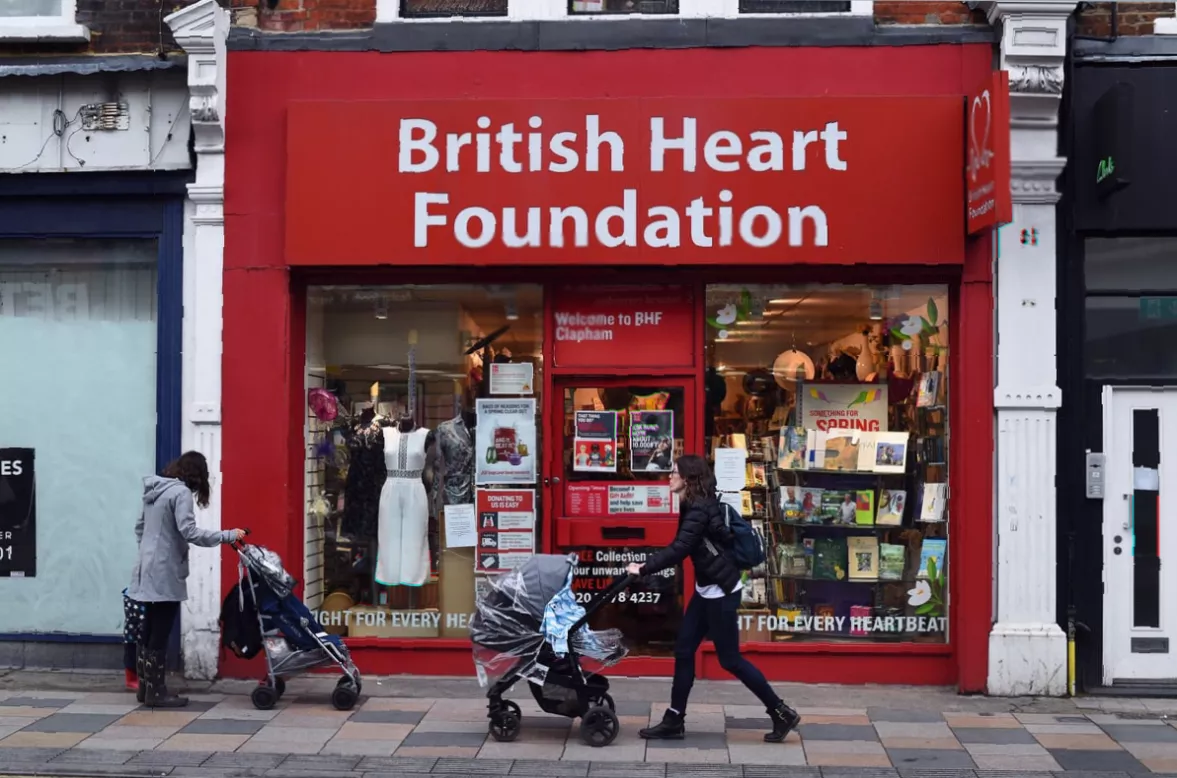
The closures themselves are the most visible outcome of that review. Around 90 stores are expected to close by the end of March 2027, with the remaining 60 shut by March 2028. The BHF says it will support affected employees through consultation and redeployment where possible, and volunteers will be offered alternative roles in nearby stores or within the organisation. Proposals also include reductions in the central teams and functions that support retail operations. The locations of the first wave of proposed closures will be published on the BHF website once affected colleagues have been personally notified.
The decision reflects a broader shift in how the public shops. Other charities, such as Barnardo’s, have also closed stores in the face of rising costs, weaker consumer spending and the growing popularity of online resale platforms. The BHF has been exploring a ‘Store of the Future’ concept focused on sustainability, using recycled materials and energy-efficient practices. Its first shop opened in 1986, and by 2011 it had reached 700 stores. As of 2025, it operated 665 high-street shops, down from around 730 in 2021.
The BHF stresses that its overall financial position remains strong, supported by legacy income and fundraising. In 2024-25, legacies brought in £108.4 million and fundraising activities generated £58.2 million. Charitable expenditure dropped to £146 million, a decrease of £10 million from the previous year. The charity’s mission, founded in 1961 by cardiologists concerned about rising death rates from cardiovascular disease, remains to create a world in which everyone has a healthier heart for longer. Cardiovascular disease kills someone in the UK every three minutes.
The consent pop-up on the BHF website is a small operational detail, but it encapsulates the tensions the charity now navigates: a digital world that demands user permission at every turn, a high-street presence that is shrinking under cost pressure, and a mission that depends on the public&rsquos willingness to engage, donate and consent – whether that consent is given with a click on a search bar or a decision to keep supporting a local shop that remains open.