

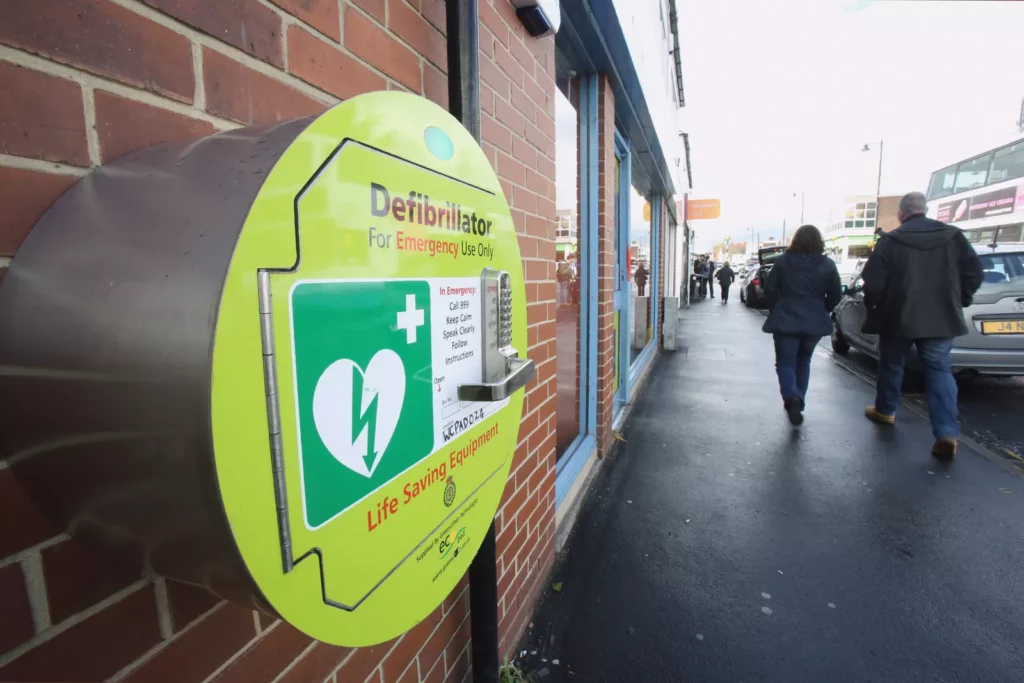
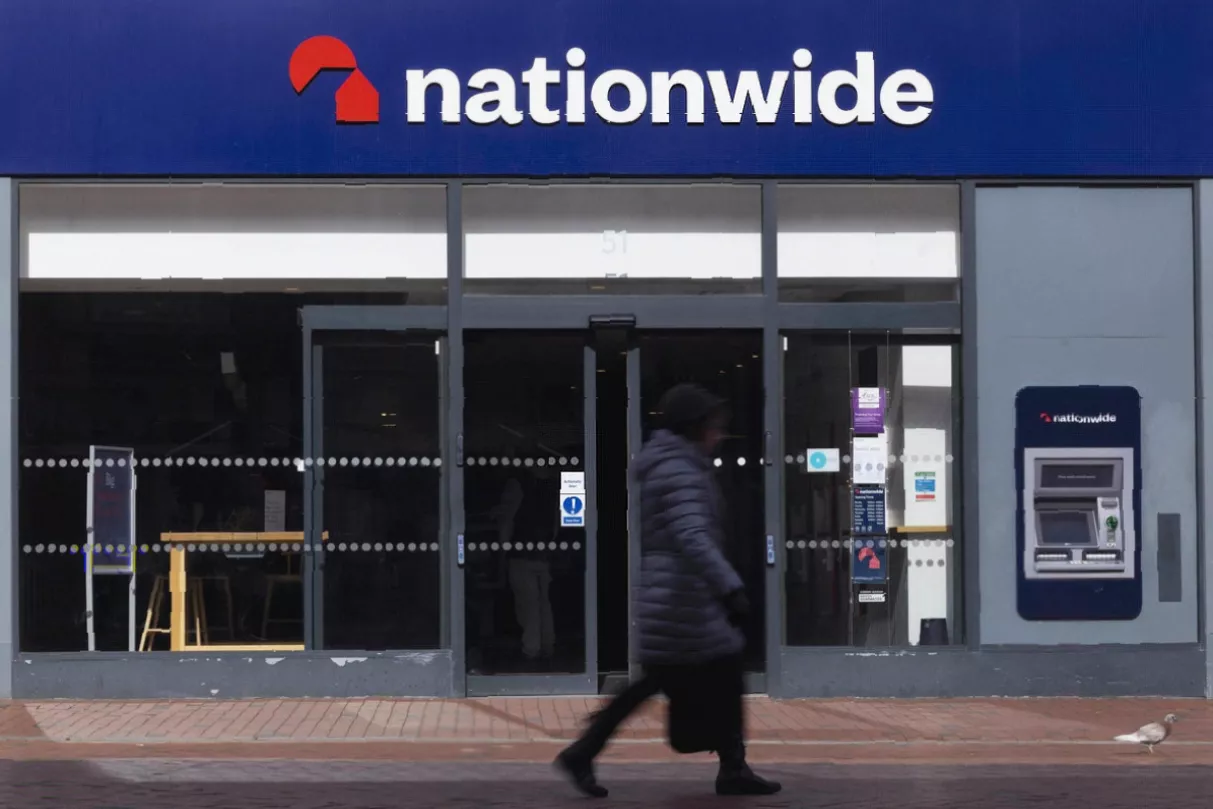
Nationwide Building Society is transforming its entire branch network into emergency hubs, equipping all 605 sites with defibrillators and bleed control kits in what the society describes as the UK’s largest-ever combined rollout of such life-saving equipment.
The initiative, delivered in partnership with Visa, will see the kits installed by the end of the year. The devices will be available to the public 24 hours a day, seven days a week, except where a branch is located inside a shopping centre, and can be accessed when directed by a 999 call operator. Research commissioned by Nationwide found that 87% of people feel safer knowing life-saving equipment is available in their local area.
Nationwide, which operates the largest branch network of any banking provider in the UK, recently acquired Virgin Money, taking its total number of sites to 696. The building society has a formal commitment — its “Branch Promise” — to keep all branches open until at least 2030, a pledge that also covers the former Virgin Money outlets acquired in October 2024. In more than 140 communities, Nationwide is now the last bank on the high street. As a mutual owned by its members, the society says it operates with a social purpose and donates at least 1% of pre-tax profits to good causes; in the 2023/24 financial year that amounted to £15.5 million.
Amanda Beech, Nationwide’s director of retail services, said: “By transforming our branches into visible, emergency hubs, we’re making it easier to access help when every second counts. Crucially we’re also offering training to all our branch colleagues, before extending that training into the communities we serve. We want more people to feel prepared, confident and ready to act when it matters most.”
Training to close the confidence gap
Complementing the rollout, St John Ambulance will provide life-saving training to 4,000 Nationwide staff members and then to local communities. The training, delivered through online modules and face-to-face sessions, covers CPR, defibrillator use, bleed control kit familiarisation and how to respond to severe bleeding, including the use of tourniquets.
The need for such training is underlined by research carried out by Nationwide which found that fewer than one in five Britons feels very confident stopping a severe bleed or using a defibrillator, and only one in four feels very confident performing CPR. Younger people aged 18 to 24 are more likely than older adults to panic in a life-threatening emergency. St John Ambulance’s chief medical officer, Professor Andrew Hartle, said: “We’re so pleased to work with Nationwide and Visa on this project, which so perfectly meets St John Ambulance’s mission to put the power of first aid into everyone’s hands. With hundreds more public access defibrillators and bleed control kits across the UK, and thousands more people confident to use them, I am confident many more lives will be saved in our communities.”
The training programme aims to address a significant gap in public readiness. Across the UK, more than 30,000 out-of-hospital cardiac arrests occur each year, yet fewer than one in ten people survive. In England in 2022, around 8% of patients survived 30 days after a cardiac arrest. Every minute without CPR and defibrillation reduces the chance of survival by up to 10%; survival rates can increase by 50–70% if defibrillation takes place within three to five minutes. Despite this, public access defibrillators are used in only around 7.9% of such emergencies in England, according to the latest figures.
Severe bleeding is also a leading cause of death after traumatic injury in the UK. Knife and sharp instrument offences totalled around 53,000 in 2024/25, and research suggests that nine in ten people want more public access to bleed control kits because of the rise in knife crime.
How a defibrillator works and when to use it
James McNulty-Ackroyd, head of clinical projects and a paramedic at St John Ambulance, explains that a defibrillator — often labelled as an AED, or automated external defibrillator — “provides a shot across the heart to help bring people out of cardiac arrest”. The device automatically analyses the heart’s rhythm, much like an ECG, and only delivers a shock if it detects a “shockable” rhythm. “It recognises when using one would be beneficial for the patient,” he says. “When we talk about cardiac arrests, we talk about shockable and non-shockable, and an AED is useful when the heart is in particular shockable rhythms.”
The electrical shock stuns the heart, sending it back to its normal function, and should be applied “from the right shoulder down to the left armpit”. Crucially, the AED will not shock if the heart is not in one of the relevant rhythms — a safety feature that means anyone can use it without risk of harming the patient.
A defibrillator should only be used in the event of a cardiac arrest, when the patient is not breathing normally or the heart has stopped. McNulty-Ackroyd warns that the breathing may resemble “a fish out of water — there is no rhythm to it, there is no real air entry, or non-purposeful gasping. The heart is not pumping in that situation — it is not working, but there is some movement. They need a defibrillator and high-quality CPR.”
The importance of having these devices readily accessible is underscored by the uneven distribution of defibrillators across the country. There are more than 110,000 defibrillators registered on The Circuit, the national defibrillator network, of which 58.6% are accessible around the clock. However, studies have shown that in the most deprived areas of England and Scotland, the nearest 24/7 accessible defibrillator can be over a mile away. Nationwide’s rollout, which places kits in branches that already serve as community anchors — especially in areas where no other bank remains — could help narrow that gap. The Department for Education has already provided more than 20,000 defibrillators to schools in England, and charities such as the British Heart Foundation and the Premier League Defibrillator Fund support installations, but the building society’s initiative represents the first time a financial institution has undertaken a nationwide rollout of this scale. For those who find themselves in an emergency, every second counts — and now, in hundreds of high streets across the UK, help will be closer than ever.