

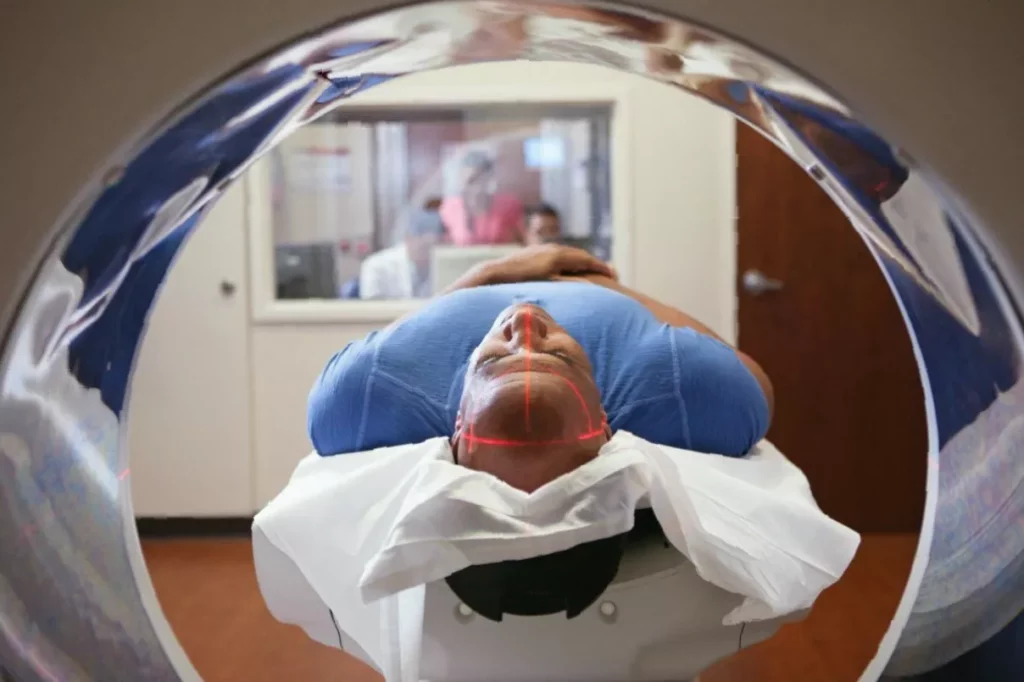
All black men in England will be offered the opportunity to take part in expanded prostate cancer screening trials, the Health Secretary will announce today. James Murray has accepted his advisers’ recommendation to limit routine screening to only a small number of men while simultaneously broadening access to clinical research. The decision marks a significant shift after the UK National Screening Committee (UK NSC) faced fierce criticism for issuing guidance that campaigners said would “condemn thousands to preventable deaths”.
The TRANSFORM study
The core of the announcement is the expansion of the TRANSFORM study, a landmark national trial led by researchers at Imperial College London and Imperial College Healthcare NHS Trust. The trial aims to identify the most effective, safest and most cost‑effective methods for detecting prostate cancer, testing a range of techniques including PSA blood tests, genetic spit tests and fast MRI scans, often used in combination. Prostate Cancer UK and the UK government’s National Institute for Health and Care Research (NIHR) are key funders.
For the first time, all eligible black men will be invited to join the trial. Under the expanded criteria, black men aged between 45 and 74 will be eligible for the second phase of the study, provided they have not undergone a PSA test or an MRI prostate scan in the previous five years. The rollout is expected to begin in 2027. The Health Secretary’s announcement goes beyond the initial target set by researchers, who had indicated that black men should comprise at least one in ten participants because of the lack of research involving this demographic group. The government is working with Prostate Cancer UK and community organisations to encourage participation.
The expansion is backed by a new investment of more than £20 million for prostate cancer research and treatment, with up to £18 million from the NIHR specifically allocated to the TRANSFORM trial.
UK National Screening Committee under fire
The announcement comes weeks after the UK NSC published its final recommendations on prostate cancer screening. The committee advised against a population‑wide screening programme and instead recommended a targeted programme for men aged 45 to 61 who carry a confirmed BRCA2 gene variant and have a family history of breast, ovarian, pancreatic or prostate cancer. Those men would be offered a PSA test every two years.
Under the committee’s recommendations, black men were explicitly excluded, as were men with a family history of prostate cancer but without a BRCA2 variant, and men with BRCA1 gene changes. The UK NSC stated that there was “ongoing uncertainty on whether screening would cause more good than harm” for black men. Charities, prostate specialists and campaigners reacted with outrage, accusing the committee of relying on outdated evidence. An independent review of the UK NSC’s modelling identified “significant methodological limitations”.
The committee’s review had found that screening 1,000 men in their fifties would prevent two prostate cancer deaths over a 15‑year period, but would also lead to 20 men receiving diagnoses for cancers that would never require treatment. Overdiagnosis remains a central concern: an estimated 10,000 men in the UK are overdiagnosed with prostate cancer annually, and for men diagnosed at age 80, 58 per cent of detected cancers may be overdiagnosed. Some prostate cancers develop so slowly that patients would need to live well beyond 120 years before the disease posed any threat, yet those diagnosed must carry the psychological weight of a cancer diagnosis indefinitely.

Why black men are at higher risk – and were excluded
Black men are disproportionately affected by prostate cancer. Research consistently shows they are twice as likely to be diagnosed with the disease and twice as likely to die from it compared with men of other ethnicities. In the UK, one in four black men will be diagnosed with prostate cancer in their lifetime, compared with one in eight men overall. Mortality rates are markedly higher: Black Caribbean men have 1.73 times the death rate of white British men, and Black African men have 1.28 times the rate. Black men are often diagnosed at a younger age and may present with more aggressive forms of the disease.
The reasons for this elevated risk are complex and believed to involve a combination of factors. Genetic predisposition plays a role: certain inherited gene variations, including those linked to BRCA1 and BRCA2, appear more frequently in some families of African or African‑Caribbean heritage. Healthcare disparities mean that black men may have reduced access to high‑quality care, leading to delays in diagnosis or fewer screening opportunities. Lifestyle factors such as obesity, diet and physical activity can influence cancer risk, and some studies have suggested potential hormonal differences, though this area remains under investigation.
Despite this clear evidence of higher risk, the UK NSC chose not to recommend targeted screening for black men. The committee cited “ongoing uncertainty” about whether the benefits of screening would outweigh the harms. Critics argue that this caution is based on evidence that fails to account for the different risk profile of black men. The independent review of the committee’s modelling found significant limitations, and campaigners have called the decision “outdated” and “dangerous”.
The government has emphasised that it is “following the science” and that its strategy is to invest in research – particularly through trials like TRANSFORM – to close evidence gaps and develop a fairer screening system. Health Secretary James Murray said the expansion of the TRANSFORM trial to all eligible black men is a crucial step in tackling long‑standing inequalities in prostate cancer outcomes.
Additional government measures and current screening rules
Alongside the trial expansion, the government is set to introduce fresh guidance enabling GPs to better assist men who suspect they may have a family history of the disease in requesting PSA testing. At present, men without symptoms may request PSA tests from their GP, but doctors cannot proactively offer them. Prostate screening involves a blood test measuring prostate‑specific antigen levels, followed by an MRI scan of the prostate depending on the results. Newer technologies such as multiparametric MRI are being integrated into diagnostic pathways to improve accuracy and reduce the need for invasive biopsies, and the TRANSFORM study is testing combinations of these advanced techniques.
The UK NSC has previously recommended against using the PSA test as the basis for a population‑wide screening programme, stating it is “likely to cause more harm than good” because elevated levels can result from factors other than cancer and because the test can detect slow‑growing cancers that would never cause harm. The government’s approach balances the need for earlier diagnosis with the need to avoid unnecessary treatment and side effects such as incontinence and erectile dysfunction.