

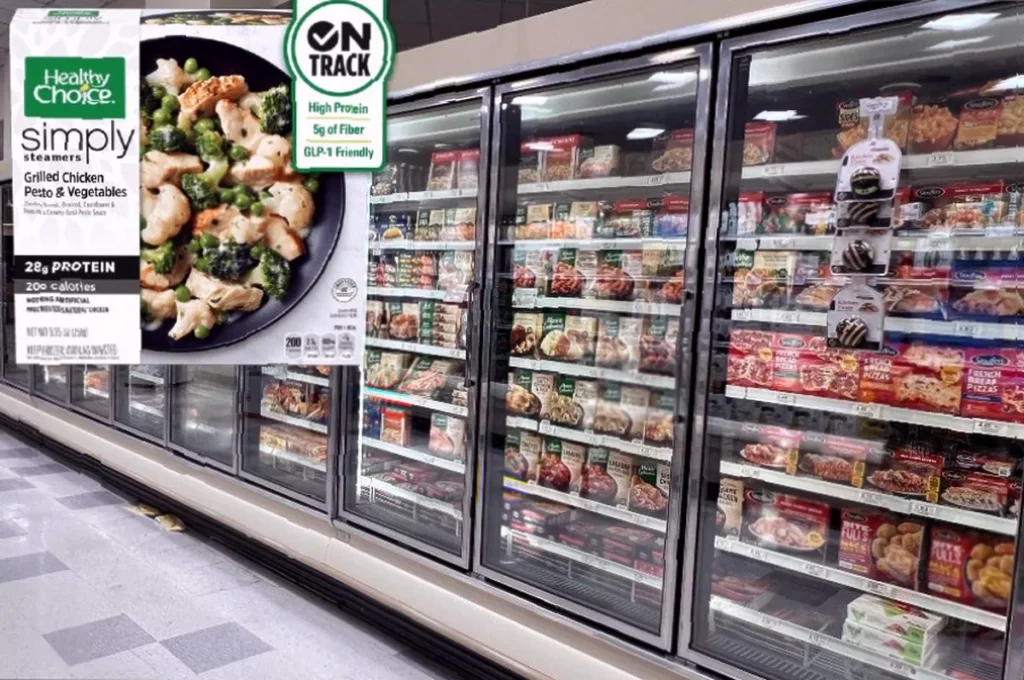
Food manufacturers are racing to capitalise on the soaring popularity of weight-loss drugs such as Ozempic and Mounjaro by slapping “GLP-1 friendly” labels on products ranging from frozen pizzas and tortillas to ready meals – despite experts warning that the term has no scientific basis and is little more than a marketing ploy.
The rush to label foods as ‘GLP-1 friendly’
Nearly one in five American adults has used a GLP-1 drug at some point, according to data cited in the original report. In the UK, estimates suggest nearly one in ten adults has either recently used a weight‑loss drug or would like to, with around 8 per cent of Britons currently taking such medications and a further 14 per cent considering them. The medicines suppress appetite, slow digestion and alter taste perception, pushing users to eat less and prioritise nutrient‑dense, smaller portions. Households with a GLP‑1 user spend, on average, 5 per cent less on groceries within six months, and one study found an 11 per cent reduction in weekly grocery spend among current users.
Food companies are scrambling to win back that lost revenue. Nestlé has launched its Vital Pursuit brand of frozen meals in the US, labelling products such as a white cheddar mac and broccoli bowl (21g of protein) and a meat lover’s pizza (32g of protein) as “GLP‑1 friendly”. Conagra Brands has added the label – via “On Track” badges – to 26 of its Healthy Choice frozen meals, including a beef merlot with 13g of protein. Popular tortilla maker Mission Foods now sells “Zero Net Carbs Spinach Tortillas” and “Protein Whole Wheat Flour Tortilla Wraps” explicitly marketed as compatible with “keto and GLP‑1 friendly lifestyles”, highlighting high fibre, zero net carbs and plant protein. Mission’s Carb Balance Soft Taco Flour Tortillas contain 2g net carbs, 15g fibre and 6g protein per serving.
In the UK, the trend has been even more pronounced. Morrisons claimed to be the first supermarket to launch “GLP‑1 friendly” own‑brand ready meals, in partnership with Applied Nutrition, offering 53 high‑protein products. Marks & Spencer introduced a “Nutrient Dense” range of meals, snacks and drinks designed for consumers eating less. The Co‑op launched “Good Fuel – Power Up Your Plate” including “mini meals”. Asda introduced high‑protein “power pots”. Iceland Foods expanded its weight‑loss range with new ready meals, omelettes and filled pastas. Ocado created a virtual “weight management” aisle with a curated selection of “GLP‑1‑friendly products”, including small portions of steak and supplements. Some retailers, such as M&S and the Co‑op, have avoided explicitly mentioning GLP‑1 drugs on packaging to prevent stigma and broaden appeal, instead using terms like “nutrient dense” or “mini meals”.
Expert scepticism and the regulatory vacuum
Despite the flurry of packaging, the “GLP‑1 friendly” label is not a regulated or scientifically defined term anywhere. In the United States, the Food and Drug Administration does not police it; the Federal Trade Commission requires off‑label health claims to be substantiated by reliable evidence, but no such evidence exists for the phrase itself. Both Nestlé and Conagra received approval from the U.S. Department of Agriculture’s Food Safety and Inspection Service, which told them the products must not mislead customers and must include statements about protein and fibre content. The FSIS generally approves meat and poultry labels that are truthful and not misleading, but it does not validate the underlying science.
In the European Union, “GLP‑1 friendly” claims are considered health or disease‑related claims and would require EU approval – approval that experts say is unlikely to be granted. In the UK, food labelling law restricts references to preventing, treating or curing a human disease. While a direct contravention by the “GLP‑1 friendly” phrase has not yet been tested in court, legal experts see it as a potential area of concern. The Advertising Standards Authority has banned advertising of prescription‑only weight‑loss drugs and indirect advertising of them; although it has not explicitly prohibited “GLP‑1 friendly” food advertising, the ASA requires claims to be accurate, clear and not misleading. Food claims must not attribute properties a food does not possess, nor suggest special characteristics when similar foods have them – a particular risk when the label is applied to products that are simply smaller portions of ordinary foods.
“A GLP‑1 friendly label is good in theory, but it’s bulls***. There’s no real science behind it,” Dr Zaid Fadul, a physician and former U.S. Air Force flight surgeon, told the original news outlet. Dr Ethan Balk, a clinical associate professor at NYU specialising in medical nutrition for bariatric surgery and metabolic weight loss, said companies were “definitely hip to what we would recommend somebody to focus on eating on a GLP‑1 diet, basically prioritising protein, produce, fruits and vegetables”. But he described the labelling as “a total marketing, money‑grab by companies” and compared it to the low‑calorie snack packs of the early 2000s diet culture. “This is just the newest iteration of marketing that is out there to try and maintain profit,” he added.
The British Dietetic Association and the British Nutrition Foundation support the use of GLP‑1 medications when prescribed with dietary support and physical activity, but caution that success is limited without ongoing nutritional guidance. There is anecdotal evidence that some people accessing these drugs privately may not receive adequate clinical or dietary advice.
Risk of abuse and the ‘GLP‑1 halo effect’
Experts warn that the absence of any regulatory framework leaves the label open to widespread manipulation. “If you don’t have regulation coming in, they’ll stick a GLP‑1 friendly label on celery,” Dr Fadul said. Companies, he argued, are “cherry‑picking some pieces of the product to highlight that they are in the realm of what we recommend for somebody on a GLP‑1”. With a suppressed appetite, users consume fewer calories, so the few meals they do eat need to be packed with nutrients. Protein is essential to prevent muscle loss; fibre aids digestion and helps counter constipation, a common side effect; plenty of water is also advised because the drugs lessen thirst.
Yet a GLP‑1 friendly pepperoni pizza may have more protein than a regular frozen pizza but still offer “zero nutrient value”, Balk said. “Companies are freaking out because people are eating less on these drugs.” The phrase may also create a “GLP‑1 halo effect”, driving broader interest in nutrient‑dense, portion‑controlled choices among non‑users, further fuelling sales. “All of us could benefit from a lot more fibre intake,” Fadul acknowledged. “Now you have patients who are being a little more mindful of their food choices – that’s a net win for society.” But the potential for abuse remains unchecked. “It’s a matter of time before it gets abused,” he warned.