

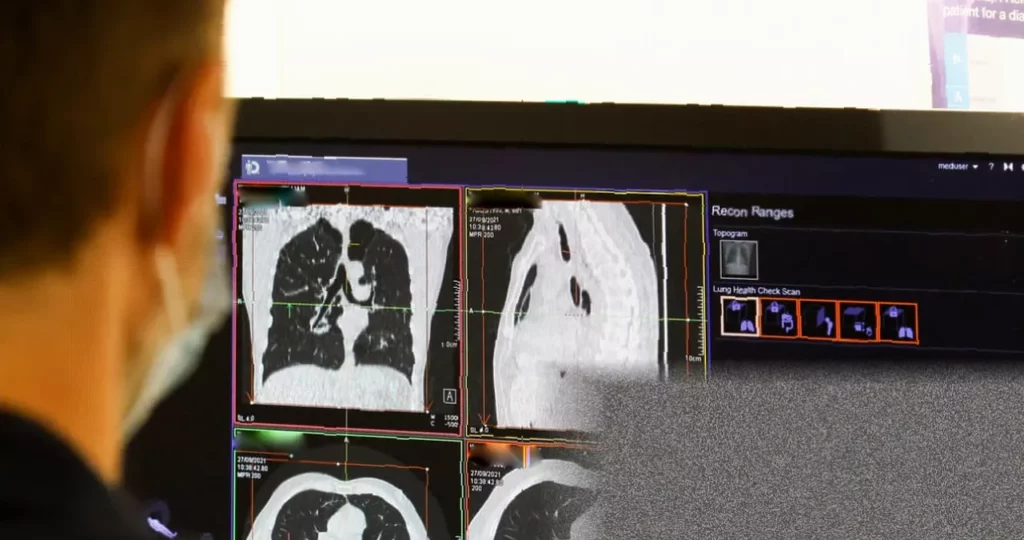
NHS spending on private scan analysis has doubled in five years, with hospitals across the UK paying independent firms a record £241 million last year to interpret CT and MRI scans they lack the staff to handle themselves, new figures from the Royal College of Radiologists (RCR) have shown.
The sum has risen sharply from £120 million in 2021 and more than tripled from £81 million in 2018 – a trajectory the RCR describes as “spiralling out of control”. The £241 million bill for 2025 is also £25 million higher than the £216 million spent the previous year, a 12% increase. Research by the RCR suggests that if current trends continue, outsourcing costs could exceed £400 million annually by 2028 – enough money to fund the salaries of more than 3,000 full-time consultant radiologists.
At the heart of the problem is a severe shortage of radiologists. The RCR estimates that as of 2023, the NHS was short of nearly 2,000 full-time consultant radiologists, a deficit of roughly 30%. Projections warn the gap could widen to more than 3,600 by 2027 unless training and recruitment improve significantly. Demand for CT and MRI scans rose by 11% in 2023, but the workforce grew by only 6%, leaving hospitals with no choice but to turn to private teleradiology companies to keep up with reporting backlogs.
Quality fears and long-term dependency
The reliance on private firms is not only expensive but also raises serious concerns about the quality of care. Eighty-six per cent of NHS radiology department heads said they had serious concerns that privatisation results in lower-quality reports, and 90% said NHS radiologists needed to double-check outsourced reports. The RCR warned that some analysis provided by private companies was so poor that NHS radiologists had to read the scans again, undermining the purpose of outsourcing.
Dr Stephen Harden, president of the RCR, said: “Increasing NHS reliance on outsourcing in radiology is not sustainable and the costs of this are spiralling out of control. In the short term, outsourcing can help to manage diagnostic backlogs, but it cannot be a long-term solution to workforce shortages. Clinical radiologists play an essential role in making most diagnoses, but rising demand for scans is outstripping our capacity.”
The Centre for Health and the Public Interest (CHPI), an independent think tank, warned that the NHS could become permanently dependent on private companies for scan reading. Its director, David Rowland, said: “The use of private teleradiology companies to read NHS scans is growing rapidly. History shows that once the government hands these roles over to the private sector, they remain in private hands, taking income and revenue away from NHS hospitals and removing the opportunity to train the next generation of NHS staff. The risk is that the NHS becomes wholly dependent on private companies for this critical function, whose sole focus is on the bottom line.”
Research by the CHPI found that private firms working with the NHS have made £1.6 billion in profits over the last two years, and raised concerns that taxpayer money may be flowing to companies based outside the UK or registered in tax havens. Companies listed on framework agreements for radiology reporting services include 4Ways Healthcare, InHealth, Radiology Reporting Online, Medacs Healthcare, Medica Reporting, DMC Healthcare, Telemedicine Clinic, Tesla Radiology Solutions, and AXON Medical. Medica, a major provider, uses Sectra’s enterprise imaging solution to support radiologists and reporting radiographers who work around the clock for more than 100 UK hospitals.
Patients are already feeling the impact. In 2024, a record 976,000 scans in England breached the one-month target for reporting – a 28% increase on the previous year – leading to what campaigners describe as “agonising waits for answers about their health”. For cancer patients, delays in diagnosis and treatment can be devastating: research suggests a 10% increased risk of death for every month’s delay in starting cancer treatment.
Despite strong interest in radiology careers – there are currently 11 applicants for every training post – the NHS has not created enough training roles to meet demand. The median age of consultant clinical radiologists leaving the NHS workforce is 50, and 40% of leavers are under 45, signalling a worrying loss of experienced staff. The RCR has urged ministers to expand training numbers, warning that ignoring the workforce crisis and continuing to spend heavily on outsourcing “would be short-sighted, would not be the best use of NHS funds and would not be in patients’ best interests”.
Some trusts are beginning to explore alternatives. Initiatives such as the PenRAD Shared Insourced Reporting Programme aim to connect hospitals directly with radiologists employed within a region, reducing reliance on external suppliers and cutting costs. The RCR has also called for investment in artificial intelligence to boost radiologists’ productivity.
Government plans
The Department of Health and Social Care (DHSC) acknowledged the growing pressure on radiology services. A spokesperson said: “We recognise the pressures facing radiology services, and that demand for diagnostic imaging has risen significantly in recent years. Despite this, the NHS carried out 30 million diagnostic tests in the last year alone, and compared with the previous 12 months, 95,000 more patients were diagnosed with cancer or given the all-clear within 28 days. But we know there is more to do, which is why this government will publish a 10-year workforce plan to help deliver a transformed health service in England. This will make sure we have the right staff in the right places, with the right skills to care for patients, when they need it.”