


UK adults spend nearly 36 days a year on social media, according to new research that reveals the scale of time lost to scrolling, posting and messaging. The study, carried out by The Big Lunch and The Big Help Out and based on a survey of 2,000 UK adults, found that the average daily session is two hours and 21 minutes. For younger adults aged 18 to 24 — often labelled the most digitally connected generation — the figure climbs to three hours and four minutes each day, equivalent to roughly 47 days a year.
The ‘lost time trap’ and personal fulfilment
The findings point to what experts describe as a growing “lost time trap” — a cycle of low-value digital activity that leaves little room for the things people genuinely enjoy. Nearly a quarter of those surveyed (24%) said they simply do not have enough time in the day to do what makes them feel fulfilled.

Professor Andrea Wigfield, director of loneliness studies and the Campaign to End Loneliness at Sheffield Hallam University, said the problem is often less about a shortage of time and more about how that time is broken up. “Many people feel chronically short of time, but often it’s not that we don’t have time, it’s that our time is fragmented by small, low-value activities that don’t leave us feeling fulfilled,” she said. “When people reclaim even a small amount of that time for meaningful connection, whether that’s meeting neighbours, volunteering, helping at a local event or simply spending more time with others, it can have a surprisingly positive impact on wellbeing, belonging and social connection.”
The survey suggests there is a growing appetite for exactly that kind of offline connection. Nearly two-thirds of respondents (62%) said they would like to get involved in volunteering within their local community if it were easy to do so. Among the 18-to-24 age group, more than half would consider swapping an hour of social media use for an hour of volunteering, according to separate research by the Royal Voluntary Service.
Reclaiming time for connection
The researchers calculate that if every adult in the UK reclaimed just 20 minutes of daily scrolling time, the country would gain more than 18.7 million extra hours that could be redirected to more fulfilling activities — whether exercising, seeing friends, pursuing hobbies or helping others. Experts believe even small changes could have a significant impact on personal wellbeing.
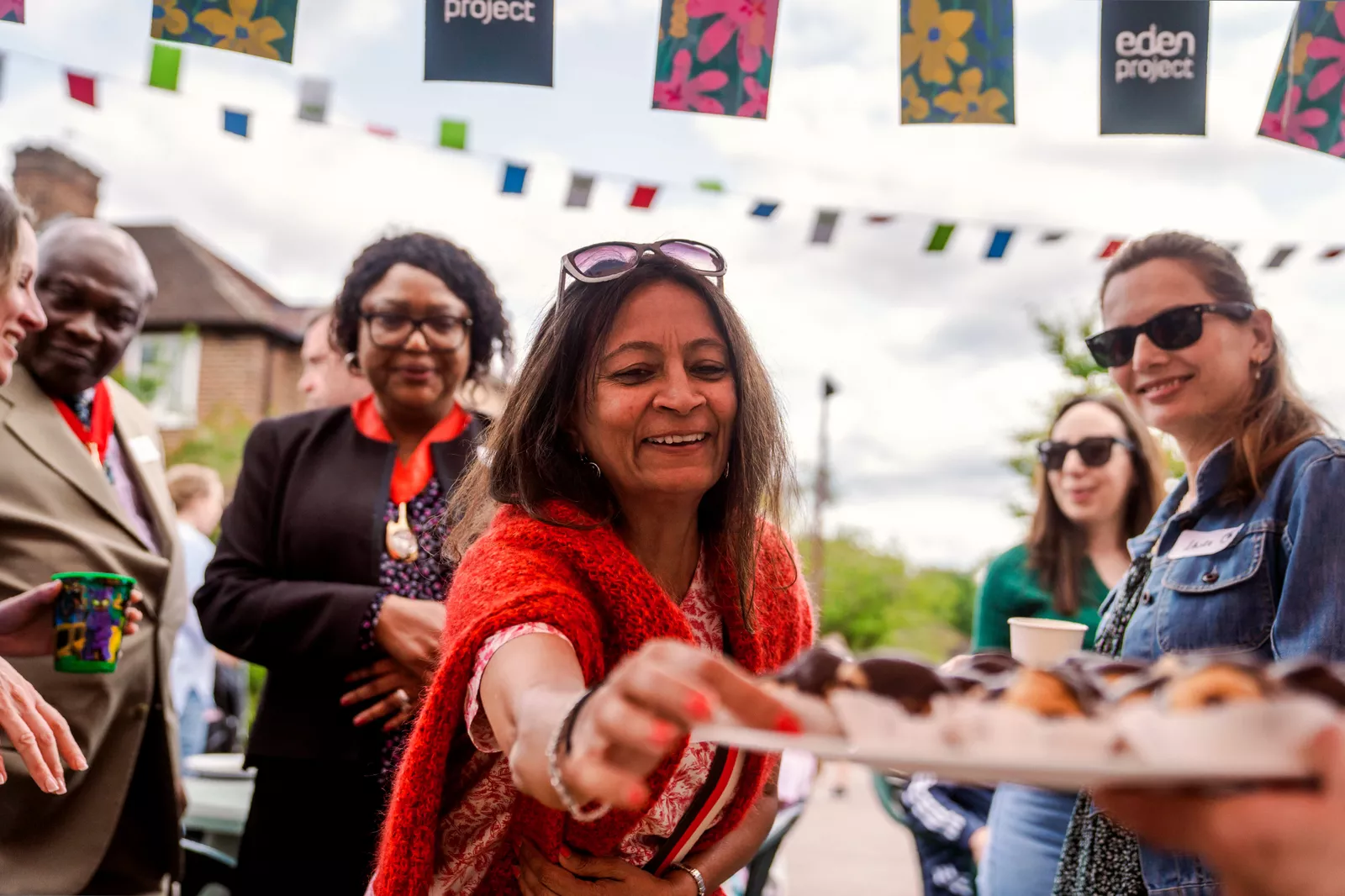
To encourage people to step away from their screens, The Big Lunch and The Big Help Out are joining forces from 5 to 8 June for a nationwide celebration of community spirit. The campaign will promote neighbourhood barbecues, street parties, volunteering for charities and local clean-up events. Lindsey Brummitt, programme director at the Eden Project which leads both initiatives, said: “Whether it’s chatting to neighbours, joining a community activity or lending a hand locally, small actions can make a big difference – not just to communities, but to how connected and fulfilled we feel ourselves.”

Yet breaking the habit is not always straightforward. Lauren Jeffries recently recounted how she attempted a digital detox by swapping her iPhone for a brick phone, hoping to avoid “losing hours at a time to mindless scrolling”. Initially she enjoyed being free of “the constant interruption of notifications” and described feeling “present in the moment and creative”. Her mood and energy were instantly boosted, she said, and the feeling lasted all day. But the experiment unravelled during a night out in Bristol’s city centre when she found herself lost and unable to use location-sharing features. She also realised she could not get into clubs, events or gigs without emailing an e-ticket to a friend beforehand. “What initially seemed like the best experiment of my life ended up being cut short after just a few days, as I admitted defeat,” she said.