

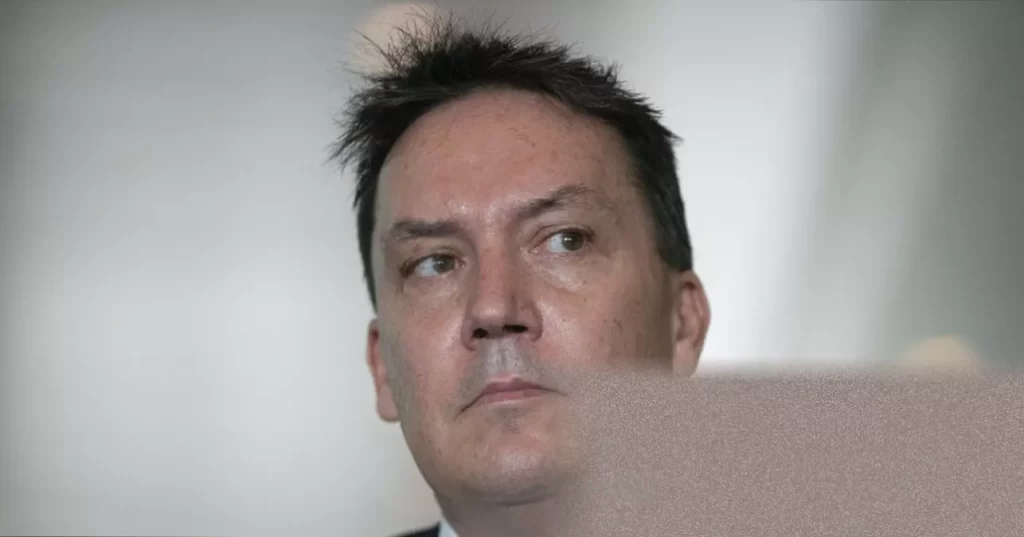
The man who wants to ban sex-selective abortions in New South Wales is the first to admit the law will not work. John Ruddick, a Libertarian Party member of the Legislative Council, has introduced the Abortion Law Reform Amendment (Sex Selection Prohibition) Bill 2025, which would make it a crime for health practitioners to perform or assist in a termination solely because of the sex of the foetus, carrying penalties of imprisonment or fines. Yet Ruddick concedes the measure is unenforceable: “If a mother still wants to abort because of their child’s sex they can obviously say it’s for any other reason and no one will know,” he said.
Ruddick argues the bill is nevertheless necessary to send a message that boys and girls are of equal value. “It will have a positive ripple effect in cementing into our culture that baby boys and baby girls are of equal value,” he said. But the proposed ban faces a wall of opposition from medical experts, researchers, and advocacy groups who say it is based on misinformation, targets immigrant communities, and serves a broader strategy to restrict abortion access across the board.
A solution in search of a problem
The central case for the legislation rests on the claim that sex-selective abortion is occurring in NSW, but official evidence suggests otherwise. NSW Health Minister Ryan Park stated flatly: “There is no evidence that sex selection is occurring in NSW.” A mandatory review by NSW Health, examining terminations between October 2019 and September 2020, found that out of 15,973 abortions, only 13 were recorded as having been performed for sex selection. Of those, 10 were likely to be reporting errors — performed at less than nine weeks gestation, when the sex of the foetus cannot be reliably determined. That leaves, at most, three possible cases out of nearly 16,000 procedures.
Proponents including Ruddick cite a 2025 study by Edith Cowan University that used data from 1994 to 2015. That study found “indirect evidence” — but not causality — of sex-selective practices among Indian and Chinese immigrant communities in NSW and Western Australia, noting a male-biased sex ratio at birth and higher induced abortion rates coinciding with the introduction of non-invasive prenatal testing. However, the study’s authors did not recommend a ban. Instead, they urged an end to using prenatal testing to reveal sex unless medically necessary, and called for culturally acceptable discussions of reproductive decision-making.
What the evidence shows about bans
International experience strongly suggests such bans do not achieve their stated aim. A 2025 study published in Social Science & Medicine examined sex-selective abortion bans in the United States and found that they “did not significantly alter the infant sex ratio”. Instead, they stigmatised Asian immigrant mothers, amplified racial stereotypes, and caused maternal stress and poorer birth outcomes. The authors concluded that while the practices were not absent, “their prevalence has been overstated and mischaracterised”, and that evidence did not support the claim it was widespread “even among groups historically associated with son preference”.
Dr Nisha Khot, president of the Royal Australian and New Zealand College of Obstetricians and Gynaecologists (RANZCOG), said the bill was “predicated on misinformation”. She noted that existing restrictions already address sex-selection abortion for non-medical reasons, and that the “underlying aim is to restrict access to abortion”.
The practical effect of the bill, if passed, would be to force health practitioners to question women about their reasons for seeking an abortion, potentially deterring women from accessing care and practitioners from providing it. The Australian College of Midwives has expressed alarm, stating that such restrictions “create real harm for real women”. MSI Australia, formerly Marie Stopes, described the attempts as “disrupting decades of progress toward women’s rights”.
A broader anti-abortion agenda
Critics point out that this bill is not an isolated effort but part of a coordinated, incremental push against abortion access. Joanna Howe, an anti-abortion activist who has organised rallies in support of Ruddick’s legislation, was recently exposed for using images at a protest that she had claimed were of tiny nine-week-old human foetuses, named “Emma” and “Ruth”. She now knows they were sugar glider joeys, yet still used paintings of them made to look like fully formed human foetuses with hair, fingers and toes. When asked about the deception, Howe replied: “Even if … the picture of Ruth and Emma is sugar gliders, like, does it really even fucking matter?”
Despite this, state and federal politicians continue to work with Howe on almost a dozen pieces of anti-abortion legislation. At a Sydney rally on Wednesday, One Nation MP Barnaby Joyce stood flanked by giant posters of the sugar glider images and declared: “This law in NSW must be passed or otherwise we all accept that sex selection is appropriate. Girls are not as good as boys.”
RANZCOG, the Australian College of Midwives, and MSI Australia have all stated that the end goal of such multiple legislative attempts is not about saving girls, but about making as many inroads as possible to abortion access. Howe herself made this clear, saying on Tuesday that this was “just the start” and that her next move would be to target late-term abortions. “Every year in this state, we will introduce a bill until we protect all the babies,” she said.
Abortion was decriminalised in NSW in 2019 under the Abortion Law Reform Act, which treats it as a health matter rather than a crime, allowing terminations up to 22 weeks. Ruddick, who was a Liberal Party member for more than twenty-five years before joining the Libertarians in 2021 (his maiden speech questioning Australia’s COVID-19 response was banned from YouTube), now finds himself at the forefront of a campaign that medical and evidence-based organisations say is built on a false premise — and one that he himself admits cannot be enforced.