


The NHS is shouldering an escalating burden as a growing number of Britons return from abroad with debilitating complications after undergoing cosmetic leg-lengthening surgery, prompting urgent warnings from surgeons and revealing significant hidden costs to the health service.
NHS faces rising costs from botched overseas surgeries
Hospitals across Britain are reporting an increase in patients who require complex corrective operations, intensive physiotherapy and long-term rehabilitation following procedures performed overseas that have resulted in limb deformities. The Royal National Orthopaedic Hospital NHS Trust has calculated that rectifying complications from just seven such cases has already cost the health service more than £36,000, and has cautioned that the true financial impact is likely to be far greater.
British surgeons have issued public warnings about the dangers of medical tourism for cosmetic height surgery, highlighting that lower costs abroad can lead to serious complications that the NHS must then manage. Specialist orthopaedic centres are seeing a steady rise in patients needing treatment for failed or botched lengthening procedures, placing additional strain on already stretched resources.
The surgery itself — once reserved for correcting genuine medical conditions such as limb length discrepancies or trauma — is increasingly sought for purely cosmetic reasons. The process involves surgically breaking the femur or tibia and then gradually separating the bone segments over several months. The body’s natural healing process fills the gap with new bone, resulting in increased height. This is typically achieved using internal magnetic nails, such as the PRECICE or STRYDE systems, or external fixator frames. However, when performed abroad without adequate aftercare, the risks multiply dramatically.
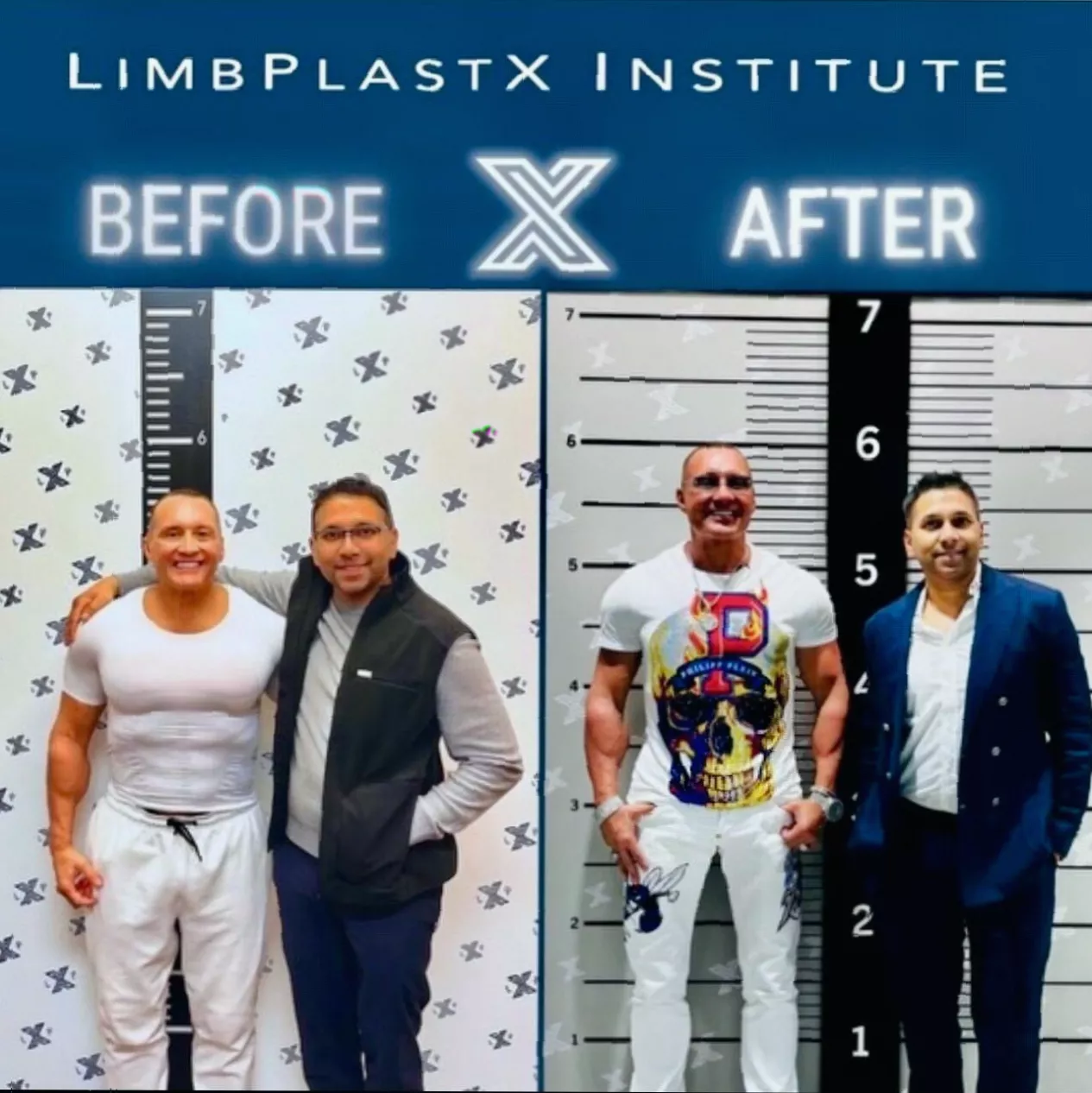
‘Brutal’ recovery: one patient’s story
Hugo Ramirez, a Miami attorney, underwent the procedure in Las Vegas at Limbplastx, paying £62,851 to increase his height from 5ft 9in to 6ft. He is now planning a second operation to reach 6ft 3in. “It’s brutal. You can’t think of the pain, you need to think six foot,” he said.
Mr Ramirez, who has been married for 13 years, said his wife did not want him to have the surgery. His motivation, he explained, stemmed from his professional life. “People that are 5ft 9in have to compete. You see a guy walk in at 6ft 1in and it’s tough. We have to stand out, whether it’s in court or a business meeting because when a six-foot person walks in that door, that’s who everybody looks at.” He also admitted his reasoning was partly “vanity” because he does not want to be seen as average.
The procedure, he described, involved being put to sleep while surgeons used a hammer and chisel to break his leg bones sideways. “It’s almost like a laser cut. It’s very, very thin. It’s not like they shatter it,” he said. A rod — an intramedullary nail — was inserted from his hip down inside the femur. This rod is magnetically controlled: whenever the body generates new bone to heal the gap, the magnet separates, forcing the body to produce yet more bone and thus extend the limb. The process achieves about one millimetre per day, or one inch per month, with the entire lengthening phase taking around three months.
Mr Ramirez opted to have his tibia lengthened in a separate procedure, rather than doing both femur and tibia at once, because tendons, ligaments and skin can only stretch so much at a time. “Five inches didn’t sound good to me, so I’d rather just deal with the pain and do it the right way,” he said. “Everybody’s tall these days, they’re 6ft 3in or 6ft 4in — I want to be 6ft 3in, that’s the perfect height.”

Recovery, however, was gruelling. Re-learning to walk was the hardest part. “Imagine you’re getting your legs stretched and you have no more muscle,” he said. His wife had to help him to the bathroom, to shower and even to get out of bed. He was bed-bound for three months, staying at the ARIA Resort & Casino where he was transported to physical therapy, and was told not to put any weight on his legs. He went against medical advice by getting on a yacht out of boredom. For six months he walked with a limp before his muscles strengthened enough for him to balance properly.
Now fully recovered, Mr Ramirez says he has no regrets. He recounted how a judge in Houston who had never paid attention to him before immediately came to introduce herself when he walked into a room at six feet tall. “It took me being six foot to realise who I was,” he added.
The serious risks of leg lengthening
Despite the apparent success of Mr Ramirez’s surgery, the procedure carries significant and potentially life-threatening risks, according to AFA Limb Lengthening. Bones may not mend properly, or may mend with tissue too fragile to bear the body’s weight. Legs can end up being different lengths. Fat embolisms — where fat particles from bone marrow enter the bloodstream during surgery — can block blood vessels, primarily in the lungs, and are life-threatening. Deep vein thrombosis and pulmonary embolism also pose fatal risks if not caught in time.

Compartment syndrome is another painful and dangerous side effect, caused by a build-up of pressure within enclosed muscle compartments. This pressure restricts blood flow, depriving muscles and nerves of vital oxygen and nutrients, and most commonly affects the lower legs and forearms. More generally, infection, bleeding, nerve damage, joint stiffness, implant failure, and permanent disability are all possible outcomes.
The societal pressures driving the trend are significant. Height filters on dating apps such as Hinge, Bumble and Tinder allow users to exclude potential partners based on height, reinforcing the perception that being tall is essential for romantic success. One man, James Cullen, previously described his experience of dating at 5ft 8in as a “shortcoming”, saying he had been ghosted after answering “how tall r u” on dating apps so many times that he could have saved enough money for the surgery.
Mr Ramirez himself noted the perceived advantages height brings in both personal and professional settings. “In life men always have to be taller than the person he’s dating or married to,” he said. Despite the costs to the NHS and the inherent dangers of the procedure, the demand for cosmetic leg lengthening shows no sign of abating.