

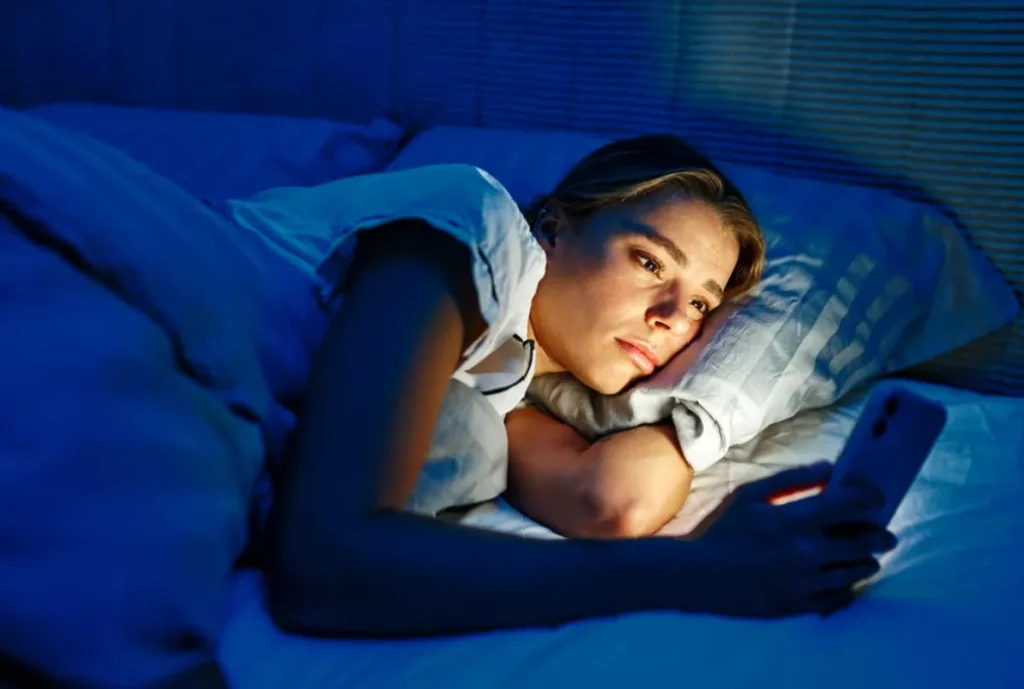
Feeling older than your actual age is linked to poor sleep quality, according to a new study that suggests the perception of aging can have tangible consequences for nightly rest and daily health.
The research, conducted by the American Academy of Sleep Medicine (AASM), involved 3,177 adults who completed an online survey about their age, how old they felt, insomnia symptoms, overall sleep health, sleep regularity, daytime impairment, and mental health. The findings, which are to be presented at the SLEEP 2026 annual meeting in Baltimore this June, showed that adults who reported feeling older than their chronological age consistently described worse sleep outcomes, including greater insomnia severity, less regular sleep, and more impairment during the day.
“These associations remained significant even after accounting for chronological age, depression and anxiety,” said Joseph Dzierzewski, senior vice president of research and scientific affairs at the National Sleep Foundation and the study’s principal investigator. Dzierzewski, whose expertise spans behavioural sleep medicine and geropsychology, noted that the link persisted regardless of participants’ actual age or mental health status.
The study also accounted for participants’ sex, race, and history of depression and anxiety, and still found a clear pattern: the older people felt, the worse their self-reported physical health related to poor sleep became. Mediation analyses revealed that a higher age discrepancy was indirectly associated with poorer physical health through its effects on insomnia severity, sleep regularity, and sleep-related daytime impairment.
A Vicious Cycle of Sleep and Mind
Researchers do not yet know exactly why feeling older harms sleep, but the findings add to a growing understanding of the bidirectional relationship between sleep and mood. Experts describe a self-reinforcing loop: poor sleep can worsen mental health, and mental health difficulties can in turn damage sleep quality. “It’s becoming increasingly clear that sleep and mood have a bidirectional relationship,” said Andrea Goldstein-Piekarski, an assistant professor of psychiatry and behavioral sciences at Stanford Medicine, in a statement last year.
Previous research has shown that people with insomnia are ten times as likely to have depression and 17 times as likely to have anxiety as the general population. Insomnia itself – a chronic sleep disorder defined by difficulty falling or staying asleep – affects an estimated 12 per cent of American adults, according to the AASM. In the UK, the picture is similar: around one in three people are thought to be affected by insomnia, with prevalence higher among women and older adults. A study using UK Biobank data found that 29 per cent of participants self-reported insomnia symptoms, though only 6 per cent had a formal diagnosis in their primary care records.
Feeling older than one’s age has previously been tied to poorer mental health and early frailty, even as young as 40. When combined with insomnia, the two conditions can feed into each other, creating a cycle that is difficult to break. The new study suggests that subjective age – how old a person feels – may play an underappreciated role in this dynamic.
Reclaiming a Younger Mindset
The implications extend beyond sleep. Past research has linked feeling older than your age to a higher risk of premature death, while feeling younger has been associated with slower brain aging. Angelina Sutin, an associate professor at the Florida State University College of Medicine whose work has explored psychological factors in cognitive aging, emphasised that feeling older is not inevitable. “We have this entrenched idea that feeling old is inevitable. But when you find the thing that makes you feel young again, you discover it’s not so,” she told the Society for Biopsychosocial Science and Medicine.
Sutin recommended practical steps: “Find something that makes you feel young again. Exercise more, take a class, do something artistic.” The society notes that feeling older does not have to be permanent, and that the perception of aging can be influenced by behaviour and mindset.
The broader UK context highlights the scale of the problem. According to data from the Mental Health Foundation and other sources, the average adult in the UK gets only three days of good quality sleep per week. Nearly half (48 per cent) report feeling more angry, irritable, stressed, overwhelmed, or anxious due to poor sleep in the past month. Work is cited by 37 per cent of adults as reducing their control over sleep, and women and people from Black, Asian, and minority ethnic backgrounds are disproportionately likely to experience poor sleep. Only 14.3 per cent of Britons wake up feeling consistently refreshed, and 91 per cent admit to using screens before bed – a habit that disrupts sleep quality.
Mental health statistics reinforce the cycle: one in four adults in England experiences a mental health problem each year, with women and those in deprived areas at higher risk. Around half of all people with diagnosed insomnia also have a comorbid psychiatric disorder.
The study, supported by a grant from the National Institute on Aging, challenges how clinicians discuss aging with patients. “These findings suggest how people perceive their own aging may have important implications for sleep and overall well-being,” Dzierzewski said. “Understanding subjective age could help inform future approaches to support healthier sleep and quality of life across the lifespan.”
The research – titled “Feeling Older Than You Are: Links Between Subjective Age and Sleep Outcomes” (abstract ID 0850) – will be presented as a poster at the SLEEP 2026 meeting of the Associated Professional Sleep Societies in Baltimore, Maryland, from June 14 to 17.