

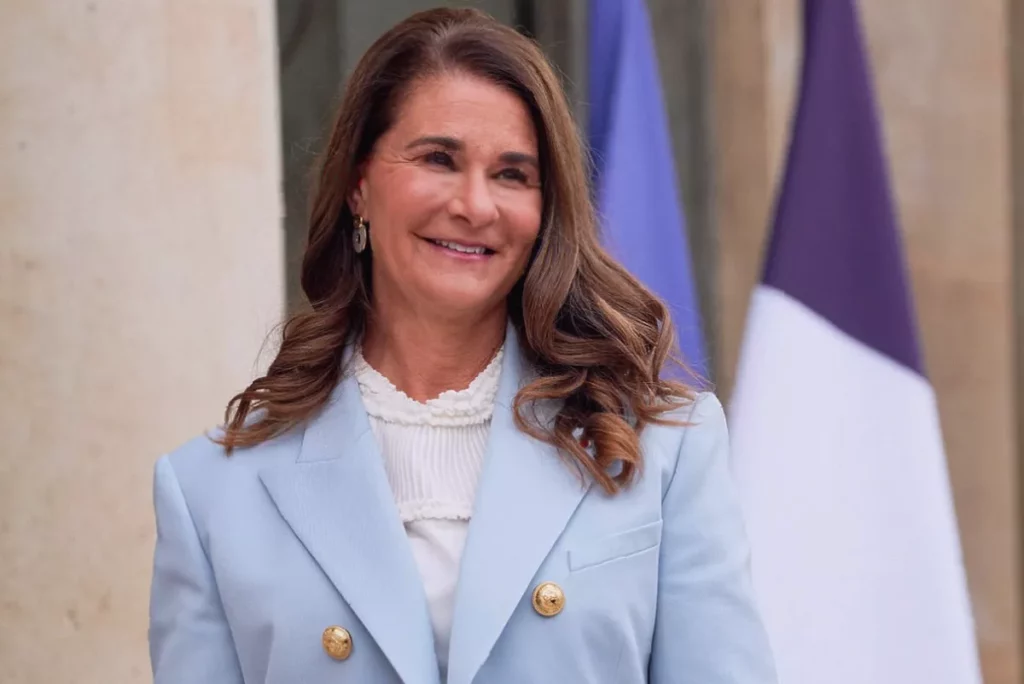
Philanthropist Melinda French Gates has pledged an additional $215 million to expand her global work on women’s health, taking her total contributions in the field to more than $600 million in just the past two years. The announcement, made through her organisation Pivotal, marks the latest tranche of a giving strategy that has sharpened since her departure from the Bill & Melinda Gates Foundation in 2024.
The new funding targets what French Gates describes as critically under-resourced areas of women’s health. A $40 million donation to Co-Impact will embed mental health support into maternal and primary care, with a particular focus on Africa. A further $10 million grant to The Menopause Society aims to address what experts call a crisis in care for midlife women in the United States, where an estimated 6,000 counties lack clinicians competent in menopause management. The grant will fund the education of healthcare professionals and expand outreach into regions with limited access to specialist care.
French Gates said the pledges are designed to send a signal to the wider philanthropic and governmental community. “The role of philanthropy, in my opinion, is to look at some of these societal problems that have been left behind, and shine light on them, show ways of making progress so you can then crowd in other donors and ultimately crowd in government funding,” she explained.
Critical underfunding and systemic neglect of women’s health
The scale of the investment gap is stark. According to the World Economic Forum and Boston Consulting Group’s “Women’s Health Investment Outlook,” health issues that uniquely affect women receive only 2% of private healthcare funding globally, despite women making up half the world’s population. The broader picture is even bleaker: women’s health as a whole attracts just 6% of private healthcare capital, with 90% of that narrow sum concentrated in women’s cancers, reproductive health and maternal care. Conditions such as menopause, autoimmune diseases and cardiovascular disorders — all of which affect women disproportionately or differently — remain severely undercapitalised.
This neglect extends to research. The US National Institutes of Health invested approximately $617 million in menopause and menopause therapy research between 2007 and 2024, though data for the 2020–2022 period is unavailable. Dr Stephanie Faubion, medical director of The Menopause Society and director of the Mayo Clinic’s Center for Women’s Health, said that research into menopause treatments was already underfunded before recent federal cuts. “Funding is hard to come by these days – much, much harder than it was before,” she said, pointing to medical research cuts implemented by the Trump administration. “I think philanthropy is going to fill a greater role than it ever has in the past because we are just not going to have the same type of government funding that we’ve had before.”
The impact of under-investment is felt acutely on the ground. Faubion noted that the shortage of menopause-competent clinicians leaves women in large parts of the US without adequate care. The Menopause Society’s “NextGen Now” initiative, which aims to train 25,000 healthcare professionals over three years, has received a $5 million grant from the Steven & Alexandra Cohen Foundation, but Faubion warned that the need remains enormous. “Menopause remains one of the most overlooked and underserved areas in medicine, and The Menopause Society believes women deserve better,” she said. “We’re ready to make those changes with the support of donors like Pivotal.”
The chronic underfunding is rooted in systemic issues. Historically, women have been underrepresented in clinical research, leading to gaps in data on conditions that affect them uniquely. Historical bias, fragmented data and a lack of women in leadership positions across healthcare have compounded the problem. Addressing the gender gap in healthcare could yield significant economic returns: estimates suggest it could add more than $1 trillion to the global economy by 2040.
Broader philanthropic and policy landscape
French Gates stepped down as co-chair of the Bill & Melinda Gates Foundation — which she co-founded with her now-ex-husband, Bill Gates, and helped build into one of the world’s largest private healthcare funders — on 7 June 2024. As part of her departure agreement, she received $12.5 billion to direct towards her own initiatives. Through Pivotal, she launched a $1 billion initiative dedicated to advancing women’s power and well-being globally in May 2024, including a $250 million open call, “Action for Women’s Health,” which supports organisations working on mental and physical health for women worldwide. She has also partnered with Wellcome Leap to invest $100 million in women’s health research and development, targeting cardiovascular health, autoimmune diseases and mental health.
Legislative efforts are also underway in the US to address the deficit. Bills such as the Advancing Menopause Care and Mid-Life Women’s Health Act aim to expand federal research, enhance provider education and increase public awareness, though their passage and implementation remain uncertain.
For French Gates, the visibility of the issue matters as much as the money. Speaking about the new pledges, she said: “I want women’s health issues to not be invisible. I don’t want the default to be that women are expected to deal with pain and suffering. I want them to be seen for what they’re going through, their real life experiences, and have those issues addressed so they can live their very best lives.” Faubion echoed that sentiment, noting that the attention generated by a donor of French Gates’ stature is perhaps even more crucial than the size of the gift. “It shows that somebody like Melinda Gates and Pivotal feel that this is an important issue,” she said. “It will illuminate the gaps that are still there… and it makes people not only aware, but maybe motivated to take some action.”