

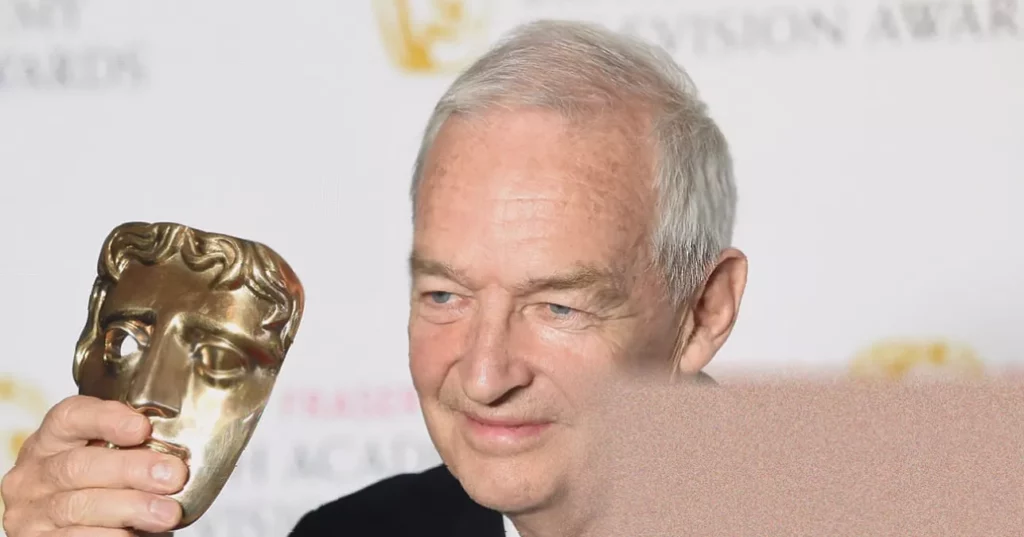
The former Channel 4 News anchor Jon Snow is to appear in a documentary about his diagnosis with Alzheimer’s disease, the most common form of dementia, in which he describes his initial desire to hide the condition because of the prejudice surrounding it. The film, titled Jon Snow: A Last Big Story, will be broadcast on Channel 4 at 8pm on 20 June.
“At the beginning I wanted to hide it, there’s so much prejudice,” Snow says in the documentary. “Any sort of hint of mental decay, you’re sort of dead. There are moments when it pops up but it’s not an all-day, every-day condition, and that’s what I cling on to.” He adds: “I’ve witnessed a great deal. I hope I’ve learned something – but I’ve still got a huge amount to learn. We all have. There’s still more to do.” The 78-year-old broadcaster, who presented his final news bulletin for Channel 4 in December 2021, has had the disease since 2023, according to his own disclosure.
The documentary follows Snow as he comes to terms with his diagnosis and undertakes what he describes as his last big investigation: a report on a mining disaster in Zambia. In an article written by his friend and former colleague Kirsty Lang, Snow said: “If I don’t speak out, who will?” He also admitted to doubts about his condition, telling Lang: “I don’t know really. I don’t feel disabled in any way. I mean sometimes I doubt whether I’ve really got it. I don’t know if it’s widespread knowledge.”
Snow’s diagnosis was reportedly hastened after he told his wife, Dr Precious Lunga, that he was late for work – ten months after he had left Channel 4. Dr Lunga, a neuroscientist and epidemiologist, has said that friends often asked about Snow’s well-being, and that she would initially say he was fine, even though she knew he was not. Snow experienced a period of deep depression following his retirement, becoming withdrawn and losing interest in activities. He felt forgotten by friends, not realising that he had forgotten their calls. In one poignant episode, he was unable to recognise Lang, asking if she had visited before.
Snow’s mother, Joan, struggled with Alzheimer’s for years before her death, and he has spoken of fearing the same fate and of the difficulties of being a carer. He has taken part in a clinical trial for the condition.
Jon Snow’s distinguished career
Snow was the longest-serving presenter of Channel 4 News, anchoring the programme from 1989 until his retirement in 2021. He became a household name, instantly recognisable for his colourful ties and socks on air. During his tenure he covered some of the most significant global events of the past three decades, including the fall of the Berlin Wall, the release of Nelson Mandela and the inauguration of Barack Obama.
Before fronting Channel 4 News, Snow worked as a correspondent for ITN. He reported from conflict zones including Somalia and Vietnam and served as the network’s Washington correspondent during the middle of Ronald Reagan’s presidency. Louisa Compton, head of news, current affairs, specialist factual and sport at Channel 4, said: “Jon Snow is not just one of Channel 4’s most recognisable faces – he is part of our very fabric and is dearly loved by viewers around the UK. It is a profound privilege that we are able to document his last big investigation, in a sensitively made film that frames Jon’s current affairs nous alongside a new life lived with Alzheimer’s. We hope this film will go a long way to raise awareness of how to live whilst facing a life-changing diagnosis.”
The challenge of early diagnosis
Alzheimer’s disease is a progressive condition that attacks the brain, leading to a decline in memory, thinking skills and other mental abilities, according to the NHS. It is the most common cause of dementia in the UK, affecting around two in every three people with the condition. Dementia itself is now the UK’s leading cause of death, with approximately one million people currently living with the illness – a figure projected to rise to 1.4 million by 2040. Every three minutes, someone in the UK develops dementia, and one in three people born today will develop the condition in their lifetime.
The Alzheimer’s Society has long stressed that dementia is not a normal part of ageing but a disease of the brain, and that early diagnosis is critical. Michelle Dyson, chief executive of the Alzheimer’s Society, said: “Jon’s decision to talk publicly about his dementia diagnosis is a real act of courage and his story will resonate with so many. His support for Alzheimer’s Society will help spark a national conversation about dementia that we so desperately need. Despite being the UK’s biggest killer, dementia is still not treated with the same urgency as other major health conditions like cancer.”
Dyson added: “Alongside his wife, Precious, Jon is shining a light on the need for faster, fairer access to diagnosis. An early diagnosis can unlock vital support, help families plan ahead and potentially open the door to participation in clinical trials. Yet too many people across the country are still waiting far too long for a diagnosis. We look forward to working with Jon, whose longstanding commitment to speaking out against injustice will help ensure the harsh realities of dementia cannot be ignored by the UK government and the NHS.”
Snow is married to Dr Precious Lunga, a Zimbabwean neuroscientist and epidemiologist who holds a PhD in neuroscience from the University of Cambridge and is CEO and co-founder of Baobab Circle, a health technology company. The couple have a young son.