

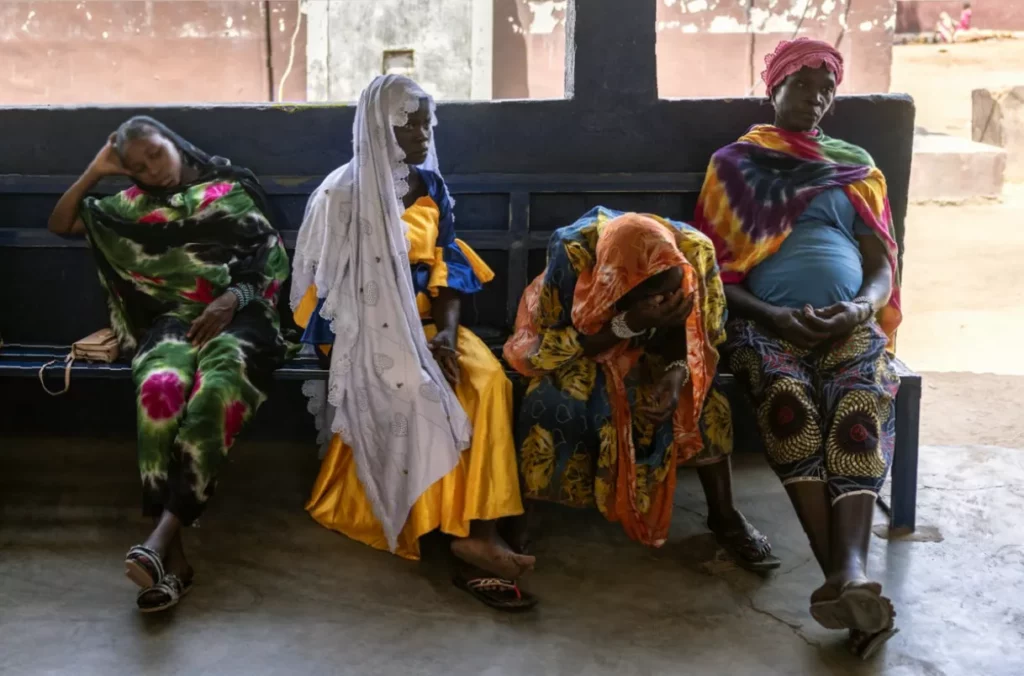
A woman dies from postpartum haemorrhage somewhere in the world every twelve minutes. The condition, which kills nearly 43,000 mothers each year and affects an estimated 27 million women, is the leading cause of maternal death globally. Yet a three-part series published in The Lancet, led by researchers at the University of Oxford and the World Health Organization, argues that many of these deaths are preventable with tools that already exist. Central to the findings is a low-cost plastic drape that could transform the way bleeding after childbirth is detected and managed – and could be manufactured for less than a dollar.
A race against time
Postpartum haemorrhage is a “race against time”, said Adam Devall, Professor of Maternal Health Clinical Trials at the University of Oxford. “Women are bleeding, the blood goes into bedsheets and kidney dishes, or onto the floor. Commonly, even in high income settings, healthcare professionals are estimating this blood loss, but visual estimation is wildly inaccurate.” That inaccuracy is deadly: historically, only about 50 per cent of postpartum haemorrhages were detected, the researchers found. The calibrated plastic drape changes that. Placed under the woman after she has given birth, the drape collects blood and measures it via warning lines, allowing for early detection. During the trials, detection rates rose to 90 per cent.
The drape is only part of the solution. Alongside it, researchers deployed a five-in-one first-response treatment bundle known as MOTIVE: uterine massage, oxytocic drugs, tranexamic acid, intravenous fluids, and examination with escalation if bleeding persists. The broader program is called E-MOTIVE, and the E-MOTIVE trial – published in the New England Journal of Medicine in 2023 – established its effectiveness. The approach is designed to be initiated immediately by midwives and nurses, reducing reliance on specialist review.
Mindblowing results
Researchers carried out trials on more than 20,000 women across Nigeria, Kenya, Tanzania and South Africa. They found that the drape, when used alongside the MOTIVE treatment bundle, led to a 60 per cent reduction in the primary outcome – severe bleeding, death or surgery – in vaginal births. “In our wildest dreams when we planned the trial we thought we might get a 25 per cent reduction in our primary outcome,” Devall said. “When we got the results it was mindblowing. I have been doing clinical trials for almost 20 years now and I have never seen an effect size of this magnitude.” The intervention reduced progression to life-threatening haemorrhage by up to 60 per cent.
Detection was coupled with a new, earlier trigger for treatment. Previously, treatment was administered if a woman was thought to have lost half a litre of blood. In the trial, interventions began at 300ml when accompanied by abnormal clinical signs such as changes to heart rate or breathing. This earlier response is critical because delays in diagnosis and treatment can cost lives.
The human reality of those delays was spelled out by Dr. Hadiza Galadanci, a professor of obstetrics and gynaecology at Bayero University in Nigeria. She cared for her cousin during her fourth pregnancy. “After she delivered, there was blood everywhere. I administered every single treatment I could think of … but she continued to bleed,” she told the Bill & Melinda Gates Foundation, which supported the trial. “I knew I had to do something, so we rushed her to the operating room for a hysterectomy and gave her six pints of blood.” Now Aminu Kano Teaching Hospital, where Galadanci also works as an obstetrician-gynaecologist, has adopted the plastic drapes and the treatment bundle. “Before … clinicians would typically administer one intervention, wait to see if it worked, and, if not, try another, losing valuable time. Waiting can cost lives,” she said.
Cost and deployment
The biggest barrier to rolling out the research at scale is investment, but work is underway. The Gates Foundation is partnering with local companies in places like South Africa to develop the drape. According to the research, the drape could be produced on a roll for easy deployment and cost less than a dollar each. Some sources indicate costs around $1–2, and a locally prepared version could be as low as $0.05. Two specific types of calibrated drapes have been used: the “Brass-V drape,” which features a calibrated pouch for accurate measurement, and the SMART-PVD (Smart Postpartum Haemorrhage Volumetric Drape), designed for uniform collection. The E-MOTIVE intervention, including the drape, has been found to be highly cost-effective, representing “really good value for money,” according to researchers.
The Lancet series calls on governments, health systems and the global health community to prioritise postpartum haemorrhage and implement proven interventions at scale. The World Health Organization has already incorporated the MOTIVE bundle into its global guidelines.
Implementation in the UK
Mortality rates from postpartum haemorrhage can be more than 200 times lower in well-resourced countries like the United States, yet the problem persists in high-income settings too. Recent data shows UK maternal death rates are now about 20 per cent higher than they were 15 years ago. The findings are being implemented closer to home. The plastic drape was included in recent recommendations published in NHS England’s Maternal Care Bundle, which was introduced in January 2026 and aims to reduce maternal mortality and morbidity. The bundle includes specific protocols for obstetric haemorrhage, aiming to standardise prevention and management. After trials, hospital trusts may implement the drape by 2027, with full implementation of the Maternal Care Bundle expected across all NHS trusts by March 2027.
Global aid and the reversal of progress
Steady progress had been made on maternal mortality rates globally since the 1990s, but it has now slowed and even reversed in some countries after sweeping cuts to international aid by US President Donald Trump and other countries, including the UK. A key target of the cuts was family planning programmes worldwide. A study on the impact of the withdrawal of USAID programmes in six West and Central African countries – Burkina Faso, Central African Republic, Chad, Mali, Niger and Nigeria – projected a 45 per cent average increase in maternal deaths among affected populations. Niger experienced the largest proportional increase, over 90 per cent, and Nigeria the largest absolute increase, more than 300 additional deaths. UN agencies warn that cuts in humanitarian aid severely impact essential maternal, newborn and child health services, leading to facility closures, loss of health workers and disrupted supply chains for life-saving medicines. Clinics are being forced to abandon their patients, and tens of thousands of women and girls could die.
Postpartum haemorrhage carries a global economic burden of over US$10 billion each year, yet the tools to detect and treat it are both effective and cheap. Researchers now plan to tackle Caesarean sections, which make up about a quarter of births but account for around 40 per cent of maternal deaths. Tracking blood loss from surgery is much harder due to the presence of other fluids such as amniotic fluid, but Devall believes early detection will also be the key.