

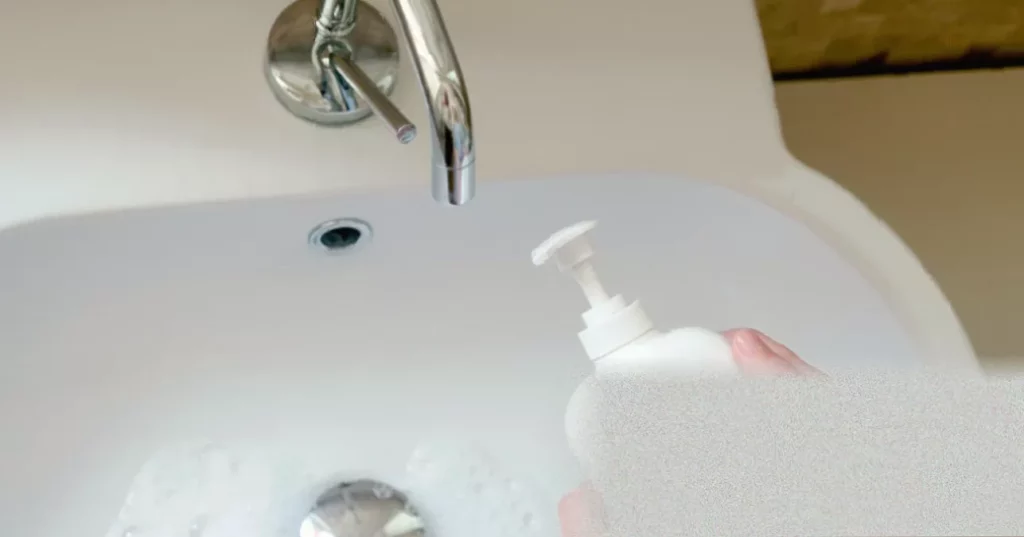
Soap dispenser pump mechanisms are often overtightened during manufacturing, a design flaw that has driven consumers to extreme measures. Bridget Spencer, a reader from Sutton, London, discovered that the simple act of gripping the pump’s internal stem with a nutcracker from her kitchen drawer can dislodge the mechanism, restoring functionality after a frustrating initial struggle. “If you remove the pump and grip the part just inside the bottle with a suitable implement, that is usually enough to dislodge it when you twist it as instructed,” she wrote. “It is a bit of a messy job, but it does work.”
This practical solution addresses what many see as a fundamental manufacturing error. Research indicates that over-tightening during the assembly process locks the pump in place, preventing the spring and one-way valves from operating correctly. The internal mechanism, though described as a simple combination of a manual pump, a spring and one-way valves, is prone to failure when overtightened. Springs can break or become jammed, especially with aggressive use. Dried soap residue, airlocks, or worn-out pump parts also contribute to malfunctions. The nutcracker method, according to Ms Spencer, works by providing enough leverage to twist the pump housing without damaging the bottle or the pump itself.
The Overtightening Fix
Ms Spencer’s approach echoes frustrations previously voiced by the broadcaster and writer Adrian Chiles, who described pump-action soap dispensers as a “disgrace” and rated the chance of one working at no better than 50/50. Mr Chiles noted that dispensers often arrive in the “down” position, requiring a difficult initial manoeuvre to “spring” them upright. He admitted to resorting to smashing non-functional dispensers. The root cause, according to research, is that the plastic threads on the pump and bottle are often over-torqued during manufacture, creating a seal so tight that the pump’s spring cannot overcome the friction. The nutcracker technique effectively breaks that seal without requiring brute force or destructive methods.
For those without a nutcracker, other manual interventions exist. Removing the pump and soaking it in warm water can help, as can using a pair of pliers wrapped in cloth to avoid scratching. The key is to grip the part of the pump that sits just inside the bottle neck, where the threaded collar meets the stem. Twisting anticlockwise while applying gentle outward pressure usually frees the mechanism. Priming the pump by pressing it multiple times can also draw soap into the tubes and clear any airlocks that may have formed during transport or refilling.
The Clogging Conundrum
Even when the overtightening problem is solved, another issue quickly emerges: clogging. Christopher Holker, also of London, added a second layer of frustration in a letter to the same publication. “Even if I do manage to make the mechanism on a soap dispenser work, the tiny hole quickly becomes clogged so that, under desperate pumping pressure, an unpredictable jet of gunk ends up anywhere but on my hands,” he wrote. This clogging is a common complaint driven by soap residue build-up, particularly from soaps with a high glycerin content or those that are too thick. Hard water deposits can also cause blockages, and infrequent use allows soap to dry inside the pump, creating a solid plug.
Research into the problem reveals that the viscosity of the soap is a significant factor. Thicker soaps require more pressure to dispense and are more likely to clog the small dispensing hole. Some dispenser designs are inherently incompatible with certain soap formulations. Diluting thicker soaps with a small amount of distilled water can improve flow, while switching to a different soap formulation may be necessary if a particular brand consistently causes issues. For stubborn clogs, a warm water flush is the first step, followed by a mixture of warm water and white vinegar for mineral deposits. Mechanically clearing the nozzle with a toothpick, pin, or pipe cleaner can also dislodge residue.
Beyond these immediate fixes, regular maintenance is essential. Periodically flushing the pump with warm water prevents clogs, especially in households where the dispenser is used infrequently. For automatic, touchless dispensers, depleted batteries are a common cause of malfunction, and checking seals and gaskets can stop leaks. If the spring is damaged or the pump mechanism is broken, replacing the pump or specific parts may be required. In cases of cracked containers or irreparable damage, replacing the entire dispenser is often the only solution.
Broader Context: Design, Hygiene and History
The widespread frustration with pump-action soap dispensers points to deeper design and manufacturing flaws. The dispensing hole is often too small, contributing to clogging, and some dispensers are difficult to refill or prone to leaks. The type of dispenser also matters: manual lever-operated models are generally considered cost-effective and reliable, while automatic touchless dispensers use motion sensors and batteries, favoured for hygiene in public spaces. Foaming soap dispensers have a special pump mechanism that aerates the soap, mixing liquid soap with air, and they require a different viscosity of soap than liquid dispensers.
Hygiene concerns add a further dimension. Refillable bulk dispensers, where soap is poured into a reservoir, pose a significant risk of contamination. Bacteria can thrive in these dispensers, and studies have shown that using soap from a contaminated refillable dispenser can leave more germs on hands than before washing. The contamination arises from environmental exposure, unwashed hands during refilling, and the reuse of the same container and nozzle. Sealed cartridge systems, where the soap is contained in a disposable cartridge, are considered more hygienic because the soap remains sealed and the cartridge is replaced, eliminating the risk of contamination. Mixing different soap products in refillable dispensers can lead to chemical instability and reduced effectiveness, and intentional tampering is a risk in public spaces.
Environmental impact is another consideration. Single-use plastic soap bottles contribute significantly to landfill and ocean waste. Refillable dispensers, especially when used with bulk soap, reduce this plastic waste. Concentrated soap formulas used with refillable dispensers often require less water, fewer chemicals, and lower energy for production and transport, promoting a circular economy. The historical evolution of soap dispensers shows how far the design has come: solid bar soap was the norm for centuries until William Sheppard patented liquid soap in 1865. Jerry Lippman of GOJO Industries developed the first portion-controlled dispenser in 1952 to combat overuse in industrial settings, and the Minnetonka Corporation launched Softsoap in 1980, popularising liquid soap in pump dispensers for the home market. The first automatic, touchless dispenser was patented in 1989 by Guey-Chuan Shiau.
For consumers who find their dispensers faulty or unsafe, recourse exists. In the UK, concerns about unsafe products can be reported to Citizens Advice in England and Wales, Advice Direct Scotland, or local district councils in Northern Ireland, which can lead to Trading Standards investigations and potential product recalls. As Bridget Spencer and Christopher Holker have shown, the path to a working soap dispenser often begins with a nutcracker in the kitchen drawer – and a willingness to get a little messy.