

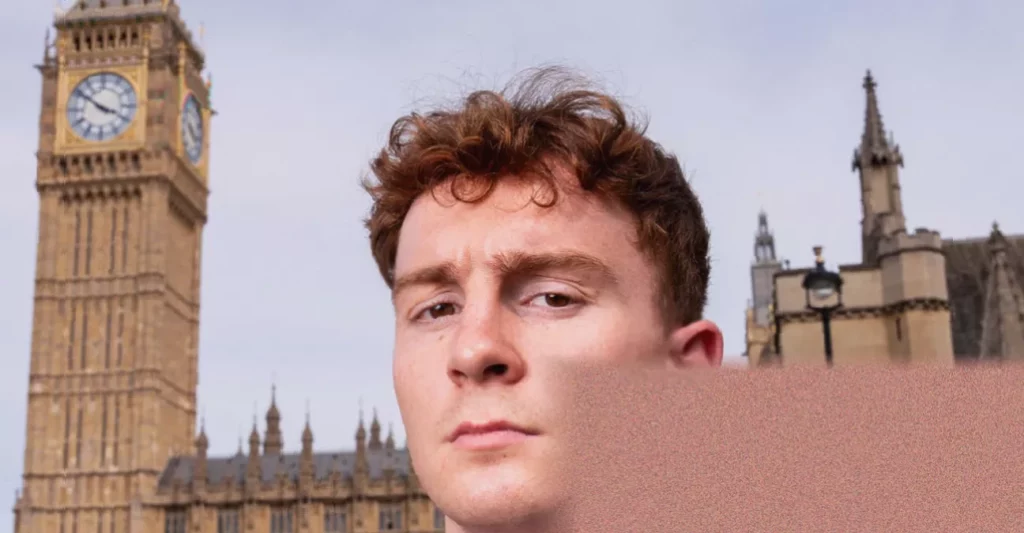
Champion swimmer Archie Goodburn is battling both a rare, inoperable form of brain cancer and what he calls government inaction. “I grew up representing my country, and I want to see my country supporting me back,” the 24-year-old said, as he prepares to step out at the Commonwealth Games in Glasgow next month while simultaneously pushing MPs for urgent change.
Personal battle
Goodburn’s life changed two years ago. A few months before the Paris Olympics qualifiers, he began experiencing strange episodes during training – a loss of strength, numbness on his left flank, a deep feeling of fear and nausea. “I felt like my consciousness was being pulled away from me,” he said. In April 2024 he missed out on qualifying by a few tenths of a second. Soon after, doctors discovered the cause: three oligodendrogliomas, rare tumours that make up about 3% of all brain cancer diagnoses.
The diagnosis came in June 2024. The standard treatment would have been radiotherapy and chemotherapy, which he would have begun in July of last year had he not been given Vorasidenib through an expanded access programme. The drug halts the production of proteins that help his tumours grow. It delayed the immediate prospect of chemotherapy and radiotherapy, which would have impaired his cognitive ability and interrupted his training, as well as his chemical engineering degree.
Shortly after starting on Vorasidenib, Goodburn broke the Scottish record in the 50m breaststroke – the event he’ll compete in at the Commonwealth Games, which run from 23 July to 2 August 2026 in Glasgow, with swimming from 24 to 29 July. He also won a gold medal at the 2023 British Swimming Championships in the same event, a bronze at the 2023 European Short Course Championships as part of the Great Britain 4x50m Medley Relay Team, and made his Commonwealth Games debut at Birmingham 2022. His resilience earned him the prestigious Peter Heatly Award.
But Goodburn says one new drug in 20 years is not enough. “Vorasidenib only bought me four years, according to the trials. I need more. And I’m not going to stop [campaigning] until my last breath,” he said.
The ‘translational gap’ hindering progress
Brain cancer is the biggest cancer killer for children and adults under 40 in the UK. Yet since 2002 it has received just 1% of the government’s national cancer research budget, and progress in UK drug development for the disease has been limited. The five-year survival rate for brain cancer is around 12–13%, with treatments having seen little substantive change in approximately 40 years.
Goodburn highlights the “translational gap” between early-phase research discoveries and drug funding. The issue, he argues, is not the inadequacy of research, but the difficulty in taking that research into clinical trials that patients can access. The all-party parliamentary group on brain tumours called this gap the “valley of death” for patients, which they blame on a siloed, risk-averse funding system for a complicated disease.
Even when funding is pledged, regulation and bureaucracy can stop it from being used. In 2018, the government pledged £40m for brain tumour research, a commitment made in honour of Dame Tessa Jowell. By early 2023, only £15m had been awarded, with a further £6m not clearly identifiable as relevant to brain tumours. Concerns persist that a significant portion of that promised money remains unspent.
There have been more recent announcements. Since July 2024, there has been a £32.3m boost to brain cancer research, including increased investment in the NIHR Brain Tumour Research Consortium. The National Cancer Plan for England, published in February 2026, includes commitments to improve early diagnosis and introduce new targeted treatments. Yet campaigners note that the UK ranks 22nd out of 29 developed nations for patient access to genomic testing, which would expand patients’ eligibility for clinical trials.
Vorasidenib: a breakthrough, but not a cure
Vorasidenib is a daily oral treatment for specific types of low-grade glioma – astrocytoma and oligodendroglioma – with IDH mutations, in patients aged 12 and over who have had surgery but do not yet require chemotherapy or radiotherapy. The INDIGO clinical trial showed it can significantly slow tumour growth and delay disease progression, extending progression-free survival.
Despite this, its journey to NHS approval was rocky. The National Institute for Health and Care Excellence (Nice) initially issued a draft decision not to recommend it. After campaigning by many in the brain cancer community, including Goodburn, that decision was overturned and the drug was made available to NHS patients in England and Wales in the last three months. Goodburn says the experience showed him the power of new treatments to change lives, but he stresses that Vorasidenib is only one drug in two decades. “There’s that much space for change. Change is so possible,” he said.
Research specifically targeting oligodendrogliomas continues, with organisations such as the Musella Foundation’s Oligo Fund supporting translational research and clinical trials, and the Astro Brain Tumour Fund backing low-grade tumour research at the University of Plymouth.
Campaign demands and political pressure
Goodburn and the Brain Cancer Justice campaign – made up of individuals affected by the disease and their loved ones – are urging the government to take immediate action. Their demands include: immediately releasing the remaining portion of the £40m pledged and ensuring it reaches frontline scientists; appointing a named brain cancer lead in government; increasing genome sequencing for patients at diagnosis to expand clinical trial access; and giving patients a “right to try” potentially life-saving treatments.
A petition spearheaded by Brain Cancer Justice gathered over 109,000 signatures. The campaign has won support from public figures including former boxer Frank Bruno and celebrities Davina McCall and Piers Morgan. On Monday, MPs will debate the petition in Westminster Hall, with Goodburn planning to watch from the viewing room – a task he calls his most daunting right now.
Broader legislative and funding mechanisms are in play. The Rare Cancers Bill, aiming to incentivise research and investment in rare cancers, is progressing through Parliament. The Cancer Drugs Fund in England provides managed access to promising new drugs while further evidence is gathered. The National Institute for Health and Care Research (NIHR) continues to fund brain tumour research, and Cancer Research UK and the Brain Tumour Charity are also major funders.
In response to the petition, the Department of Health and Social Care said it understands that “more needs to be done to boost research into brain tumours” and is “committed to securing patient access to effective and innovative new medicines”.
Balancing campaigning in Westminster with training in the pool has not been easy for Goodburn, but he remains driven. “I campaign, if I’m being completely honest, because of the disparity in care, the lack of funding, but also because I believe that my campaigning can actually make a difference to my own future. In some ways, it’s a treatment of its own,” he said.