

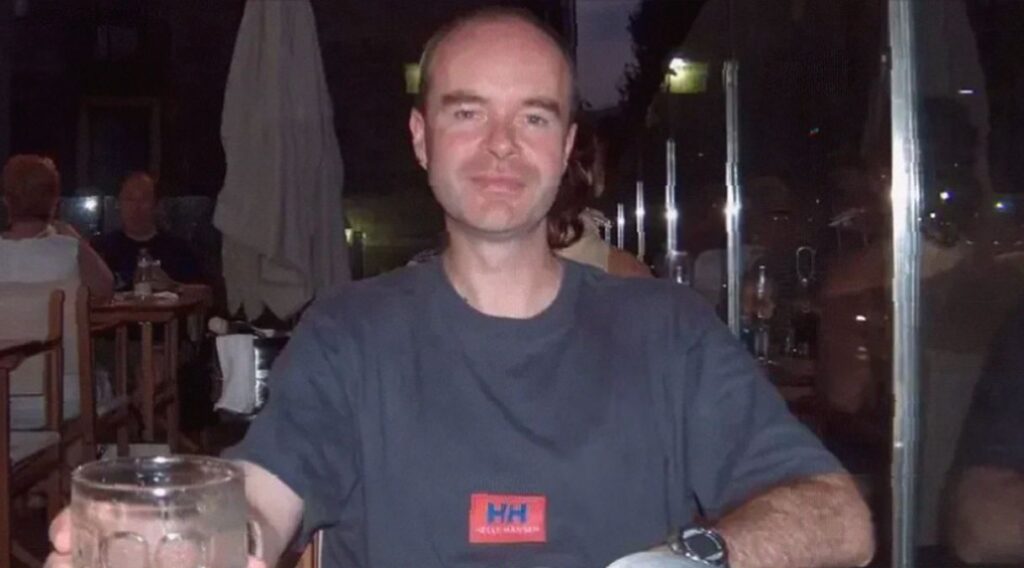
A £300,000 fine has been imposed on an NHS trust after a chemotherapy patient died from an infection he contracted from a contaminated showerhead at Cheltenham General Hospital. Dr Chris Elliot, 59, was admitted to the hospital’s oncology ward in August 2022 and died just two weeks later, with medical evidence presented in court indicating the infection was “highly likely” responsible for his death.
Gloucestershire Hospitals NHS Foundation Trust pleaded guilty to failing to provide safe care and treatment, a prosecution brought by the Care Quality Commission (CQC). The penalty handed down by District Judge Nick Wattam at Cheltenham Magistrates’ Court also included a £2,000 victim surcharge and £22,143.47 in costs, bringing the total financial penalty to £324,143.47.
How the shower became a death trap
The source of the fatal infection was traced to the showerhead in Dr Elliot’s ensuite bathroom. A routine water sample taken from that showerhead on August 1, 2022 — eight days before Dr Elliot was admitted to the ward — had already tested positive for Pseudomonas aeruginosa, a bacterium commonly found in soil and water that can cause severe infections in people with weakened immune systems.
Despite that positive result, no remedial measures were taken and the bathroom continued to be used by patients. Dr Elliot, who was undergoing chemotherapy for cancer, was placed in the room on August 9. He subsequently developed an infection that genetic testing later confirmed matched the bacteria found in the shower water. His condition deteriorated despite medical intervention, and he died on August 23.

Pseudomonas aeruginosa is a leading cause of hospital-acquired pneumonia and sepsis, particularly in neutropenic cancer patients whose immune defences are suppressed by treatment. In immunocompromised individuals, the bacteria can cause progressive lung damage, respiratory failure and death if left untreated.
Breakdown in oversight
The court heard that the trust had delegated water sampling responsibilities to NHS Gloucestershire Managed Services (GMS) in 2021, but oversight of that arrangement was inadequate. A water safety group that was meant to meet quarterly had not convened for nine months during 2021, and early concerns about GMS’s competence were never pursued.
Prosecutor James Marsland told the court there was no evidence that GMS had taken appropriate action after receiving the positive test result on August 1, nor were the findings communicated to ward managers or infection prevention staff. GMS claimed to have replaced the showerhead and a filter, but could provide no documentation to support either assertion.
Dr Elliot’s widow, Victoria Elliot, delivered an emotional statement to the court, describing her husband as a “sitting duck” and declaring that those responsible should “hang their heads in shame.” She said he was “treated with arrogance and incompetence with regards to his safety” and that both the trust and its contractor had failed to protect him. His sister, Vicky Elliot-King, remembered him as someone with “boundless enthusiasm” who “had the ability to make everything okay.”

Trust accepts responsibility
Kevin McNamara, the trust’s chief executive, said the organisation was “deeply sorry” for Dr Elliot’s death, calling it “a tragedy that should never have happened.” He confirmed the trust had entered an early guilty plea and accepted full responsibility for the failures, acknowledging that water test results were not shared by the contractor in a timely manner, which would have allowed swift action to restrict access to the room. The trust has since invested more than £3.8 million in water safety improvements and claims to have some of the lowest rates of hospital-associated Pseudomonas aeruginosa infections nationally.
Catherine Campbell, the CQC’s deputy director of hospitals in the South West, said: “Dr Elliot was at particular risk of infection when he was admitted to Cheltenham General Hospital because he was immunosuppressed. He had the right to expect that risks within the hospital were being effectively managed to keep him safe. Had Gloucestershire Hospitals NHS Foundation Trust ensured there were effective systems in place to manage water safety at the hospital, he would not have been placed in a room with a shower head that had tested positive for pseudomonas aeruginosa.” She described the trust’s failure to protect him from avoidable harm as “unacceptable.”
The prosecution is one of only two brought by the CQC over infection control failures. In 2021, Dudley Group NHS Trust was fined £2.53 million after two women died from sepsis. Other significant CQC prosecutions include East Kent University Hospitals Foundation Trust being fined £733,000 in 2021 over the death of Harry Richford, and Nottingham University Hospitals Trust facing fines of £800,000 in 2023 and £1.6 million in 2025 for patient deaths. In a separate but related incident highlighting broader water safety concerns, South West Water Ltd was fined a record £1.93 million in June 2026 for supplying water unfit for human consumption due to a parasitic outbreak in Devon.