

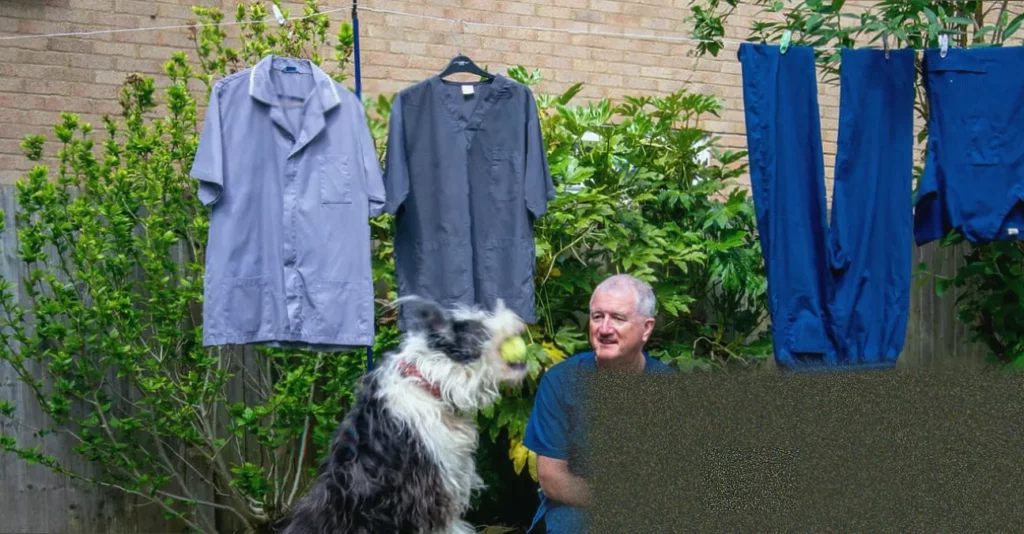
A 60-year-old former engineer is retraining as a nursing associate, raising his hand in a doctor’s waiting room when a practice nurse emerged expecting to meet a student. Nick Dowling was the only person there, and the nurse’s confusion was understandable: most apprentices are decades younger. He hopes to qualify as a registered nursing associate this autumn.
Apprenticeship on the wards
Dowling’s current placements have taken him from a general practice to a psychiatric unit, from ward nursing to urgent treatment centres. The shifts can be 12 hours long, and at £14 an hour they pay less than he has earned in decades. The nursing associate role, regulated by the Nursing and Midwifery Council, sits between a healthcare support worker and a registered nurse, providing hands-on patient care under the supervision of a registered nurse. It requires completion of an NMC-approved programme, often a Level 5 apprenticeship or foundation degree.
From engineering to leadership consultancy
For decades Dowling worked in engineering and manufacturing, holding quality management roles after graduating with a quality engineering degree in the mid-1980s. He grew up in Dundalk in the Republic of Ireland, so close to the border with Northern Ireland that during the Troubles it was nicknamed El Paso. At 21, like many of his peers, he headed to the US for the summer. While living in digs in Cape Cod, Massachusetts, he found work at a local nursing home as a nurse’s aide on a “total care” dementia ward, feeding patients and emptying their bedpans. The shock and initial distaste were so great he vowed not to return after his first shift, but a senior nurse persuaded him to stick at it – “probably because of the level of care she showed for the patients”, he says. He stayed for six months, then settled in England and into a “proper job”, thinking little more of it.
That proper career took him into quality management for manufacturing companies, and then around 2012 into consultancy, delivering leadership and change-management training with a friend who was a psychologist. Their approach incorporated the concept of neuroplasticity – the brain’s ability to change and adapt in response to new experiences – which Dowling says was still “very emergent” and “largely unknown” at the time. He worked on legacy projects including Crossrail in London, the Medupi power station in South Africa, and the civilianisation of the police force in Northern Ireland. The idea was to approach change “from a wellbeing point of view: how can we make the workplace better for employees? Because if it’s better for them, if their mental health is better, their physical health is better … organisations will perform better.”
A few years later, Dowling saw a poster advertising volunteering opportunities with the ambulance service near his home in West Sussex. He cannot remember where he saw the poster, nor why it spoke to him – he was happy in his work – but he signed up and became a first responder, attending acute medical emergencies in the community: chest pains, strokes, trauma, falls, burns, “anything and everything”. Community first responders are volunteers trained to respond to 999 calls, often reaching patients before an ambulance, providing life-saving first aid and basic observations.
Why nursing now?
The catalyst for change came with Covid-19. In 2020, Dowling’s consultancy work went online. “Suddenly, you’re just talking to a screen,” he says. “You’re getting nothing back from it. No energy. It’s a very different proposition. I got bored quickly.” At the same time, his voluntary work became more urgent: he took the temperature of ambulance crews, delivered Covid tests, moved ambulances, and ran sustenance trucks for crew. The frontline intensity contrasted sharply with the isolation of remote consultancy.
Rather than having a career plan, Dowling has always kept in mind advice he once heard to keep his “eyes open to opportunities and have the courage to seize them”. It was his daughter, a cardiac physiologist, who “pointed me towards the NHS jobs website”, he says. “I knew I needed to start at the bottom. An ad came up for a healthcare assistant with a team called responsive services.”
That application led him to reflect on his earlier, abandoned experience in care. “It took me a long time to actually make the connection and think: hang on, I’ve done this work before, as a naive 21-year-old. And then there was something about a circle closing … And there definitely is now, further down the track.” He quotes T.S. Eliot’s Four Quartets: “The end of all our exploring will be to arrive where we started and know the place for the first time.” “There might be a bit of that going on,” he says.
While the original care work was accidental, now it is a choice. Although the long shifts are tiring, Dowling hopes to have a seven-year career after he qualifies. As a specialist in change management, does he know why he sought this move? “I value learning,” he says. “And I think learning and change are synonymous.” That philosophy – rooted in neuroplasticity and the idea that leadership skills can be developed through intentional practice – now finds expression not in corporate consultancy but in direct, hands-on patient care. His previous work focused on improving organisational performance through employee wellbeing; now he applies that same principle to the wellbeing of patients, one shift at a time.