

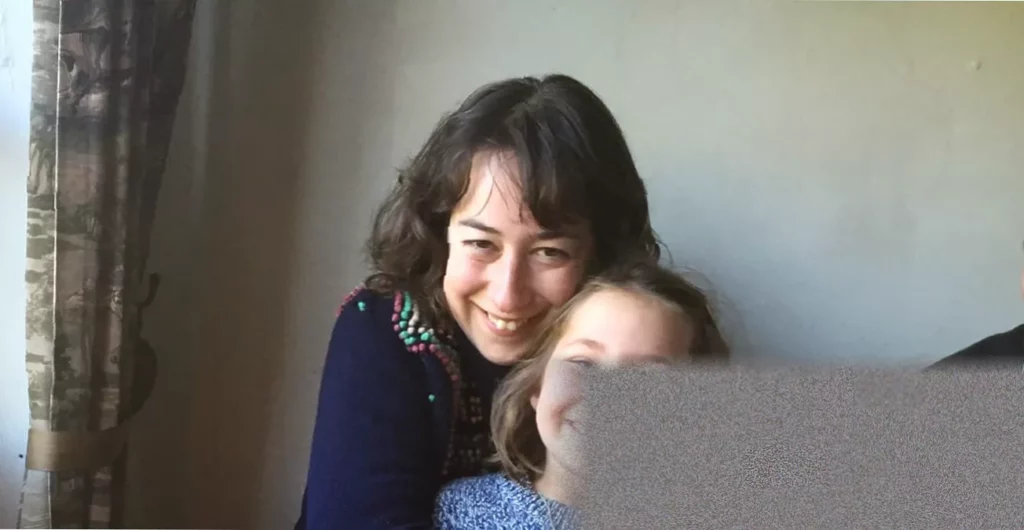
The healthcare campaigner and Guardian senior editor Merope Mills has been appointed a CBE in the King’s birthday honours list for services to patient safety, the highest recognition of a campaign that has reshaped how the NHS responds to patients and families who fear something is going wrong.
The honour reflects Mills’s central role in creating Martha’s Rule, a safety mechanism that gives patients, their relatives and hospital staff a direct route to a rapid second opinion when they have concerns about a person’s care. The rule, named after Mills’s 13-year-old daughter, has been credited with potentially saving hundreds of lives since it was introduced in England in 2024.
Martha’s story
Martha Mills died in 2021 at King’s College Hospital in London after developing sepsis while being treated for a laceration to her pancreas. The injury had occurred in what initially seemed a minor cycling accident. Martha was transferred to the south London hospital because it is one of only three national centres for children with pancreatic trauma; her condition was not considered life-threatening. Sepsis developed, but her parents, Merope Mills and Paul Laity, repeatedly told doctors that Martha was getting worse. Their concerns were not heeded; nursing staff later privately acknowledged she had been at risk of death.
In 2022 a coroner ruled that Martha would probably have survived if doctors had identified the warning signs and moved her to intensive care earlier. That finding propelled her parents into a campaign for a system that would compel doctors to listen when families or staff raise the alarm.
“This is recognition for a campaign fought not just by me but also my husband, Paul, with the help of many excellent doctors and nurses who helped make Martha’s rule a reality,” Mills said. “They knew it was time we saw a shift in the power dynamic in hospitals, and a real chance to give patients and their families more of a voice at the time they need it most.”
How Martha’s Rule works
Martha’s Rule is designed to give patients, families and staff a clear, predictable way to escalate concerns about a deteriorating condition. Anyone can call a hospital-run helpline and request a “rapid review” by a critical care outreach team. The team then carries out an immediate assessment and, where necessary, moves the patient to a higher level of care, changes medication or arranges a transfer to a specialist unit.
The mechanism was first piloted in 143 NHS acute trusts in England from April 2024. It has since been rolled out to all 210 acute facilities in England, with full implementation expected by the 2026/27 financial year. The rule applies in both adult and children’s inpatient settings. King’s College Hospital, where Martha was treated, was among the first hospitals to adopt it.
Mills has described her hope that the rule will “alter medical culture: to give patients a little more power, to encourage listening on the part of medical professionals, and to normalise the idea that even the grandest of doctors should welcome being challenged.”
Impact and statistics
NHS England data collected from the start of the pilot shows the rule is already producing measurable results. Between September 2024 and February 2026, the helplines received 12,301 calls. Of those, 524 adults and children were moved to intensive care, high-dependency units, specialist hospitals or specialist wards – interventions that NHS England says potentially saved their lives. A separate report from March 2026 estimated that more than 400 lives may have been saved during the period.
The majority of calls – around three-quarters – have been made by families or patients themselves, highlighting the rule’s success in empowering people who might otherwise have been dismissed. More than 1,000 NHS staff have also used the helpline to flag rapid deterioration in patients they were caring for.
In the first six months of the pilot, 2,389 calls resulted in 129 potentially life-saving interventions, ranging from transfers to critical care and specialist services to changes in medication. Between September 2024 and December 2025, the total number of calls had reached 10,119.
Wes Streeting, the Health Secretary, said last month: “Martha’s parents have fought tirelessly to turn the most unimaginable grief into something that is genuinely changing how our NHS works. Merope and Paul pushed for a practical change that puts patients and families at the heart of care – and it’s one that is already having a life-saving impact. That takes extraordinary courage, and the NHS owes them an enormous debt of gratitude. The NHS is changing its culture and putting patient safety at its heart. Change isn’t always easy, but Martha’s rule is proof that it can be done.”
In a statement about the award, Mills noted that NHS statistics suggest the rule may have saved more than 500 lives since 2024. “Occasionally, I hear from people who used it and saw significant changes in treatment or other life-saving interventions after making a Martha’s rule call,” she said. “There is still so much that can be done to make our healthcare safer. The number of preventable deaths like Martha’s remains shockingly high. Apart from the devastation it causes families like ours, it costs the NHS billions in compensation and treating complications that result from mistakes.”
A survey conducted in September 2025 found that 32% of the public were aware of Martha’s Rule, with awareness higher among those with higher education. Similar patient safety measures already exist in Australia, Denmark, Scotland and the United States.
Beyond the honours list, Mills’s campaigning has earned her recognition as one of Good Housekeeping’s Women of the Year in 2023 and a place on The Independent’s list of 50 most influential women in 2024. Before her advocacy work, she held a series of senior editorial roles at The Guardian, including US west coast editor and editor of the Saturday magazine, and is a three-time winner of the British Society for Magazine Editors’ Editor of the Year award.
The CBE, she said, “is recognition for a campaign fought not just by me but also my husband, Paul, with the help of many excellent doctors and nurses who helped make Martha’s rule a reality.”