

St Helier Hospital’s main building, constructed in 1940, is older than the National Health Service itself – a fact that has become a pressing concern for patient safety, according to the Care Quality Commission (CQC). The regulator’s latest inspection, which also assessed the adjoining Queen Mary’s Hospital for Children on the same Wrythe Lane site, warned that the ageing estate is having a direct and negative impact on the care patients receive.
Ageing Infrastructure Taking Toll on Patient Care
The hospital’s 1940s fabric – originally designed in a modernist style by Saxon Snell & Phillips and painted green to avoid detection by German bombers during the Second World War – now presents serious clinical risks. CQC inspectors found that some operating theatres are cluttered and that staff are forced to use the same routes for clean and contaminated areas, raising the risk of infection. The ageing infrastructure is not merely an aesthetic issue: it undermines the basic safety protocols that modern healthcare demands.
This physical deterioration is compounded by severe overcrowding in the emergency department. The A&E unit, originally designed to accommodate 24 patients, routinely sees around 250 people per day – more than ten times its intended capacity. The consequences, documented by the CQC, include patients being treated on trolleys in corridors, where safety during an evacuation is compromised. In some cases, patients have had to use urine bottles behind inadequate screens, and confidential conversations could be overheard. Recent NHS data ranks the Epsom and St Helier University Hospitals Trust among the worst in England and Wales for corridor care.
Extended waits have become a grim reality. Between June and November 2025, patients spent an average of nearly 25 hours in the emergency department. One mental health patient reportedly waited up to 160 hours in a recliner chair before being transferred to specialist care. The broader picture is stark: a report from the Royal College of Emergency Medicine (RCEM) estimates that more than 300 people per week died in English A&E departments in 2025 as a direct result of excessive waiting times and overcrowding. The RCEM attributes this to “exit block” – the inability to move patients out of emergency care because the rest of the hospital is full – a problem that has normalised the treatment of patients in corridors and other non-designated spaces, compromising privacy, dignity and clinical safety.
£57m Expansion Plans and Other Hospital Details
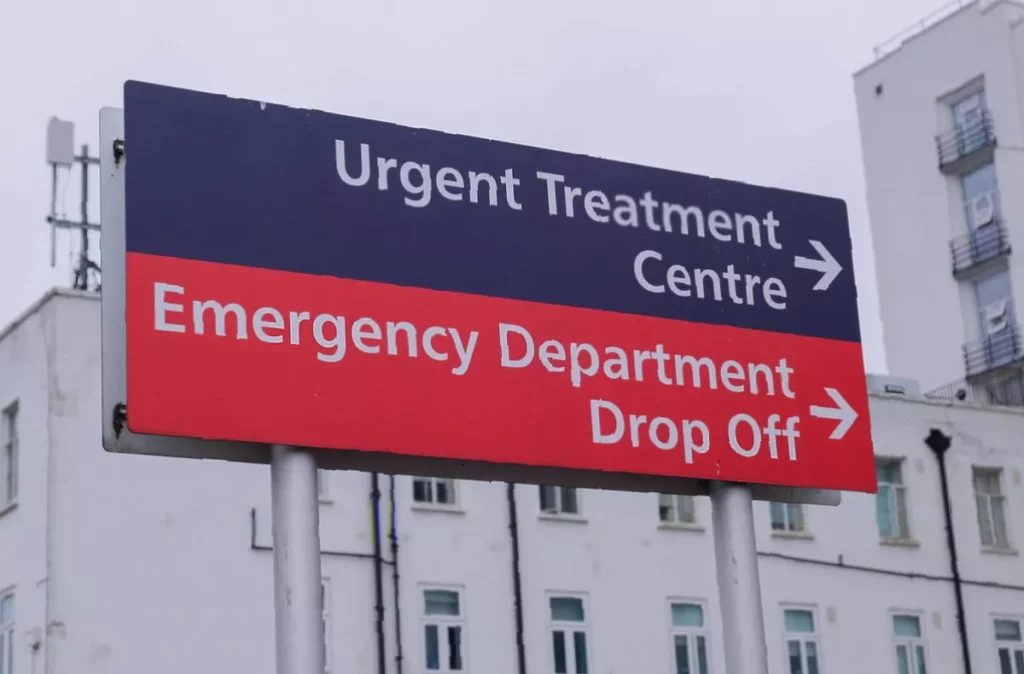
In response to these pressures, St Helier Hospital has secured up to £57 million in funding from NHS London for a major expansion and modernisation of its Emergency Department. Subject to approvals, construction is expected to begin in spring 2027, with phased work to ensure continued patient care. The project will include a larger A&E department with an improved layout, a new Urgent Treatment Centre to speed up patient flow, expanded Same Day Emergency Care services to avoid unnecessary overnight stays, and upgraded infrastructure to improve reliability. The investment is designed to support the hospital for the next decade and beyond, ahead of the planned Specialist Emergency Care Hospital in Sutton.
St Helier itself has a long and layered history. Commissioned in 1934, it received its first patients in February 1941, during the Second World War. It joined the NHS in 1948 and later became the site of the UK’s first kidney transplant in 1974. The hospital became part of the Epsom and St Helier University Hospitals NHS Trust in 1999. The adjacent Queen Mary’s Hospital for Children, which shared the same site, originated as the Southern Hospital in 1908 and was renamed in 1915 after a visit from Queen Mary. It was the first comprehensive children’s hospital in the UK and, by the late 1970s, the largest in Europe. Services were transferred to St Helier in 1993, and the children’s hospital subsequently closed.
Despite the injection of capital, the hospital faces a series of deeper challenges. The UK government’s New Hospital Programme, originally intended to deliver 40 new hospitals by 2030, has been delayed until 2045-46, with a revised plan for 46 hospitals costing £60 billion. Several hospitals built with Reinforced Autoclaved Aerated Concrete (RAAC) are still awaiting replacement, with some not expected to be completed until 2032-33. Historical underinvestment in capital infrastructure remains a significant issue, and the Private Finance Initiative (PFI) model – used for many major hospital projects in the past – has drawn criticism for its long-term costs.
Separate from the estate concerns, St Helier Hospital has also faced scrutiny over patient safety and workplace culture. In a recent legal case, the hospital was found to have acted unlawfully by stopping life-sustaining dialysis treatment for a patient without proper judicial oversight. Separately, a CQC report identified bullying and discrimination from leaders in surgery services at the hospital, a finding that could affect staff morale and the safe delivery of care.
In April 2026, Mat Shaw took over as the new Chief Executive of the St George’s, Epsom and St Helier University Hospitals and Health Group, vowing to focus on high-quality care and reducing health inequalities. The trust – which also includes Epsom and Sutton hospitals – now faces the dual task of modernising an estate that predates the NHS itself while addressing the systemic overcrowding and cultural issues that have drawn repeated criticism from regulators.