

Two unfolding outbreaks continue to command global attention. As a hantavirus outbreak tied to a cruise ship appears to be petering out, Ebola cases continue to mount in Africa. Alongside them have emerged familiar artifacts of the Covid era: dashboards, trackers, maps, risk estimates, and a polarising mix of alarming and dismissive takes. Once again, we can watch disease spread in almost real time. Yet despite all the information, many people are left asking the same questions: what can I trust? How bad is this, really? What should I do? Data does not speak for itself, and the infrastructure that once helped us interpret it has collapsed.
The collapse of interpretive infrastructure
Rewind to 2014, when the last major Ebola outbreak dominated headlines. Most of us encountered that crisis through journalists and public health officials who helped us interpret complex information, providing important details, acknowledging caveats, and connecting relative risks to appropriate actions. By 2020, those supports were already weakening. The Covid-19 pandemic turned millions of people into direct consumers of data dashboards, statistical models and risk calculations. The Johns Hopkins dashboard alone received billions of data requests a day. The pandemic also turned social media into a machine for stripping numbers of context and recirculating them as certainty. We had never had more access to information, or less help making sense of it. Since then, the interpretive infrastructure has only continued to fragment and collapse.
Today’s high-profile outbreaks will eventually fade. But more are coming. Researchers put the odds at greater than one in five for another pandemic killing at least 25 million people within the next decade. Meanwhile, we are already dealing with persistent measles outbreaks across parts of the US and the world – a disease so contagious that nine out of 10 unvaccinated people exposed will contract it, and one for which we have effective prevention. The challenge there is largely one of communication.
Erosion of credible channels
Deep cuts at the US Centers for Disease Control and Prevention (CDC), the Department of Health and Human Services (HHS) and the National Institutes of Health (NIH), plus the dismantling of the US Agency for International Development (USAID) and the country’s withdrawal from the World Health Organization (WHO), have undermined systems that track and respond to infectious disease. A poll in October 2025 indicated that trust in the CDC had dropped to 54 per cent from 66 per cent in December 2024, and confidence in the agency has seen a marked decline since February 2020. This erosion of trust is linked to perceptions that administration policies have made the country less healthy. Funding cuts have also affected humanitarian operations in the Democratic Republic of the Congo, where an outbreak of the Bundibugyo strain of Ebola is ongoing – a rare form of the virus for which there are no licensed vaccines or targeted treatments. By June 3, 2026, 598 confirmed cases and 101 deaths had been reported in Ituri, North Kivu, and South Kivu provinces, and the WHO declared it a Public Health Emergency of International Concern (PHEIC).
Less discussed is the parallel gutting of communication capacity within those organisations and the concurrent demise of local and national newsrooms. The US newspaper industry has lost more than three-quarters of its jobs in the past two decades. As those channels have eroded, people have grown more reliant on rapid, context-thin streams of information on social media feeds and AI-generated summaries. Social media rewards certainty, not the nuance of relative versus absolute risk or the transmission dynamics of a virus. AI’s confident-sounding summaries may, too, omit the very caveats that determine whether a statistic is meaningful or misleading. This problem runs deeper than conspiracy theories, although a vacuum of trustworthy information does give misinformation room to spread.
Here’s my explainer on log scales: https://t.co/yKtpVgTDad
— John Burn-Murdoch (@jburnmurdoch) March 14, 2020
There is no returning to the old media landscape. But some of what has been lost can be restored. Investing in original reporting is a necessary foundation. As the New York Times publisher AG Sulzberger recently argued, AI products rely on journalism – without strong reporting, they will eventually have little of value to synthesise. Communication teams need rebuilding, too. One underappreciated consequence of US withdrawal from the WHO is that the country stepped away from one of the world’s primary efforts to coordinate health messaging. Before ties were cut, the WHO had begun partnering with platforms such as TikTok to reach wider audiences, part of a year-long collaboration to provide reliable health information through its “Fides” network of health influencers. TikTok also donated $3m to support WHO’s work on destigmatising mental health.
Scientists, doctors and other trusted voices can also do more to communicate directly with the public. This worked during Covid, when researchers used social media to walk people through concepts such as the logarithmic scale and “flattening the curve”. One study found that short videos by doctors and nurses ahead of the winter holidays reduced travel and subsequent Covid infections. At the centre of the Ebola outbreak in the Democratic Republic of Congo, a radio station has dedicated daily programming to answering questions and correcting rumours about the virus, in hopes of winning over residents who have grown distrustful of authorities.
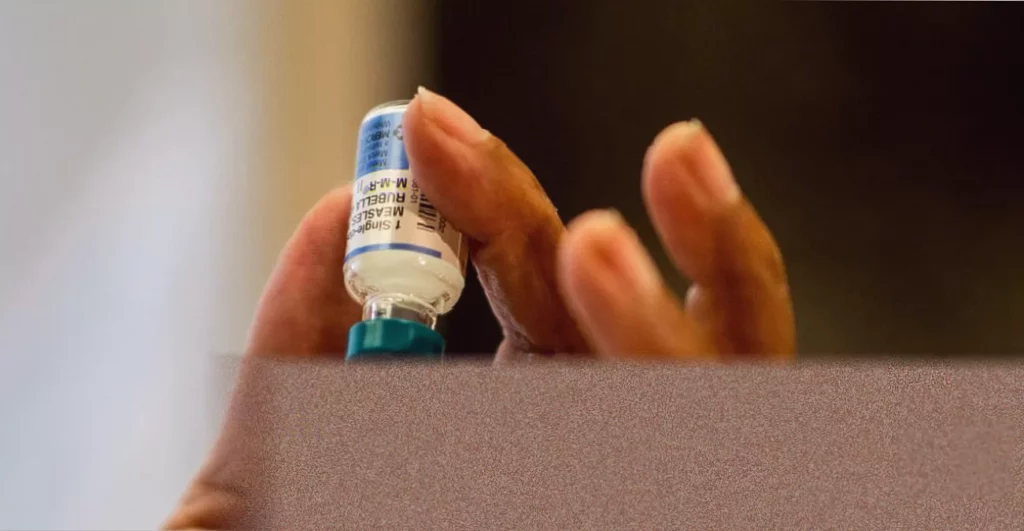
Measles offers a stark illustration. As of April 24, 2025, 800 confirmed cases had been reported in the US – a 180 per cent increase compared to the entirety of 2024 – and by the end of 2025, 2,288 confirmed cases had been recorded, associated with 48 outbreaks. Globally, measles cases surged to 11 million in 2024, a substantial increase from pre-pandemic levels. The WHO Region of the Americas saw an 11-fold increase in early 2025 compared to the same period in 2024, with 2,318 cases and three deaths reported. Europe has also reported a significant increase, with Romania particularly affected due to low vaccination rates. The US measles elimination status, achieved in 2000, is now in “major jeopardy”, and Canada has already lost its elimination status. The disease is the world’s most contagious virus: a single patient can spread it to up to 18 unprotected people. Yet vaccination has prevented an estimated 93.7 million deaths worldwide since 1974, including 6.2 million in the Americas. The problem is not the science – it is the communication gap.
That gap becomes more dangerous as the US prepares to host millions of visitors for the 2026 FIFA World Cup. Experts have raised concerns about the potential spread of not only measles but also dengue, chikungunya, respiratory viruses and sexually transmitted infections. Public health officials are implementing enhanced surveillance measures including wastewater testing and monitoring hospital visits and social media. The Pan American Health Organization has issued warnings regarding measles. All this comes at a time when US public health agencies are described as “budget-strapped” and facing staffing challenges.
Calibrated concern and response
Good risk communication helps people understand what actions are proportionate to their actual risk – whether that means getting vaccinated, monitoring symptoms, avoiding close contact or resisting the urge to panic. Covid showed what happens when officials translate uncertainty into rules without clear reasoning. In February 2020, the US surgeon general tweeted: “Seriously people – STOP BUYING MASKS!” He stated they were not effective in preventing the public from catching Covid. Two months later, when the CDC recommended face coverings, people were less willing to trust the message, and the messenger. Officials also marked out 6ft intervals with precision, closed beaches and trails without always distinguishing risks of crowded gatherings versus solitary outdoor time, and urged intensive surface cleaning after shared indoor air appeared to be the greater threat.
Preliminary investigations conducted by the Chinese authorities have found no clear evidence of human-to-human transmission of the novel #coronavirus (2019-nCoV) identified in #Wuhan, #China🇨🇳. pic.twitter.com/Fnl5P877VG
— World Health Organization (WHO) (@WHO) January 14, 2020
The hantavirus response, too, has included mixed messages. Even as officials maintained that the virus required prolonged close contact to spread, passengers from the same cruise ship faced strikingly different protocols: some placed in quarantine, others asked to self-isolate at home. The divergent reactions reflected genuine uncertainty about whether the Andes strain could spread across a room and whether people are infectious before symptoms appear. But that uncertainty was rarely communicated explicitly, leaving people to draw their own conclusions from seemingly arbitrary rules. Inconsistency can look like incompetence, and it can invite distrust. Research from Covid and earlier outbreaks linked greater trust in public institutions, medical experts, and media with greater adherence to public health guidance and lower anxiety.
Framing shapes what people understand – and misunderstand. During Covid, some messengers cited data showing higher death rates among vaccinated people than unvaccinated people. Obscured was the fact that older adults were both more likely to be vaccinated and more likely to die from Covid. The relationship reversed once broken down by age. Early hantavirus statistics carry a similar blind spot: commonly cited death rates of 30 per cent to 40 per cent may overstate the true risk, since milder infections may go undiagnosed and shrink the denominator. Geography can disappear from the picture, too: a region may hit the vaccination threshold for herd immunity on paper while unprotected pockets within it act as kindling. Scientists believe this local variability is driving measles resurgence, yet that nuance rarely reaches the public.
Even technical definitions can mislead. The WHO’s declaration of the current Ebola outbreak as a PHEIC prompted headlines suggesting global danger. In reality, the designation is a mechanism for mobilising resources and coordination. A sharp drop in official Ebola case counts in early June looked like good news but actually reflected a definitional shift from suspected to confirmed cases; confirmed counts have since continued to rise. Explaining such terms up front, and acknowledging uncertainty, makes later revisions look less like reversals.
All of this is compounded by how data currently travels. The most trusted Covid data dashboards specified “confirmed cases” and “confirmed deaths”, provided both absolute and relative case counts, explained methodologies and annotated anomalies. But even the best ones could not control what happened next: a figure that carried caveats on a dashboard could lose them the moment it hit a social feed.
Strong surveillance systems and coordinated responses will not be enough for the next outbreak. We also need to re-establish systems that help people understand what the evidence means – and what to do with it.