

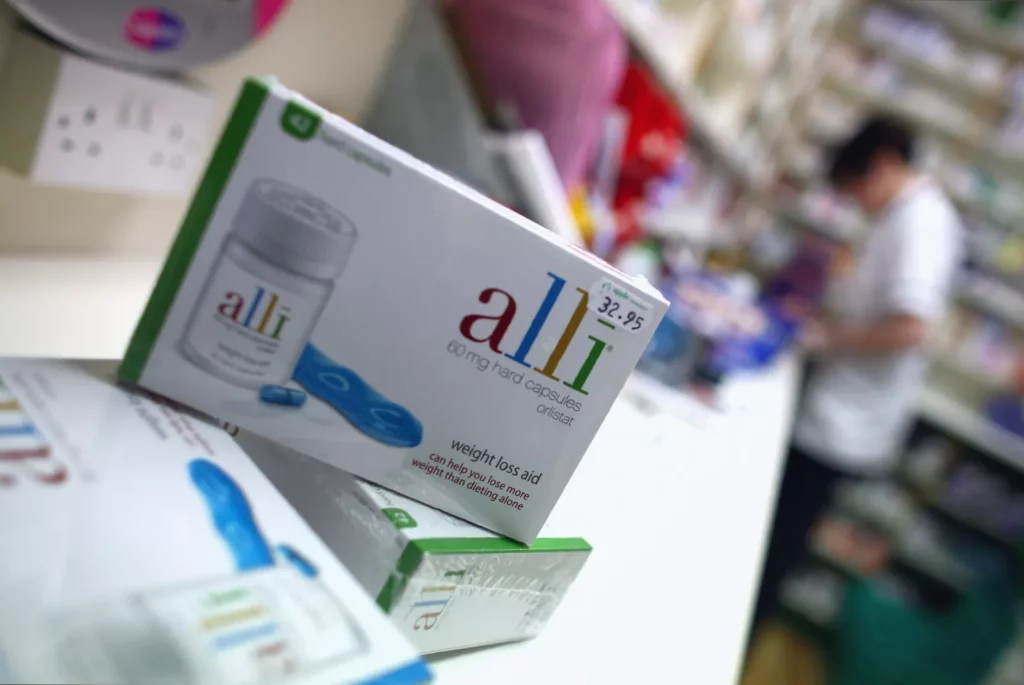
The U.S. Food and Drug Administration (FDA) has issued a fresh warning to consumers about the risk of kidney problems linked to the over-the-counter weight loss pill Alli, prompting changes to the drug’s labelling that urge users to be alert for specific symptoms of kidney injury.
The regulator said it had identified 12 cases of severe kidney complications associated with orlistat – the active ingredient in Alli and its prescription-strength counterpart, Xenical – between the drug’s initial approval in February 2007 and December 2023. Of those 12 cases, eight required hospitalisation and five needed dialysis. The median age of affected patients was 61, with seven women and five men among them, and kidney injury typically emerged after a median of 2.5 months of using the drug.
Under the updated labelling, the FDA is advising anyone with a history of kidney disease or kidney stones to consult a doctor before taking Alli. Consumers are told to stop using the drug and seek medical advice if they develop back or groin pain, painful urination, blood in the urine, swelling in the feet or legs, or less frequent urination. While mild cases of acute kidney injury (AKI) may be reversible, the agency warned that untreated cases can be fatal. Between 2018 and 2023, 569,877 deaths globally were related to acute kidney injury, researchers reported last year.
The FDA’s re-evaluation was prompted by postmarketing safety reports of AKI and calcium oxalate kidney stones. The proposed mechanism involves a condition called enteric hyperoxaluria. Orlistat works by blocking the digestive tract enzyme lipase, preventing around 30 per cent of dietary fat from being absorbed in the intestines. When that unabsorbed fat forms calcium soaps, less free calcium is available in the gut to bind to oxalate. As a result, more oxalate is absorbed into the bloodstream, leading to high levels in the urine. This supersaturation can cause calcium oxalate crystals to precipitate in the renal tubules, forming kidney stones (calcium oxalate nephrolithiasis) and potentially triggering acute kidney injury (oxalate nephropathy).
The risk does not appear to be dose-dependent, the FDA noted. The 60 milligram over-the-counter capsules of Alli and the 120 mg prescription capsules of Xenical inhibit fat absorption by a difference of only about 5 per cent, meaning both versions carry the same potential for kidney harm. Alli, which was the first OTC weight loss pill approved by the FDA in 2007, can be taken up to three times a day.
Past safety concerns and counterfeit issues
This is not the first time Alli has faced scrutiny for adverse events. In 2010, the FDA published a safety review after rare reports of severe liver injury linked to orlistat. The agency identified 13 postmarketing cases of serious liver damage, including two deaths and three liver transplants, but found no conclusive evidence confirming orlistat as the cause, according to the Mayo Clinic. At that time, patients were advised to report symptoms such as itching, jaundice, dark urine, loss of appetite or light-coloured stools.
There has also been a persistent problem with counterfeit versions of Alli that contain sibutramine, an appetite suppressant originally developed by Boots in the UK in 1988 and marketed as Reductil and Meridia. Sibutramine was withdrawn from most markets, including the UK, in 2010 after the SCOUT study linked it to an increased risk of heart attack and stroke. In the UK, around 86,000 patients were using the drug before its withdrawal. The FDA has warned that counterfeit Alli containing sibutramine poses a serious safety risk.
Manufacturer response
GSK, which originally brought Alli to market, directed inquiries to Haleon, the British multinational consumer healthcare company that was spun off from GSK in July 2022 and is headquartered in Weybridge, England. A spokesperson for Haleon confirmed that the FDA required updates to harmonise labelling for all FDA-approved orlistat medicines, including OTC Alli and higher-strength prescription versions. “Alli labelling has always included a precautionary statement related to use by consumers with kidney stones,” the spokesperson said. “The newly-required updates expand the existing warning to include kidney disease, and provide additional detail to help consumers identify the signs and symptoms of potential kidney injury, a rare side effect for those who took orlistat over-the-counter or prescription medicines.” The company said the changes reflected its commitment to transparency and patient safety.
Comparison with newer weight loss drugs
Alli belongs to an older generation of weight loss treatments that predate the current boom in GLP-1 drugs. The active ingredient in Alli, orlistat, works locally in the gut to reduce fat absorption. In contrast, GLP-1 drugs such as semaglutide (the active ingredient in Ozempic and Wegovy) mimic the body’s GLP-1 hormone to suppress appetite and are generally considered more effective for sustained weight loss. GLP-1 injections are taken once a week, while the pill versions are taken once daily.
Newer GLP-1 pills have recently become widely available. Eli Lilly’s Foundayo and Novo Nordisk’s Wegovy pill are among those now reaching consumers. Novo Nordisk says at least three million people have received prescriptions for the Wegovy pill since January, while Eli Lilly told CNBC in April that more than 20,000 people were taking Foundayo.
In England, data from 2024 showed the rate of AKI episodes was 13,345 per million population. Mortality remains highest among those who develop AKI during a hospital stay: the UK Kidney Association reports that 43 per cent of people with AKI stage 3 die within 30 days. In 2018, 18 per cent of people with an AKI episode died within 30 days of the first alert. AKI can result from dehydration, infection, certain medications such as NSAIDs and some antibiotics, toxins, and underlying conditions like diabetes, hypertension and heart failure. Symptoms of AKI can include reduced urine output, fluid buildup causing swelling, tiredness, confusion, nausea, chest pain, irregular heartbeat, itching, and in severe cases, seizures or coma.