

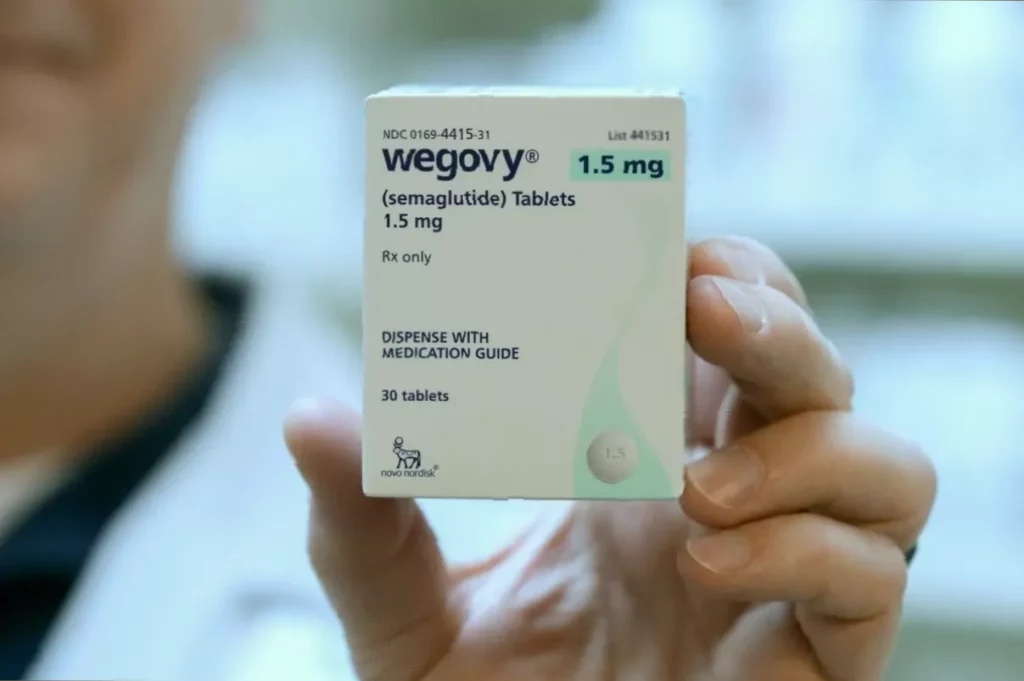
Britain first in Europe to approve oral Wegovy tablet
Britain has become the first country in Europe to authorise an oral tablet form of the weight-loss drug semaglutide, marketed as Wegovy, in a move that marks a significant shift in obesity treatment options. The Medicines and Healthcare products Regulatory Agency (MHRA) granted approval yesterday for what is the UK’s first GLP-1 receptor agonist pill designed specifically for weight management, offering patients an alternative to injectable versions that have faced persistent supply challenges.
Julian Beach, the MHRA’s Executive Director of Healthcare Quality and Access, said: “Having met the MHRA’s rigorous standards of safety, quality and effectiveness, the semaglutide tablet has been approved in the UK for weight loss and weight management.” He added that, like all GLP-1 receptor agonists, the medication is prescription-only and cannot be bought over the counter. The UK now joins the United States and the United Arab Emirates as the third country globally to authorise the oral formulation.
Who can access the weight-loss tablet?
The tablet is not yet available through the National Health Service. Its availability on the NHS depends on a forthcoming assessment by the National Institute for Health and Care Excellence (NICE), which will evaluate whether the drug represents value for public money. For now, patients will be able to obtain the tablet only via private prescription, though pricing details have yet to be confirmed. Private prescriptions for Wegovy injections currently range from £90 to £300 per month, and the US list price for the pills has been reported at roughly £110 per month for the starting dose.
The eligibility criteria for the oral tablet align with those already established for the injectable form. Adults living with obesity — defined as a Body Mass Index of 30 or greater — may be prescribed the medication. Those carrying excess weight with a BMI between 27 and 30 also qualify, provided they suffer from at least one health condition linked to their weight. For NHS use of the injectable form, NICE currently recommends a higher threshold — a BMI of at least 35, or exceptionally 30 to 34.9 if patients meet criteria for tier 3 weight-management services. Lower BMI thresholds are recommended for individuals from South Asian, Chinese, Black African or Caribbean family backgrounds, reflecting the increased metabolic risks in these populations. The tablet’s eligibility may align with these criteria or be determined by NICE’s own evaluation.
How the drug mimics a natural hormone to reduce appetite
The drug works by replicating the effects of glucagon-like peptide-1 (GLP-1), a hormone naturally produced in the gut after meals. By targeting brain regions responsible for appetite control, semaglutide helps individuals experience prolonged satiety, diminish hunger pangs and reduce food cravings. This mechanism supports a reduction in calorie intake when used alongside appropriate dietary changes — an essential component of treatment, since the tablet is not intended as a standalone solution. Patients must combine it with a calorie-reduced diet and greater physical activity to achieve optimal results, reflecting the medical consensus that pharmaceutical interventions work most effectively when paired with meaningful lifestyle modifications.

Clinical trials have demonstrated significant weight loss with the oral formulation. One study reported an average of 13 per cent weight loss in adults with obesity, while another showed an average of 16.6 per cent weight loss over 64 weeks with the 25mg tablet. By comparison, the injectable form of Wegovy led to an average of 16.9 per cent weight loss in similar trials, and some studies have recorded losses of up to 20.7 per cent over 12 months when combined with lifestyle changes. Researchers note that the injectable version may produce more consistent results due to more reliable absorption, but the oral formulation has achieved comparable outcomes in trials.
The tablet is taken once daily, following a strict schedule to ensure optimal absorption. Patients must take it whole on an empty stomach after fasting for at least eight hours, with a sip of water, and then wait at least 30 minutes before consuming any food or drink — a routine that can present practical challenges compared with the weekly injection, which requires no coordination around meals. Treatment begins at a daily dose of 1.5mg, with incremental increases to 4mg, then 9mg, and finally 25mg. Each dosage level must be maintained for a minimum of four weeks before escalation. Patients already receiving the 2.4mg weekly injection through private healthcare may transition directly to the maximum 25mg daily tablet, though the 7.2mg injection dose may equate to a lower effective dose when switching because of different absorption rates.
As with other GLP-1 receptor agonists, gastrointestinal issues are the most frequently reported side effects — including nausea, diarrhoea, constipation and vomiting. Headache, fatigue and stomach pain are also common. Side effects are more likely at higher doses and can return or worsen with dose increases, but most are mild and tend to resolve as the body adjusts. Staying hydrated, eating small meals and following dietary guidelines can help manage symptoms. Rare but serious risks include pancreatitis, gallbladder inflammation or gallstones, and a very small risk of thyroid cancer in individuals with a family history. Wegovy alone does not often cause low blood sugar, but the risk increases when taken with other diabetes medications such as insulin or sulphonylureas. Patients experiencing side effects are encouraged to report them to the MHRA Yellow Card scheme.
The oral semaglutide tablet is distinct from the existing product Rybelsus, which is also approved in the UK but only licensed for type 2 diabetes at a lower dose and not for weight management. Meanwhile, Eli Lilly is developing another oral GLP-1 receptor agonist called orforglipron, which is a small molecule rather than a peptide and could potentially be cheaper to manufacture. NICE guidelines emphasise the importance of addressing weight stigma and using non-stigmatising language when discussing weight management, and advocate a tailored, holistic approach that considers individual circumstances, comorbidities and lifestyle factors alongside medication. The tablet remains unavailable through the NHS pending NICE’s assessment.