

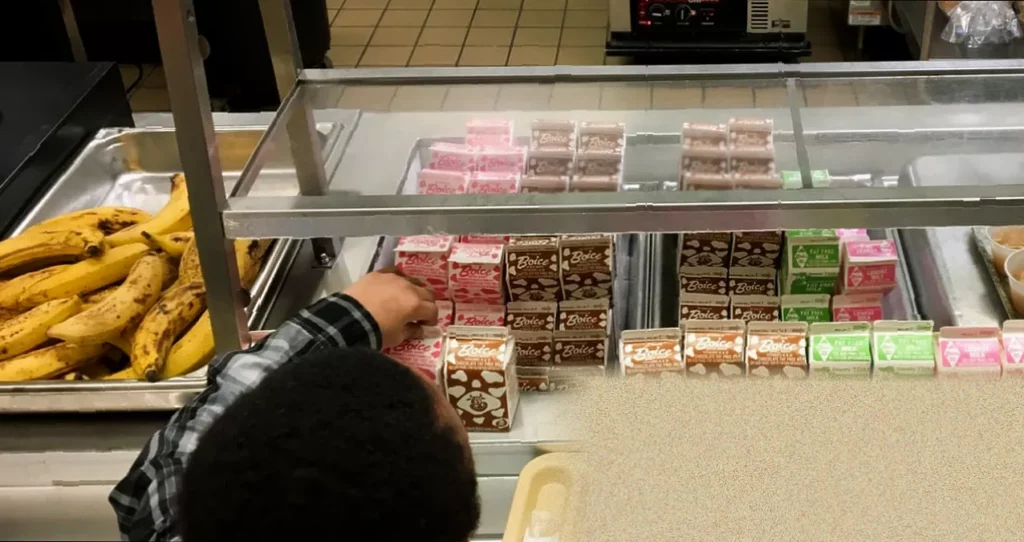
US schools may soon be forced to remove bananas from their menus, as proposed changes to the Farm Bill threaten to upend the way cafeterias source their fruit. “School districts are saying, ‘I can’t get you bananas because they’re not American,'” said Donna Martin, a school nutrition consultant from Georgia. The warning comes as the House of Representatives has passed a version of the Farm Bill that would dramatically accelerate restrictions on foreign-produced foods served to children.
The core of the issue lies in the “Buy American” mandate, first added to the National School Lunch Act in 1998. That law originally required schools to purchase US products “to the maximum extent possible,” a phrase that went undefined for years. Exceptions were carved out for foods considered “non-available” domestically — a list that includes bananas, mandarin oranges, canned pineapple, coconut and bulk spices — as well as for foreign-sourced items that cost less than their domestic equivalents.
In 2024, the Buy American provision was amended to introduce a phased approach: a 10% cap on non-US food purchases through 2026, reducing to 8% until mid-2031, and finally to 5% by the 2031-32 school year. That gradual reduction, said Erin Ogden, policy associate for federal child nutrition programs at the Center for Science in the Public Interest (CSPI), was designed to “allow more time to gather current information on what sorts of foods school nutrition directors couldn’t access from American producers,” with the data ideally shaping “USDA strategy with growers/producers on how to eventually meet this demand.”
The House version of the Farm Bill, however, abolishes that phase-in entirely. Instead, it knocks the cap straight down to 5% for the next full school calendar year after the bill is enacted — potentially as early as the 2026-27 academic year. Karen Spangler, policy director at the National Farm to School Network, described the move as “nuts”, pointing out that school food professionals may plan meals and order ingredients up to a full year in advance.
The impact is already being felt. Jessica Shelley, director of student dining services for Cincinnati public schools, said she will have to remove bananas from her lunch programme next year and cut breakfast servings of the fruit to twice a week. Bananas are a particular flashpoint because the US is the world’s largest importer of the fruit, sourcing almost all of its supply from Central and South America. In 2025, the US imported $3.2 billion worth of bananas, with Guatemala, Ecuador, Costa Rica, Colombia and Honduras as the primary suppliers. Bananas only grow in tropical climates, making domestic production all but impossible. Yet under the new rules, even items on the “non-available” list count towards the overall 5% cap.
The House bill does propose that the USDA create its own list of unavailable products that would not count towards the cap, potentially offering a lifeline for bananas and other items. But Spangler fears this would create a confusing two-tiered system that risks school nutrition directors unwittingly running “afoul of the rule”.
Beyond bananas: a wider menu in jeopardy
The restrictions do not stop at bananas. “We have to serve kids a dark green vegetable, and broccoli is one of the great vegetables we can do,” said Martin. “But you can’t get American frozen broccoli. A lot of the fish we get is not American. Diced peaches are from China.” In many cases, the problem is not that these foods cannot be sourced from US producers, but that the domestic alternatives are prohibitively expensive. Distributors selling to schools must keep their own costs low and supply constant, and foreign-sourced items are often the most affordable option.
The changes threaten to undermine decades of effort to improve the nutritional quality of school meals. The National School Lunch Program and the School Breakfast Program together serve billions of meals to US children every year. In the 2021-22 school year alone, the lunch programme provided reimbursements for approximately 4.86 billion lunches, supported by a federal budget of $16.3 billion, while the breakfast programme served around 2.55 billion breakfasts with a budget of $5.75 billion. For many children, these are the healthiest meals they will eat on any given day.
Some school systems have moved well beyond the era of canned green beans and tasteless mac and cheese, offering dishes such as overnight oats topped with shredded carrots and coconut, scratch-cooked salmon burgers, and local root vegetables roasted with herbs and spices. The proposed Buy American changes put such innovations at risk by constraining the variety of fresh produce that can be procured.
Planning chaos and administrative burden
For school nutrition directors, the accelerated cap reduction translates directly into more work. They are responsible for documenting compliance with the Buy American rule, and the new system — with different definitions of what “counts” and an abruptly tighter cap — creates what Spangler called “an unnecessary burden”. “There’s a lack of transparency in the food system,” she said. “It’s tough to ask them to single-handedly turn that around or document each step of it on top of doing their regular jobs.”
The situation is compounded by other policy moves from the Trump administration. New dietary guidelines centre animal protein, which could eventually affect what school nutrition directors must serve at breakfast and lunch. Meat is a budget-buster, said advocates, and there is no federal plan to increase the amount of money allocated for school meal purchases. Health secretary Robert F Kennedy Jr has called for schools to serve “real”, not ultra-processed foods, but many schools lack full-service kitchens for scratch cooking, and USDA grants to buy equipment are too scant to meet the need.
In March 2025, the USDA terminated the Local Food for Schools (LFS) program, which had allocated $660 million to help schools and childcare facilities source fresh products from local farmers. The termination has already had consequences: schoolchildren who might have looked forward to fresh local strawberries in May are now switching to frozen berries. Spangler noted that this is “a palate change, and school nutrition directors are at the mercy of what kids like and don’t like. It’s a big lift to put forward a menu that kids — the most notoriously picky eaters — will be enthusiastic about.” The loss of the LFS program also created a financial strain for farmers who suddenly found themselves without a once-reliable market.
“School nutrition directors completely, 100% support American and local growers — in fact, we invest almost $6m into purchasing local produce and items from Ohio Proud manufacturers,” said Cincinnati’s Shelley, referring to the state programme that promotes locally produced food. “At a time where policy is rightly focused on reducing ultra-processed foods, setting policy that will reduce a school’s ability to procure and serve a variety of fresh fruits and vegetables seems counterintuitive.”
As the Senate gets ready to mark up its version of the Farm Bill this month, Spangler said “there’s definitely an opportunity for them to think meaningfully and critically about what would need to happen to actually reach the goal of, with a few exceptions, sourcing fully domestically. We know for a fact that that includes more support for local purchasing and more support for local producers.”