

A patient locked inside his own body after a brainstem stroke could only communicate by blinking one eyelid. For days, the consultants in the intensive therapy unit and his family had not noticed the intentional nature of the movements and had written him off. It was a speech and language therapist and a nurse who realised he was cognitively intact and could dictate full sentences, one letter at a time. The man had locked-in syndrome, a condition made famous by Jean-Dominique Bauby in The Diving-Bell and the Butterfly. He went on to access specialist inpatient neurorehabilitation and, though he remained a wheelchair user, was able to return to work.
That account, provided by John Swan, a speech and language therapist specialising in stroke and neurorehabilitation from Cheltenham, Gloucestershire, illustrates both the extraordinary capacity of the human brain to retain awareness and the critical importance of early, expert observation. It is one of several personal stories that lay bare the gap between what is possible after severe brain injury and what the system consistently delivers.
A silent conversation in intensive care
Swan noted that the patient’s blinking was initially missed by senior clinicians. His experience echoes that of other survivors and families who describe long battles to be seen, heard and treated. Marcie Shaoul, who suffered a significant head injury seven years ago when she came off a horse at speed, recalled how a prefrontal lobe injury impaired her logic. Yet she now runs two businesses and last year published a book. “The brain is incredibly remarkable and I am in awe of what it achieves each day,” she said, pointing to the gradual healing that allowed her to move from total incapacity to functioning independently.
Linda Leroy, an artist, had a stroke in 2024 while alone in a remote part of the Western Isles. She received no aftercare beyond scans and medication. In confusion, she began drawing the intricate root systems of trees, only to find strange faces appearing on the paper that she could not recognise as her own work. Instinctively she continued, numbering each drawing by the day. Twenty-one months later she is drawing in a way she could not have done before. “I feel a real connection between roots and my neural pathways,” she said, adding that the work has been responsible for her “good-enough recovery.”
Norm Mohamid, who had a stroke at 65 thirteen years ago, said his recovery was helped by early therapeutic interventions and his declared intention to return to work. He had spent 22 years writing disability policy for the Canadian government and believed he would receive more help if still seen as a better investment of health resources. “The first challenge was the goal of bending over and tying the laces of my shoes,” he said. His experience taught him that those not considered employed or employable are less likely to get the attention needed to rejoin active society.
Anna Bauer Ross, who had a major stroke at 36 eighteen years ago, received extensive rehabilitation including physiotherapy, occupational and speech therapy. She relearned to walk, write and speak. But she said she is “maddened” when people ask why neuroplasticity has not helped her further. “Neuroplasticity does not mean your brain repairs everything,” she said. “I’ve honestly spent so much time explaining this to people.”
A system of unequal chances
While these personal accounts demonstrate the brain’s resilience, they also highlight a persistent and damaging feature of care in the UK: the postcode lottery for neurorehabilitation services. Access and quality vary dramatically depending on where a patient lives.
The Fenton family from Hastings, East Sussex, described what they called a “tragic” example. In January 2025, their daughter underwent 11 hours of neurosurgery at a London teaching hospital to remove a brain tumour. After weeks on a post-neurosurgery ward, therapists recommended she be repatriated to a neurorehabilitation centre. “Simply because of the postcode, she was rejected by the nearest centre and repatriated to an acute medical ward at a local hospital,” wrote Dr Jill Fenton and Nick Fenton. She stayed there for weeks before being discharged to the residential care home where she had lived before surgery – a facility not equipped to address her rehabilitation needs. NHS community therapy did not arrive for several weeks and eventually amounted to just six physiotherapy sessions. The family, both in their 70s, are now privately funding additional physiotherapy, a neuro-occupational therapist, hydrotherapy, music and art therapy. More than a year after neurosurgery, an NHS speech and language therapist has seen their daughter and provided guidance on, for example, eating with a fork. A neuropsychology assessment remains outstanding. “We feel NHS managers gave up far too early and have largely left us picking up the pieces,” they said.
The disparity is not an isolated case. Research collated from reports and specialist organisations indicates that only 40% of individuals assessed as requiring specialist rehabilitation actually receive it. The provision of expert neurorehabilitation in the UK is widely described as a postcode lottery, with funding streams that differ between Integrated Care Boards and Clinical Commissioning Groups. The NHS itself is under intense resource pressure. John Swan, the speech and language therapist, said he knows trusts that are making staff redundant to avoid bankruptcy. “The tragedy is that often a little extra spent now can save a greater sum in the future, but many trusts feel they cannot commit to even a small amount of extra spending,” he wrote.
Jonathon O’Brien, from the Department of Occupational Therapy at the University of Liverpool, said the worryingly low intensity of therapy provided in NHS stroke units is due partly to staff shortages. He called for enhanced training in neurophysiology, neuropsychology, musculoskeletal anatomy and human movement, and for a 24/7 approach so that therapists’ recommendations are implemented by nursing and support staff outside therapy hours. “Greater attention to improving what therapists are doing with survivors of acquired brain injuries is needed if patients are to fulfil their recovery potential,” he said.
In London, £5 million was allocated in 2022/23 to establish four Rapid Access Acute Rehabilitation (RAAR) services aimed at reducing waiting lists and facilitating earlier discharge. From April 2025, the commissioning of specialist rehabilitation is being delegated to Integrated Care Boards, with NHS England retaining responsibility for service specifications. Yet for many families, the reality remains that timely, intensive rehabilitation is a matter of luck.
The economic case for more investment is strong. Specialist neurorehabilitation is considered one of the most cost-effective interventions available to the NHS. Studies suggest that early specialist rehabilitation can generate significant long-term savings by reducing reliance on nursing or social care and by increasing the likelihood of a return to paid employment. Some analyses have shown a return on investment within 19 months of discharge. As John Swan noted, “The more independent a patient can become, the less reliant they are on nursing or social care, and the more likely they are to return to paid employment.”
Support organisations such as Headway – The Brain Injury Association, the UK Acquired Brain Injury Forum (UKABIF), SameYou, and the Brain and Spine Foundation provide advice, peer networks and rehabilitation support, but they cannot substitute for a properly funded and equitable NHS service. Many families, like the Fentons, are left to navigate a fragmented system alone, spending their own money on therapies that should be provided as a matter of course.
The brain’s remarkable will to heal
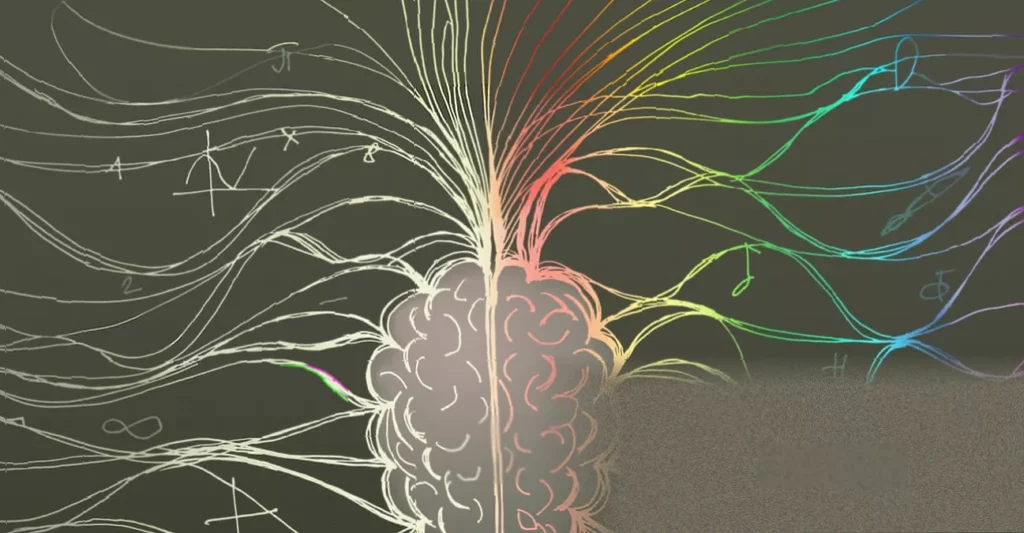
At the heart of recovery from brain injury lies neuroplasticity – the brain’s ability to adapt, rewire and create new neural connections throughout life. It is not a magical process akin to a gecko regrowing a tail, as Anna Bauer Ross pointed out, but a biological mechanism that involves changes in the strength of connections between neurons, the remapping of intact brain areas to compensate for damaged regions, and the sprouting of new connections from surviving neurons.
Rehabilitation strategies are increasingly designed to stimulate these natural repair processes. Repeated, meaningful physical and cognitive tasks, along with consistent practice, are crucial for strengthening neural pathways. The brain’s capacity for neuroplastic change continues throughout life, and there is no specific end date to its ability to restore internal connections. As John Swan, the speech and language therapist, attested, “Vital neuroplasticity continues for months and, in some people I have seen, years at a time.”
Marcie Shaoul’s seven-year journey from total incapacity to running two businesses, and Linda Leroy’s 21 months of daily drawing that produced work she could not have made before the stroke, are testament to the brain’s ongoing capacity for change. Yet as the Fenton family’s experience shows, that potential is only realised when the system provides the right care at the right time.
“We should not give up,” Dr Jill Fenton wrote. But she added the bitter corollary: “Sadly, we feel NHS managers gave up far too early.”