

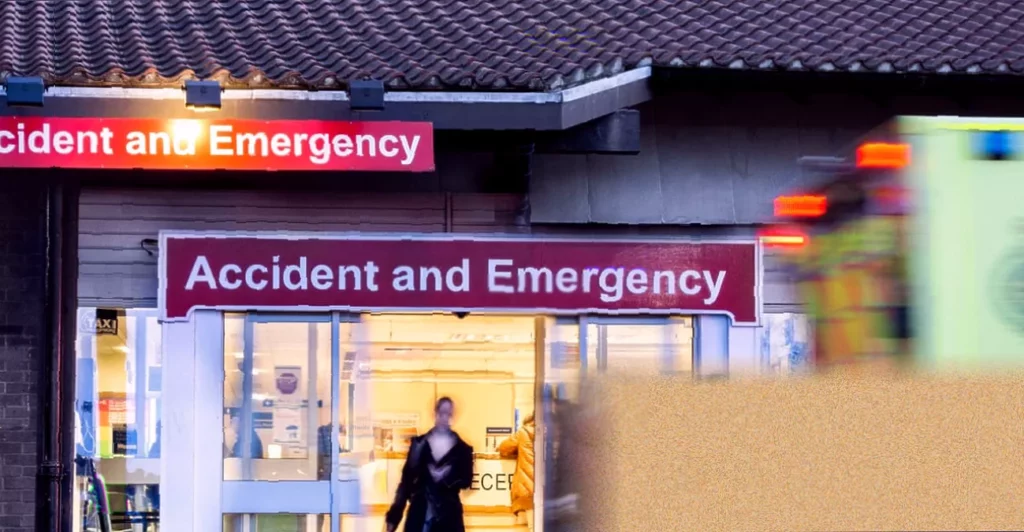
Hospitals in England could soon tell patients with non-urgent complaints to leave A&E and return at a later time, under a major NHS push to tackle chronic overcrowding and avoid the annual winter crisis. The plan, championed by NHS England chief executive Jim Mackey, centres on a “digital triage assessment” already being used by 18 hospitals. Patients who do not need urgent treatment would be redirected to a booked appointment later that day or the next, or referred to a GP, pharmacy, physiotherapist, or mental health services.
Digital triage: how it works
Under the new system, patients arriving at an emergency department enter details of their illness into an online information-gathering system. A&E staff then use that data to assess the condition and decide the best course of action — immediate treatment, a scheduled return, or a community-based referral. NHS England describes the approach as a “hi-tech concierge service” designed to bring more order to departments that are frequently overwhelmed, particularly during winter.
Jim Mackey, speaking at the NHS ConfedExpo conference in Manchester, said he expected “really big change ahead from us in the next few months” and described the shift to more bookable appointments as “a personal obsession of mine”. He added that combining booked slots with digital triage could have an “enormous” beneficial impact on both patients and staff.
Early results from one pilot site, East Lancashire Teaching Hospitals NHS Trust, suggest the tool can dramatically reduce waiting times. According to NHS England, the trust nearly halved average waiting times for A&E patients from 178 minutes to 94 minutes. The trust implemented a new booking model that integrated NHS England’s Streaming and Redirection product with Strata PathWays Digital ED, supplied by Strata Health Solutions. Patients described the new system as “excellent” and said it saved them from “lengthy waits”. NHS England said the change had gone down well with patients, adding that “generally having a better sense of when you’ll be seen, and getting booked into the right service more quickly, is positive”.
The urgency behind the reforms is underscored by data from the Royal College of Emergency Medicine (RCEM). Earlier this week, the college disclosed that more than 1,300 patients a month die in England as a result of A&E overcrowding. Its “State of Emergency Medicine in England” report found that in 2025 an estimated 15,860 excess deaths were associated with long waiting times — a figure that has risen nearly tenfold since 2015. The report also highlighted a direct link between extended A&E waits and an increased risk of death within 30 days. NHS England’s target of admitting, transferring or discharging at least 95% of A&E attendees within four hours has not been met nationally since July 2015; in April 2026 the figure stood at 76.9%. That same year, 496,485 patients waited 24 hours or longer in English A&E departments, down slightly from 489,138 in 2025.
The British Medical Association has pointed to poor patient flow as a key driver of long waits, noting that general and acute bed occupancy has been consistently above 90% since September 2021. Patients often remain in hospital despite being fit for discharge because of a lack of social care capacity. The “Getting It Right First Time” programme has said a 24-hour maximum stay in the emergency department represents a “red-line safety standard”.
Mackey urged all NHS trusts to follow the lead of the 18 hospitals already using digital triage, saying “the big prize for this coming winter is shifting to introducing many more appointments into urgent care”. The initiative is part of a broader NHS strategy that includes creating 40 new same-day emergency care units and urgent treatment centres, establishing 15 mental health crisis assessment centres, and deploying 500 extra ambulances, backed by a £450 million investment. The government has said it aims to make winter 2025/26 “significantly better than recent winters”.
Patient concerns over digital divide
Despite the promise of reduced waiting times, patient groups have warned that the digital-first approach could leave vulnerable people behind. Rachel Power, chief executive of the Patients Association, said digital triage “must work for all patients, not just the digitally confident”. She emphasised that “older patients, those with disabilities, and people with limited digital access must never be disadvantaged because they couldn’t use a kiosk or a tablet”.
Power also called for clear, easy-to-understand information for anyone redirected or given a later appointment slot, including explicit guidance on what to do if their condition deteriorates, who to call, where to go, and how quickly to act. “Without that safety netting, vulnerable patients risk falling through the cracks,” she said. The Patients Association advocates maintaining non-digital options and face-to-face care for those who cannot or do not feel confident using digital services.
Additional concerns have been raised about variations in how triage processes are implemented across NHS trusts. Some still rely on manual or paper-based systems, which can affect data quality and information sharing. Inconsistent training among triage nurses may also lead to differences in clinical decision-making. Research has suggested that artificial intelligence triage systems carry a potential for bias, which could exacerbate existing health inequalities.
Digital triage is also being rolled out in general practice, where similar worries about widening health inequalities have been voiced. A “blended” triage approach that incorporates digital, phone and in-person options has been proposed as a more equitable solution. The Digital Coalition, a group that includes the Patients Association, is working to ensure that digital health solutions remain accessible and fair.
NHS England could not say how many patients at the 18 pilot hospitals have been told to come back at another time, but emphasised that the change had been well received. At East Lancashire, the technology has brought waiting times in the emergency department down by nearly half — a result that, for patients, has meant the difference between a lengthy, uncertain wait and a booked return that offers a clear sense of when they will be seen.