

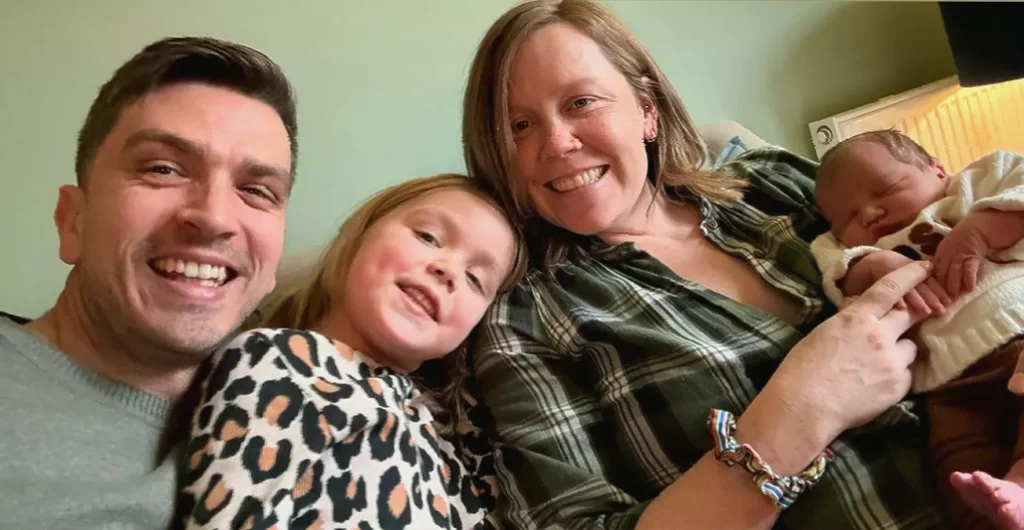
Secondary infertility affects around 5% of the UK population — roughly one in 20 couples — yet those who live through it say the condition carries a stigma that primary infertility does not. While fertility problems overall touch an estimated 15% of people, according to the charity Fertility Network UK, the experience of being unable to conceive again after already having a child is often dismissed or misunderstood. Grace Lee-Brindle, a 36-year-old clinical psychologist who specialised in fertility and perinatal mental health long before her own struggles began, knows this better than most. “People would ask, ‘Why are you doing this? You already have a daughter,'” she says. “People would tell me: ‘You’ve got a lovely life.’ It was really hard to hear, because it feels like you’re being judged — especially as it wasn’t just about us, we were putting Marley through this as well.”
An emotional toll that cuts deeper than the physical journey
The psychological burden of secondary infertility is, for many, the hardest part. Grace describes feeling isolated even within the fertility community itself. “You can’t talk to people struggling with primary fertility because of course they’re thinking: ‘You’ve already got a baby!'” she explains. “You feel lonely, even in the fertility space.”
The sense of being judged by others was compounded by an internal spiral of self-doubt and guilt. Grace, who had conceived her first child Marley — now five — after just two months of trying, found herself questioning everything. “In the worst moments, your brain goes to: ‘Is this your body, or the universe, telling you that you’re not a good enough parent to have a second child?'” she says. “It makes you question yourself. You think: ‘Am I finding parenting so stressful that my body won’t let me get pregnant?’ ‘Is it some way of protecting me from doing it again because I couldn’t cope?'”
That psychological distress is far from unusual. Infertility, including secondary infertility, is linked to high rates of anxiety, depression and stress. A survey has found that nine out of ten people struggled with their mental health while balancing fertility treatment with work. For Grace, the emotional conflict was heightened because she was a mother already. “My daughter would say to me: ‘Mummy, why don’t we have a baby?’, because all of her friends had baby siblings,” she recalls. “So, on one hand I was doing it for her, but in another sense I was just a wreck, and I felt like I wasn’t being the best parent I could be.”
A UK study by women’s health brand Wild Nutrition adds context: 79% of parents studied wanted more children than they currently have, with the figure rising to 88% among those with one child. The longing for a larger family is widespread, but the stigma around secondary infertility means many feel unable to seek support. Grace says she would hear the same refrain: “It starts to feel like a judgement on your parenting and your relationship with your first child. You are looking for every reason to try and find out why this isn’t happening, because no-one is giving you a physical reason. So, you go to what horrendous thing must I have done something in the past to deserve this.”
A medical marathon marked by setbacks and expense
Grace and her partner Mike, also 36, began trying for a second child six months after Marley’s birth. When nothing happened, they turned to the NHS after about a year. Doctors gave them a diagnosis that is common — accounting for around one in four infertility cases in the UK — but deeply frustrating: “unexplained infertility.” Neither Mike’s sperm nor Grace’s eggs raised any red flags.
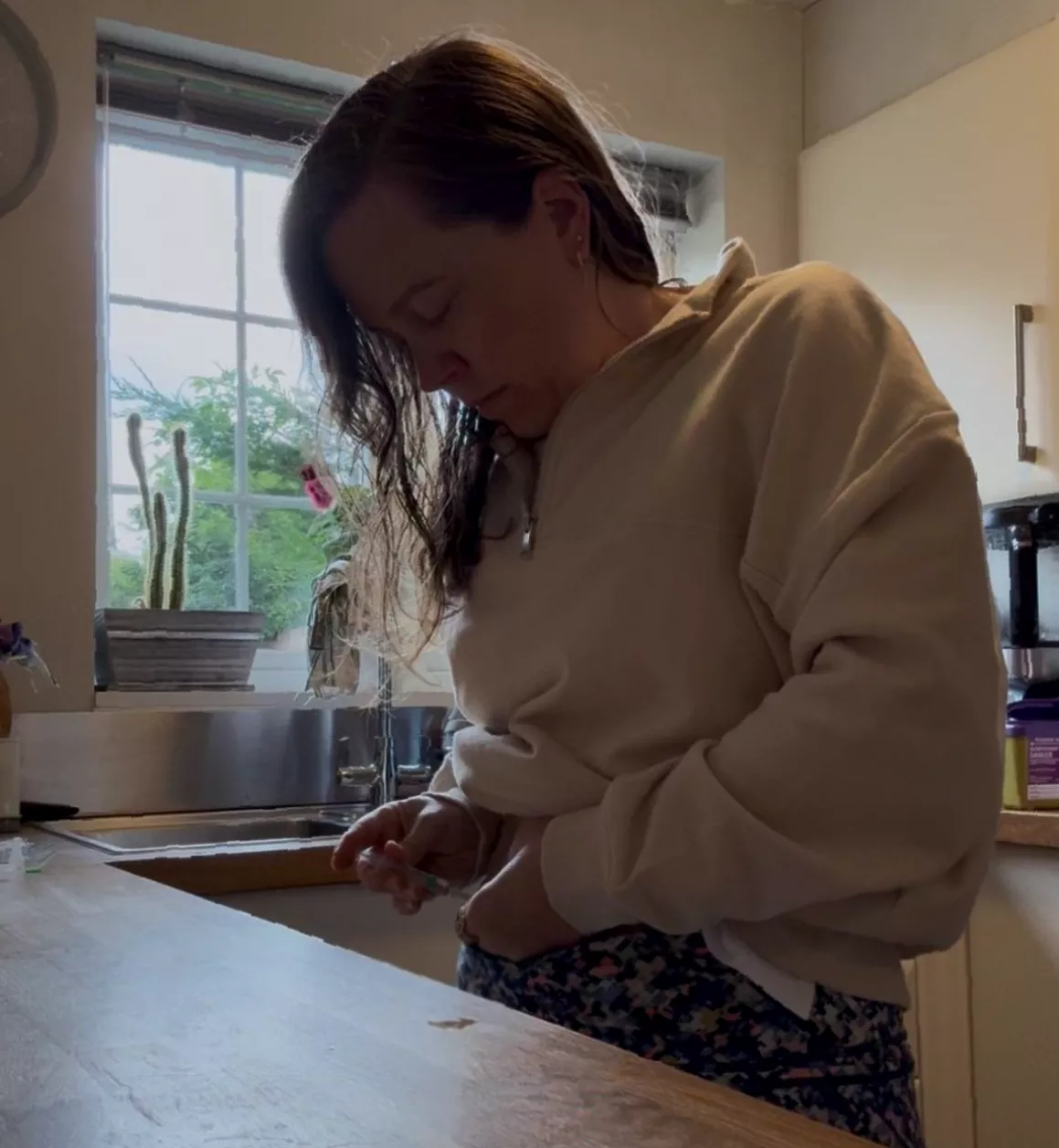
The couple soon discovered a second barrier: the NHS does not fund IVF for secondary infertility in most parts of England, where funding is only available if neither partner has any living children. (Eligibility varies by region.) So they went private. A consultant recommended ovulation induction, a treatment that uses medication to increase the number of eggs produced each month. But Grace suffered a severe reaction known as Ovarian Hyperstimulation Syndrome (OHSS), where the ovaries over-respond to fertility drugs. Symptoms of OHSS can range from mild bloating to life-threatening complications. “My body started filling with fluid and pushing against my lungs so I couldn’t breathe very well,” Grace says. After recovery, doctors adjusted her medication, but two more cycles still did not lead to a pregnancy.
The couple then moved to IVF. On average, 31% of UK couples achieve pregnancy on the first round using fresh embryo transfers. Grace collected 24 eggs, but only “two poor quality embryos” resulted. A miscarriage followed, then another unsuccessful round. The financial strain was enormous: over four years, they spent nearly £40,000 on fertility treatments. In the UK, a single IVF cycle can range from £3,500 to £8,000, with medication adding another £1,000 to £2,000. Additional procedures such as ICSI, blastocyst culture, assisted hatching and genetic testing can push costs much higher.
During this time, Grace was touched by the generosity of those around her. “I’d never ask anyone to do that but I was so lucky, I had five friends offer eggs to me,” she says. Her twin sister also offered to donate. “It’s so lovely people were willing to do such a huge thing for us.”
Then, in 2024, came another obstacle. Just as the couple prepared for a third round of IVF using Grace’s own eggs, she was diagnosed with an overactive thyroid. The medication for this condition prevents pregnancy, forcing a complete halt. “I was smack bang in infertility world and I had to start using contraception,” Grace says. “I remember thinking it’s laughable how ridiculous this is.”
Success, but a lasting impact
Almost a year later, in summer 2025, Grace and Mike went through their third round of IVF. The positive result brought not joy but fear. “Mike actually thought someone had died by the look of my face,” Grace says. “I wasn’t excited. The fear that came over me was just horrendous. I didn’t enjoy the pregnancy at all. And that’s the weird thing because all I’ve wanted for four years is to be pregnant. But the second I had it, I couldn’t trust it.”

She asked her family to keep their excitement outside her space: “I can’t handle the pressure.” At 12 weeks she began to accept the possibility that the pregnancy might continue; at 20 weeks she started to prepare. But, she admits, “there was honestly no point where I thought it’d actually be okay.”
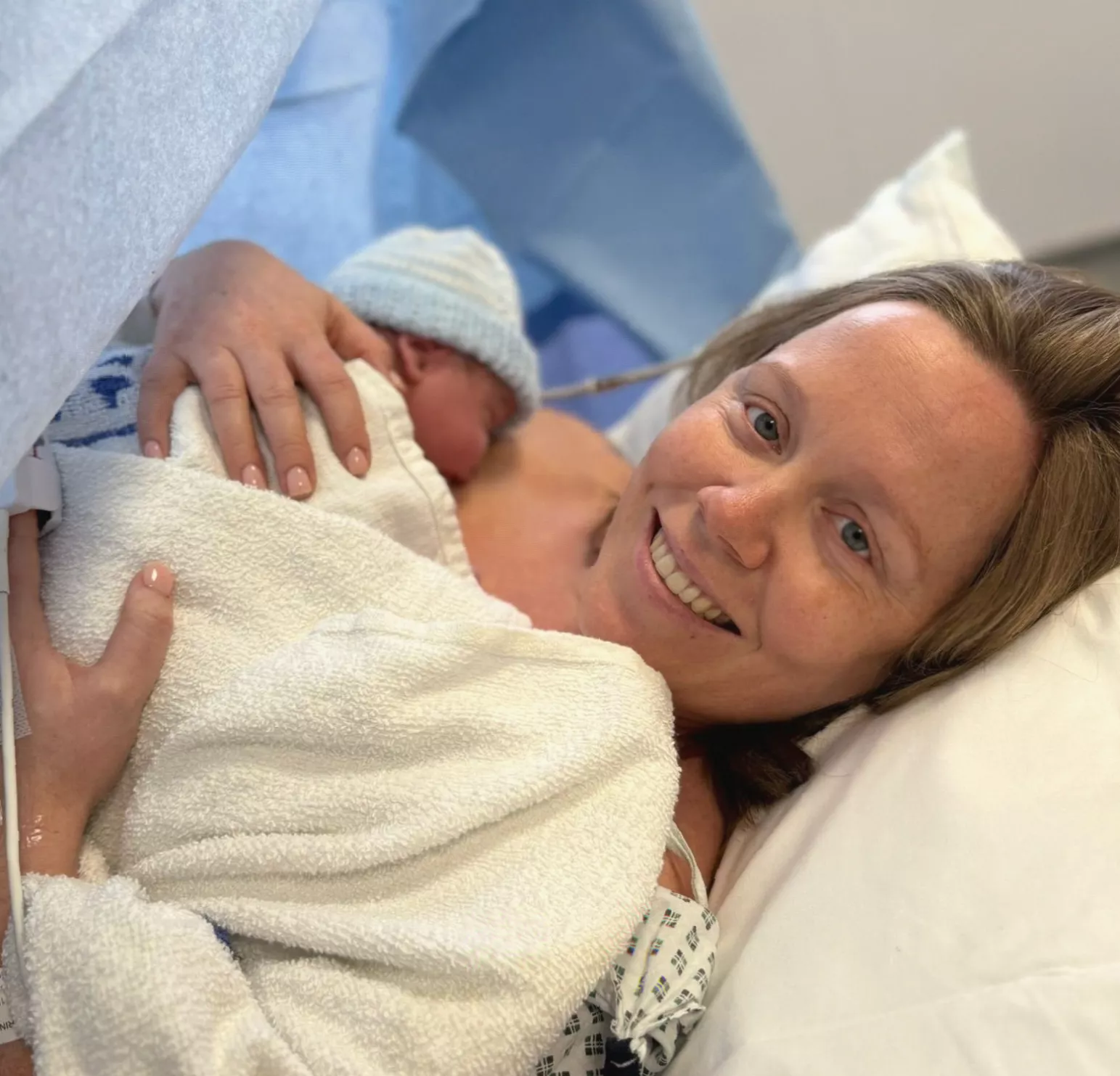
In March 2026, Grace had a planned caesarean section. “We wanted prediction, we couldn’t handle any more drama or uncertainty,” she says. Little Ziggy was born healthy and happy, and Grace says he has “completed” their family. Yet the ordeal has left a deep mark. “It makes you question yourself,” she says, reflecting on the lasting psychological impact.
Grace, who now draws on her own experience through her platform @thenotsofertilepsychologist, offers evidence-based psychological support through her practice, Hope in Mind Psychology. She urges others in the same situation to be kind to themselves. “In the end, it was just luck,” she says. “So, stop beating yourself up, you’re not doing anything wrong. We just got lucky.”