

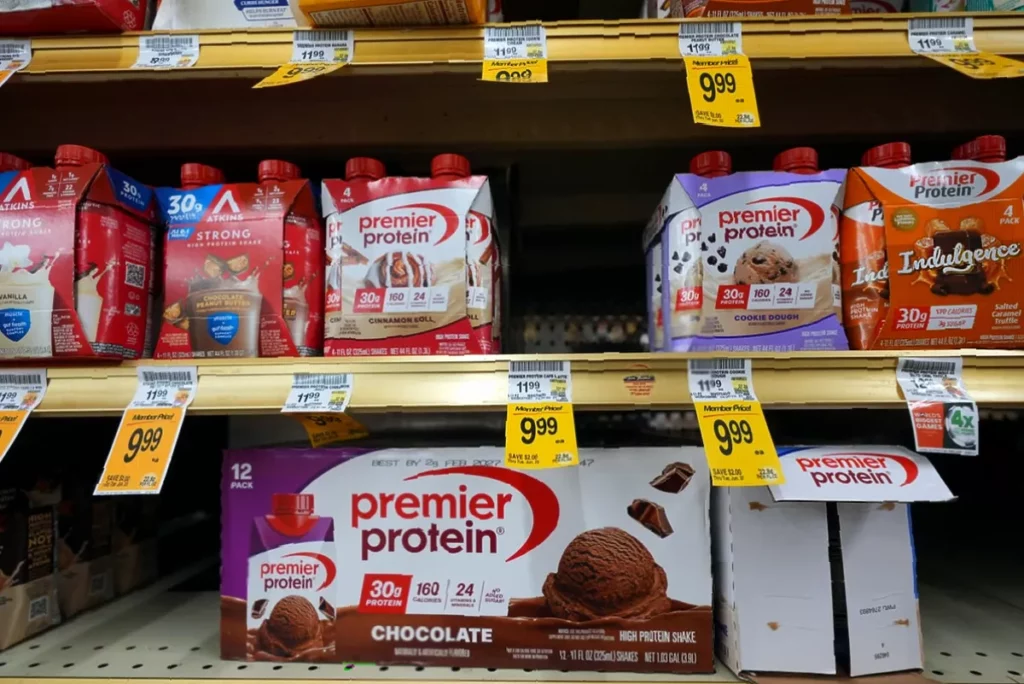
Wholesale prices for whey protein concentrate in the United States have surged more than 250% over the past year, according to data from the agriculture analytics firm Ever.Ag, reflecting a global imbalance between supply and a rapidly expanding appetite for protein-rich foods. The sharp increase has pushed the cost of the commonly used 80% protein concentrate above $13 per pound, while the more refined 90% protein isolate has risen by 150% over the same period. These wholesale gains are now feeding through to supermarket shelves, with the price-tracking company Datasembly reporting that US prices for whey protein concentrate powder have climbed by approximately 15% in the past year, and premium isolate powders have risen even more sharply.
Demand drivers: GLP-1 drugs and the protein boom
The principal force behind the demand surge is the growing use of GLP-1 weight-loss medications such as Wegovy and Zepbound. These drugs suppress appetite, which means users must focus on nutrient-dense foods. Health experts recommend that patients taking GLP-1 drugs consume sufficient protein to help maintain muscle mass during weight loss and to promote a feeling of fullness for longer. Kathleen Wolfley, vice president of Ever.Ag Insights, identified the use of these drugs as one of the factors that has “supercharged” demand for whey protein concentrate.
Morgan Stanley, the investment bank, estimated that around 6% of obese and diabetic patients in the US and 2% globally were using GLP-1 drugs last year. Broader estimates suggest up to 12% of the entire US adult population may now be taking the medications, once non-obese and non-diabetic users are included. In the UK, research indicates that approximately 4.1% of households are already using GLP-1 drugs, a figure expected to grow following the approval of an oral version of Wegovy in the UK. Studies have shown that GLP-1 users have a higher willingness to pay for protein products and are less sensitive to price increases, driving innovation in the food sector. Food and nutrition companies are creating added-protein products specifically to attract these consumers, as well as people who believe replacing meals with protein shakes will help them lose weight.
Beyond the GLP-1 effect, the general high-protein trend continues to accelerate. Market research firm NielsenIQ reports that the average US supermarket now stocks 38,708 products that advertise their protein content. Food manufacturers are adding whey protein to a vast array of everyday items, from breakfast cereals and Pop-Tarts to potato crisps, bagels, tortillas, and even Starbucks beverages, in an effort to appeal to ingredient-conscious shoppers. In the UK, nearly half of consumers (43%) have increased their protein intake over the past year, according to industry data. Sales of protein bars, powders and drinks have climbed 24.2%, contributing to a £1.1 billion UK sports nutrition market. The UK whey protein market itself was valued at £60.8 million in 2023 and is projected to exceed £107.5 million by 2033, with a compound annual growth rate of 5.86%.
Supply constraints and soaring prices
Whey protein is a byproduct of cheese-making. Milk contains two proteins: casein and whey. During cheese production, the casein forms solid curds, which are separated from the liquid whey. The whey is then dried into a powder. According to the US Department of Agriculture, every pound of cheese yields nine pounds of whey. For decades, falling fluid milk consumption in the US — as Americans switched to sodas and other beverages — was offset by a strong appetite for cheese, generating a steady surplus of whey that was exported to China and other countries.
That surplus has now vanished. Domestic demand for high-protein snacks and meals is keeping more whey protein in the US for use as a food additive or nutritional supplement. According to Vesper, an Amsterdam-based commodity tracking firm, US exports of 80% whey protein concentrate and whey protein isolate to China fell by 47% from January through April compared with the same period a year ago. “There simply isn’t enough product for the US customer, and exports have therefore been paused as much as possible,” said Jasper Endlich, a Vesper dairy analyst. China is now seeking more whey protein from Europe, which itself is experiencing shortages as a result of reduced US exports, Endlich added.
The price impact has been dramatic. In Europe, the Netherlands-based commodity pricing firm DCA Market Intelligence reports that 80% whey protein concentrate reached a new record average of €26,450 (£22,500) per metric ton in late May, more than double its price from less than a year earlier. In early April 2026, DCA had benchmarked the same product at €20,250 per metric ton, with some instant-quality WPC80 reportedly sold at €29,000 per metric ton by late May. The European whey protein market, valued at approximately €2.77 billion in 2025, is projected to grow to €5.44 billion by 2034, according to industry forecasts.
Wholesale price rises are being passed on to consumers. Now Foods, an Illinois-based maker of health foods and nutritional supplements based in Illinois, said that tubs of whey protein powder are consistently the biggest seller in its sports nutrition category. After two years of paying more for raw ingredients, the company raised the price of its own whey protein products earlier this year. Bryan Morin, the sports brand manager at Now, said the company does not anticipate further price increases on whey protein powder this year, but is instead trying to absorb some of its increased costs by cutting back on discounts. The firm is also considering expanding its portfolio to include products made with milk protein concentrate, a powder that contains less whey and is cheaper. “From our perspective, broader market dynamics continue to indicate a tight and evolving protein landscape,” Morin said.
Future supply outlook: new capacity but no quick fix
Manufacturers are investing heavily in new whey protein production capacity, but relief will take time. Wolfley said that while these investments should eventually improve supplies, the effect will not be immediate. Glanbia, an Irish nutrition company, announced in November that it planned to increase its whey protein isolate production in New Mexico, but the additional capacity will not be in place until 2027. In February, Canadian dairy company Agropur said it intended to expand whey protein manufacturing at plants in Quebec, Nova Scotia, South Dakota and Wisconsin. Tirlán (formerly Glanbia Ireland) is investing €126 million in premium whey expansion in Ireland. Idaho Milk Products is investing $200 million in new facilities, and Wisconsin Whey Protein is completing a plant to increase whey protein isolate output. Fonterra’s advanced protein facility is set to begin WPC production in 2026. Arla Foods Ingredients has also strengthened its US production capacity.
In the meantime, high prices may begin to cool demand. Wolfley noted that higher costs could cause some consumers to stop buying whey protein powders, particularly at a time when groceries are becoming more expensive overall. Reduced retail demand might then alleviate shortages at the wholesale level. “The supply-demand dynamics could start to improve, but I don’t know if that’s a tomorrow dynamic or within a year. Some of these things are going to take time,” she said. The shift in dietary focus from fats to proteins, driven in part by GLP-1 drugs, is likely to sustain long-term demand, but for now the market remains extremely tight. Alternative proteins such as milk protein concentrate and milk protein isolate are seeing increased demand as a result, and the clean-label trend is pushing consumers toward products with no artificial additives. E-commerce is playing an increasingly dominant role in the distribution of protein powders and supplements in the UK, where the overall protein market is projected to be worth around £491 million by 2026.