

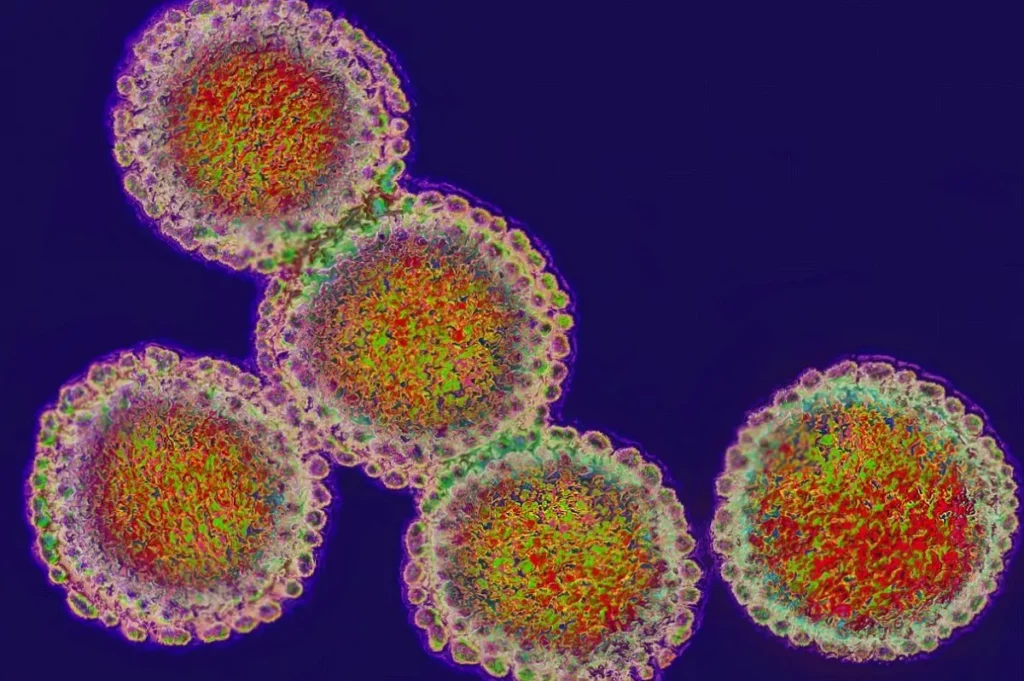
Respiratory infections with pandemic potential have been identified as the most significant threat to the nation’s health security over the next five years, according to the first systematic risk assessment published by the UK Health Security Agency (UKHSA). The landmark Health Security Risk Assessment (HSRA) ranks respiratory pathogens such as influenza and novel coronaviruses above all other dangers, warning that the probability of a pandemic caused by either agent within this timeframe exceeds 25 per cent.
The HSRA, which the agency says is designed to bolster national resilience planning, evaluates threats across seven thematic areas: bloodborne and sexually transmitted infections, contact-related infections, gastrointestinal infections, respiratory infections, vector-borne diseases, environmental hazards, and combined events. For each risk, the assessment outlines a “reasonable worst-case scenario” — not a prediction, but the worst plausible manifestation intended to inform preparedness. The COVID-19 pandemic, the report notes, exposed significant weaknesses in public health infrastructure and showed how existing health inequalities can magnify the impact of such crises.
Respiratory infections top the list
Respiratory infections are ranked as the foremost threat because of their high potential impact, assessed likelihood, and repeated historical precedent. Professor Steven Riley, UKHSA chief data officer, said the nation faces “a set of diverse and complex health security threats, whose timing and magnitude are difficult to predict”. The report identifies antimicrobial resistance (AMR) as a crucial factor that could significantly influence how various health threats affect national security. AMR has the potential to exacerbate viral respiratory outbreaks: a pandemic in an environment where antibiotics are ineffective against secondary bacterial infections could lead to higher mortality. UKHSA leads national and global efforts to tackle AMR, bringing together capabilities in public health microbiology, genomics, surveillance, antimicrobial stewardship, and research into novel therapeutics and diagnostics. The UK’s 20‑year vision on AMR aims for effective containment and control by 2040, supported by National Action Plans.
Detailed scenarios for planners
The HSRA presents several alarming scenarios that planners must consider. One envisions a new influenza strain arriving in Britain and spreading over two years, causing symptomatic infections in more than half the population. Of those infected, 4 per cent would require hospitalisation. The outbreak would have wider healthcare impacts because of illness among healthcare workers and the diversion of resources. A separate scenario considers a novel coronavirus similar to SARS‑CoV‑2 emerging in an immune‑naïve population, assessing its severity and transmissibility.
Warmer European summers could enable the Aedes albopictus mosquito, known as the Asian tiger mosquito, to establish itself in London and southern coastal areas, potentially bringing locally transmitted dengue fever to British shores. The recent detection of West Nile virus in UK mosquitoes for the first time, in Nottinghamshire in July 2023, is a significant development, although the risk to the public remains very low. Other vector‑borne diseases such as Zika, West Nile virus, and tick‑borne encephalitis currently carry lower probability ratings, yet the report notes that climate conditions are increasingly favouring their transmission within Britain over the longer term.
Perhaps most concerning for public health officials is the continued decline in MMRV (measles, mumps, rubella, and varicella) vaccination uptake, which could trigger approximately 160,000 measles cases annually, severely straining NHS resources. The report states that declining childhood immunisation coverage is a scenario that has already been witnessed.
Broader threats and the cost of inequality
Environmental dangers, particularly extreme heat and severe cold, pose substantial risks to both public health and economic stability. Seasonal illnesses — influenza, RSV, and norovirus — combine to place considerable pressure on healthcare capacity and coordination across the health system.
A critical aspect highlighted by the HSRA is the disproportionate impact of health security risks on vulnerable groups. Inequalities Impact Assessments within the report found that ethnic minorities, inclusion health groups, and the most deprived 20 per cent of the population are expected to experience a high disproportionate adverse impact from most health hazards. Common drivers include co‑morbidities, living conditions, and barriers to healthcare. Inequalities in emergency hospital admissions for infectious diseases are estimated to cost the NHS between £970 million and £1.5 billion annually in avoidable costs. For respiratory infections, deprivation is associated with an estimated additional 260,000 admissions. Emergency admission rates for tuberculosis were 29 times higher among certain ethnic groups, and seven times higher for tuberculosis, six times higher for measles, and three times higher for influenza in the most deprived areas. The report acknowledges data gaps, particularly concerning certain population groups such as prisoners, limiting the ability to adequately protect them.
Preparedness and future resilience
Drawing lessons from the 1918‑1920 influenza outbreak and the COVID‑19 pandemic, the assessment serves as the foundation for a renewed preparedness effort. The UK government has launched a new Pandemic Preparedness Strategy, backed by approximately £1 billion in funding. The strategy aims to rebuild readiness through a whole‑of‑government and whole‑of‑society approach, prioritising the needs of the most vulnerable. Key elements include cross‑government coordination with integrated response frameworks, a multi‑hazard approach covering five main routes of disease transmission under a “One Health” framework that recognises the interconnection between human, animal, plant, and environmental health, and investment in vaccines, therapeutics, surveillance, and testing. The plan also involves replenishing PPE stockpiles, building chemical and equipment stockpiles, improving onshore manufacturing capacity, and drafting an “All Pandemic Hazards Bill” to ensure legislative options are ready. An adult social care pandemic action plan, improved workforce resilience, and targeted funding mechanisms are also part of the strategy, alongside integrated data and digital tools for decision‑making. Lessons from the UK COVID‑19 Inquiry and national pandemic exercises such as Exercise Pegasus will be embedded.
Professor Riley pointed to recent incidents — mpox clade Ib, botulism, meningococcal B, and hantavirus — as demonstrations of how swiftly health concerns can escalate. As of February 2025, nine cases of clade Ib mpox had been confirmed in the UK, primarily linked to travel to Uganda. “COVID‑19 was a reminder of the importance of preparedness and resilience during a health crisis,” he said, underscoring the necessity for effective strategic planning.