

Close Menu
    Useful
    • About Us
    • Contact Us
    • Advertise With Us
    • Health Explainers
    • Our Editorial Team
    Facebook
    HealthNewsDaily.co.uk
    • Home
    • NHS

      NHS hit with £300,000 fine over water contamination that killed chemo patient

      16 June 2026

      Woman, 60, quits job that moved online to start anew in nursing

      15 June 2026

      Cancer patients and unwell children in hospital delighted by dance sessions

      14 June 2026

      NHS warned its weekday-only approach is causing deaths and wasting billions

      13 June 2026

      Resident doctors announce four-day strike, dealing triple blow to NHS

      13 June 2026
    • Health Policy

      Sierra Leone first lady will not oppose FGM without evidence of harm

      17 June 2026

      Readers tell of days of suffering as assisted dying bill returns

      16 June 2026

      Ministers accused of inaction on protection of women and girls

      16 June 2026

      Taxi costing £70 almost used by NHS to deliver 50p pill to England’s former deputy chief medical officer

      15 June 2026

      Abolition of legal protections for disabled people creates dangers

      14 June 2026
    • Mental Health

      Kathleen Chalfant excels in understated, sensuous memory loss play Familiar Touch

      15 June 2026

      William consoles mental health charity user overcome by emotion during tribute

      11 June 2026

      Mother spent £40,000 and four years trying for a baby – despite already having a child

      11 June 2026

      Drop in US suicide toll as one state defies national pattern

      10 June 2026

      Rural California county struggles to cut suicides as gun ownership widespread

      9 June 2026
    • Wellness & Lifestyle

      Letter writers take issue with soap dispensers

      16 June 2026

      Dietitian advises morning drink to lower blood pressure in hours

      16 June 2026

      Experts outline sunscreen reapplication frequency as summer returns

      15 June 2026

      Rising demand for high-protein foods sparks shortage fears

      14 June 2026

      Heightened pollen season expected this year with advice on symptom avoidance

      14 June 2026
    • Disease & Prevention

      Men’s skin cancer risk three times higher if sunscreen misses one body part, doctor warns

      16 June 2026

      Mobility equipment firm’s five-star assistance credited with saving holiday

      16 June 2026

      Mystery tooth condition puts millions of children at risk, experts warn

      16 June 2026

      Incurable cancer found in 25-year-old woman after she mistook symptoms for a virus

      15 June 2026

      UKHSA warns pandemic risk now over 25% with respiratory infections judged top threat

      15 June 2026
    • Treatment & Research

      Behaviours tied to violent crime could be curbed by weight loss jabs

      17 June 2026

      Doctors do not recommend paracetamol for period pain, yet most women use it

      16 June 2026

      Mother baffled by death of one-year-old who was in good health

      16 June 2026

      Title-winning swimmer with rare brain cancer appeals for UK to boost support for fellow patients

      16 June 2026

      Toxic endocrine-disrupting compounds detected in US breast milk samples

      14 June 2026
    HealthNewsDaily.co.uk
    • NHS
    • Health Policy
    • Mental Health
    • Wellness & Lifestyle
    • Disease & Prevention
    • Treatment & Research
    Home » Wellness & Lifestyle » Experts outline sunscreen reapplication frequency as summer returns
    Wellness & Lifestyle

    Experts outline sunscreen reapplication frequency as summer returns

    Oliver MarshBy Oliver Marsh15 June 2026
    Person applying sunscreen to their arm in a sunny garden

    It may seem obvious, but the simple act of reapplying sunscreen every two hours is the single most effective measure people overlook when spending time outdoors. The advice from both sides of the Atlantic is consistent: reapplication is essential, particularly after swimming or sweating, because no sunscreen stays on the skin indefinitely. Johns Hopkins Medicine in the United States stresses that even water-resistant products, which typically last for 40 to 80 minutes, will eventually wash off – there is no such thing as waterproof sunscreen, according to federal regulators.

    While office workers may feel safe indoors, the same caution applies to short exposure. Johns Hopkins advises keeping a spare bottle at your desk, warning that even a brief lunchtime stroll can put unprotected skin at risk. In the UK, the NHS echoes this guidance, recommending that sunscreen be reapplied liberally every two hours, not just because water and sweat remove it, but because the UV filters themselves can become less effective after absorbing ultraviolet light.

    When and how to reapply sunscreen

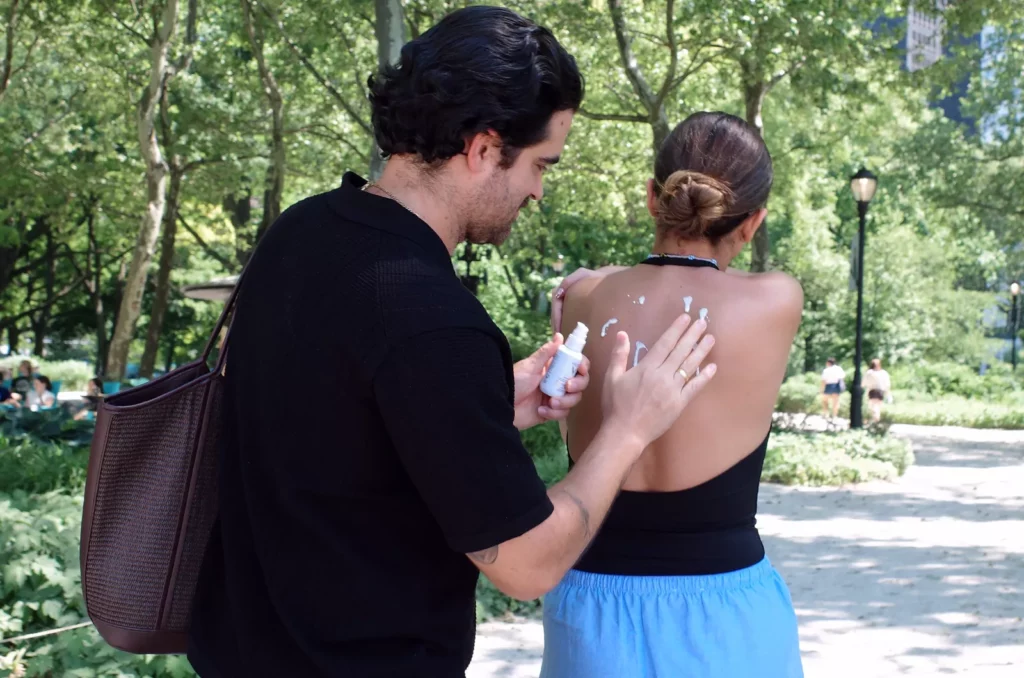
    The need for regular reapplication is especially pronounced during the UK’s strongest sunlight hours, which run from 11am to 3pm between March and October. During this window, seeking shade is particularly important. The NHS advises applying sunscreen twice before going out: once 30 minutes beforehand, and again immediately before exposure. This two-stage process ensures the product binds properly to the skin. For adults, a full-body application requires around six to eight teaspoons – roughly 35ml – and applying too thinly dramatically reduces protection. Even on overcast days, UV rays can penetrate cloud cover, so protection is necessary whenever the UV index reaches three or higher.

    Water-resistant formulas offer some leeway but should not be trusted beyond their stated duration. Whether you choose a standard or water-resistant sunscreen, experts recommend a minimum Sun Protection Factor (SPF) of 15, with higher SPFs offering greater protection against sunburn. The highest available SPF is 100-plus. For UK consumers, the NHS also recommends looking for at least a four-star UVA rating, often marked with a circle containing the letters “UVA”, to ensure broad-spectrum defence against both UVA rays (linked to premature ageing) and UVB rays (the primary cause of sunburn and skin cancer).

    Skin cancer: the stark figures on both sides of the Atlantic

    The reason for this vigilance is clear: skin cancer is overwhelmingly caused by sun damage. In the United States, non-melanoma skin cancer is the most common form of cancer, with more than 5.4 million cases treated in 2012 – still considered the best estimate available, according to the Skin Cancer Foundation. Melanoma, a more severe form, accounts for only 1 per cent of yearly cases but is linked to more than 8,000 annual deaths. The American Cancer Society estimates that about 8,510 people in the US will die of melanoma this year. Getting sunburnt leaves the skin vulnerable: five or more blistering burns more than doubles the risk of developing potentially deadly melanoma, the foundation warns.

    In the UK, the picture is similarly concerning. Melanoma skin cancer is the fifth most common cancer, representing 5 per cent of all new cancer diagnoses. There are approximately 19,400 new melanoma cases each year – about 53 per day. In 2022, diagnoses exceeded 20,000 for the first time, and projections suggest this could rise to 26,500 annually by 2040. Non-melanoma skin cancer is even more common, with around 156,000 new cases each year. Around 2,600 people die from melanoma annually in the UK, making it the 19th most common cause of cancer death. Mortality rates have risen significantly since the early 1970s, particularly among men. Yet up to 90 per cent of all skin cancer cases in the UK are preventable by staying safe in the sun and avoiding sunbeds. Nearly nine in 10 melanoma cases are caused by overexposure to UV radiation.

    Absorption time: why the wait matters

    One of the most misunderstood aspects of sunscreen use is the time it takes to become effective. The American Academy of Dermatology Association states that sunscreen should be applied 15 minutes before going outside, explaining that “it takes approximately 15 minutes for your skin to absorb the sunscreen and protect you. If you wait until you are in the sun to apply sunscreen, your skin is unprotected and can burn.” The NHS extends this window slightly, recommending 30 minutes before exposure, followed by a second application just before stepping out. This absorption period is critical because the active ingredients need to bind to the skin’s surface layers to form a protective film. Without it, UV rays can penetrate and cause damage from the moment you step into sunlight.

    The newly approved sunscreen ingredient bemotrizinol, which has been used in Europe and Asia for decades, offers improved protection against both UVA and UVB rays. The US Food and Drug Administration recently classified it as “generally recognised as safe and effective”. Bemotrizinol is photostable, meaning it does not break down easily in sunlight, and it provides a more seamless, streak-free application than older chemical filters. Products containing bemotrizinol are expected to become available in the US later this year, though they have long been on the market elsewhere.

    Practical tips for full protection

    No single sunscreen is perfect, as Johns Hopkins reminds us. Alongside regular reapplication, the NHS advises spending time in the shade during peak hours, covering up with suitable clothing and a wide-brimmed hat, and wearing sunglasses. Extra care is required for babies and children – those under six months should be kept out of direct sunlight entirely. Regular self-examination of the skin is crucial for early detection; survival rates for melanoma in the UK stand at around 90 to 95 per cent overall, and nearly 100 per cent for stage 1 cancers, underscoring the importance of catching it early.

    A short daily period of sun exposure without sunscreen during summer can help the body produce vitamin D, but for those who avoid the sun strictly, dietary sources or supplements may be necessary. However, the overriding message from health authorities remains: reapply every two hours, respect the absorption time, and never assume a single application will see you through the day.

    Ageing Cancer
    Share. Facebook Twitter LinkedIn WhatsApp Telegram
    Oliver Marsh
    Oliver Marsh

    Mental Health & Lifestyle Correspondent
    Oliver Marsh reports on mental health and wellness for Health News Daily. He covers NHS mental health services, workplace wellbeing, children's mental health, anxiety, depression and modern approaches to healthy living. A certified Mental Health First Aider, Oliver is passionate about breaking the stigma around mental health and making evidence-based wellbeing advice accessible to all. His reporting bridges the gap between clinical mental health news and practical lifestyle guidance for UK readers.
    · Certified Mental Health First Aider (MHFA England), peer support volunteer, lived experience of NHS Talking Therapies pathway
    · ADHD and autism in adults, anxiety and depression, CAMHS and children's mental health, workplace burnout, sleep science, nutrition and ultra-processed foods, NHS mental health service access

    Related Posts

    Wellness & Lifestyle

    Letter writers take issue with soap dispensers

    16 June 2026
    Wellness & Lifestyle

    Dietitian advises morning drink to lower blood pressure in hours

    16 June 2026
    Wellness & Lifestyle

    Rising demand for high-protein foods sparks shortage fears

    14 June 2026
    Wellness & Lifestyle

    Heightened pollen season expected this year with advice on symptom avoidance

    14 June 2026
    Join Our Community & Win

    Each month we select one lucky follower to receive a prize from our partners. Follow us on our social channels for your chance to win.

    • Facebook
    Latest
    Treatment & Research

    Behaviours tied to violent crime could be curbed by weight loss jabs

    17 June 2026
    Health Policy

    Sierra Leone first lady will not oppose FGM without evidence of harm

    17 June 2026
    NHS

    NHS hit with £300,000 fine over water contamination that killed chemo patient

    16 June 2026
    Health Policy

    Readers tell of days of suffering as assisted dying bill returns

    16 June 2026
    Wellness & Lifestyle

    Letter writers take issue with soap dispensers

    16 June 2026
    Disease & Prevention

    Men’s skin cancer risk three times higher if sunscreen misses one body part, doctor warns

    16 June 2026
    News Categories
    • NHS
    • Health Policy
    • Mental Health
    • Wellness & Lifestyle
    • Disease & Prevention
    • Treatment & Research
    Help
    • About Us
    • Contact Us
    • Advertise With Us
    • Health Explainers
    • Our Editorial Team
    About Us
    About Us

    Health News Daily provides trusted UK health news, covering NHS updates, medical research, public health and wellbeing with clear and reliable reporting.

    Facebook
    • Cookie Policy
    • Privacy Policy
    • Complaints Policy
    • Corrections Policy
    • AI Disclosure Policy
    • Editorial Policy & Ethics
    • Accessibility Statement
    • Medical Disclaimer
    • Terms & Conditions
    • Sponsored Content Disclosure
    • Copyright Notice
    © 2026 Healthnewsdaily.co.uk. All rights reserved.

    Type above and press Enter to search. Press Esc to cancel.