

Close Menu
    Useful
    • About Us
    • Contact Us
    • Advertise With Us
    • Health Explainers
    • Our Editorial Team
    Facebook
    HealthNewsDaily.co.uk
    • Home
    • NHS

      NHS hit with £300,000 fine over water contamination that killed chemo patient

      16 June 2026

      Woman, 60, quits job that moved online to start anew in nursing

      15 June 2026

      Cancer patients and unwell children in hospital delighted by dance sessions

      14 June 2026

      NHS warned its weekday-only approach is causing deaths and wasting billions

      13 June 2026

      Resident doctors announce four-day strike, dealing triple blow to NHS

      13 June 2026
    • Health Policy

      Sierra Leone first lady will not oppose FGM without evidence of harm

      17 June 2026

      Readers tell of days of suffering as assisted dying bill returns

      16 June 2026

      Ministers accused of inaction on protection of women and girls

      16 June 2026

      Taxi costing £70 almost used by NHS to deliver 50p pill to England’s former deputy chief medical officer

      15 June 2026

      Abolition of legal protections for disabled people creates dangers

      14 June 2026
    • Mental Health

      Kathleen Chalfant excels in understated, sensuous memory loss play Familiar Touch

      15 June 2026

      William consoles mental health charity user overcome by emotion during tribute

      11 June 2026

      Mother spent £40,000 and four years trying for a baby – despite already having a child

      11 June 2026

      Drop in US suicide toll as one state defies national pattern

      10 June 2026

      Rural California county struggles to cut suicides as gun ownership widespread

      9 June 2026
    • Wellness & Lifestyle

      Letter writers take issue with soap dispensers

      16 June 2026

      Dietitian advises morning drink to lower blood pressure in hours

      16 June 2026

      Experts outline sunscreen reapplication frequency as summer returns

      15 June 2026

      Rising demand for high-protein foods sparks shortage fears

      14 June 2026

      Heightened pollen season expected this year with advice on symptom avoidance

      14 June 2026
    • Disease & Prevention

      Men’s skin cancer risk three times higher if sunscreen misses one body part, doctor warns

      16 June 2026

      Mobility equipment firm’s five-star assistance credited with saving holiday

      16 June 2026

      Mystery tooth condition puts millions of children at risk, experts warn

      16 June 2026

      Incurable cancer found in 25-year-old woman after she mistook symptoms for a virus

      15 June 2026

      UKHSA warns pandemic risk now over 25% with respiratory infections judged top threat

      15 June 2026
    • Treatment & Research

      Behaviours tied to violent crime could be curbed by weight loss jabs

      17 June 2026

      Doctors do not recommend paracetamol for period pain, yet most women use it

      16 June 2026

      Mother baffled by death of one-year-old who was in good health

      16 June 2026

      Title-winning swimmer with rare brain cancer appeals for UK to boost support for fellow patients

      16 June 2026

      Toxic endocrine-disrupting compounds detected in US breast milk samples

      14 June 2026
    HealthNewsDaily.co.uk
    • NHS
    • Health Policy
    • Mental Health
    • Wellness & Lifestyle
    • Disease & Prevention
    • Treatment & Research
    Home » Disease & Prevention » Mystery tooth condition puts millions of children at risk, experts warn
    Disease & Prevention

    Mystery tooth condition puts millions of children at risk, experts warn

    Sophie HargreavesBy Sophie Hargreaves16 June 2026
    Close-up of a child’s discoloured molar with chalky white and brown patches

    Molar incisor hypomineralisation (MIH) affects nearly 30% of Scandinavian children, according to researchers at the University of Copenhagen dental hospital. In the United Kingdom, the condition is also widespread: prevalence studies suggest it affects approximately one in eight children, with some estimates putting the figure as high as 20% — or one in five.

    What is MIH?

    MIH is a developmental defect of tooth enamel. The outer layer — the hardest material in the body — and sometimes the middle layer of the tooth do not form properly, leaving them softer and less mineralised than normal. The disruption occurs early in a child’s life, while the teeth are forming inside the jaw, typically from around birth until about the age of two.

    The condition most often affects the first permanent molars — the so-called six-year molars — and the permanent incisors, although it can also affect the second primary molars (baby back teeth), which can be an early sign of future problems. The teeth can appear chalky white, yellow or brown, often with a clear border against healthy enamel. Because the enamel is fragile, the teeth can crumble or break easily and become sensitive to hot, cold or sweet foods and drinks. Some children avoid brushing because it hurts. At around six or seven years old, when the permanent molars and incisors first erupt, parents and dentists often notice the tell-tale discolouration and tenderness.

    Causes of MIH: varied and not fully understood

    Researchers emphasise that MIH is not caused by poor brushing, sugar intake or bad dental habits. Instead, it results from something that disrupts enamel formation before the teeth even appear. The exact triggers remain something of a puzzle, but current research points to several possible factors, often interacting with one another.

    One leading candidate is prolonged illness in early life, such as high fevers, repeated infections (respiratory or urinary tract infections) or gastric disorders. Another is the long-term use of antibiotics, which may interfere with enamel development. Complications during pregnancy or birth are also suspected — these include oxygen deprivation, premature birth, and traumatic birth.

    Environmental factors, including air pollution, have been proposed as contributors. Deficiencies, particularly of vitamin D, which is crucial for the body’s ability to form strong enamel, are also thought to play a role. In addition, a possible genetic vulnerability means some children may simply be more susceptible than others. A recent finding has linked MIH with an increased risk of hypodontia — congenitally missing teeth — which strengthens the case for a genetic component.

    The wide variation in reported prevalence across the globe — MIH appears less common in Africa and Asia — is suspected to be largely due to differences in diagnosis and reporting, as well as genuine differences in early childhood illnesses and genetic factors.

    What parents and dentists can do

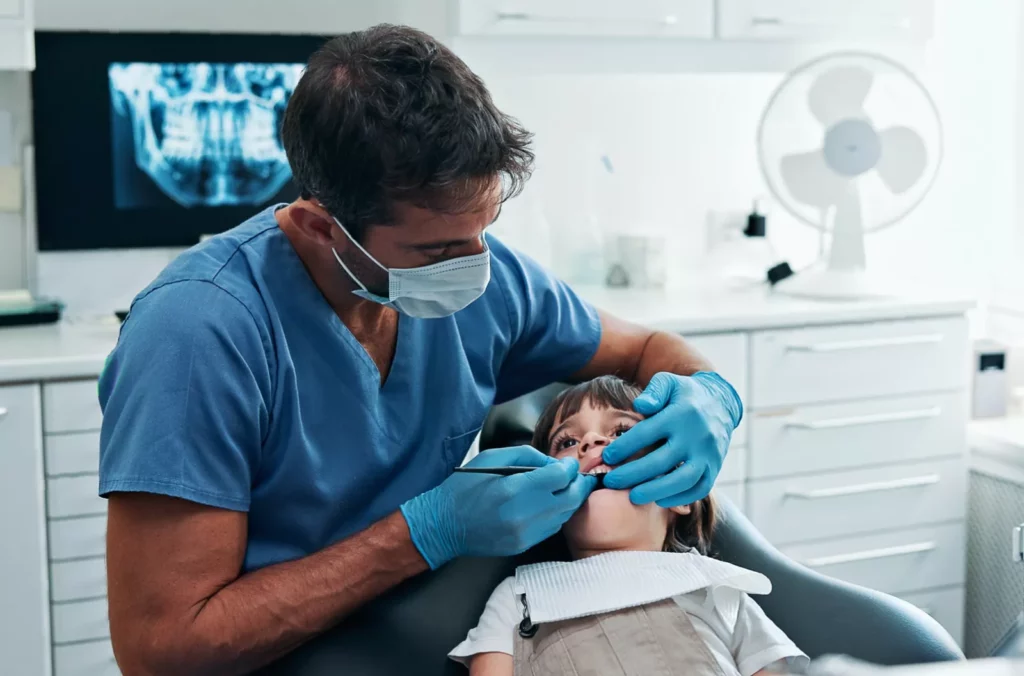
    With current knowledge, MIH itself cannot be prevented. However, parents can take steps to protect their child’s teeth. Twice-daily brushing with fluoride toothpaste is essential because the softer enamel is harder to keep clean and at greater risk of cavities. Dentists may recommend high-fluoride toothpaste, fluoride mouthwashes, or products containing CPP-ACP (Recaldent) to help with sensitivity. Limiting sugar intake is also important.

    Parents are encouraged to help their child build a good relationship with the dentist by speaking positively about how dental treatment protects teeth and by asking the child to describe where and how a tooth hurts. The sensitivity and difficulty of treating MIH can contribute to dental anxiety, so early trust is valuable.

    The dentist will assess the extent of the condition and classify affected teeth as mild, moderate or severe. For mild cases, concentrated fluoride gel or transparent fissure sealants are used. Moderate cases often require temporary or permanent fillings, and because the tooth is very sensitive, anaesthesia is needed. Severe cases may receive fillings and, in the most serious instances, a stainless steel crown — a foil cap that protects the tooth from breaking, cavities and pain. In rare cases where the long-term prognosis is poor, extraction may be recommended, typically between the ages of eight and ten.

    Front teeth usually have only mild to moderate MIH and are often not treated initially. As children grow older, they may seek aesthetic treatment. Options include whitening combined with a newer technique in which a thin, fluid resin is infiltrated into the enamel, filling the empty spaces and making the discolouration disappear. In adulthood, severely affected molars may benefit from a crown or porcelain inlay.

    Research needs

    To tackle MIH effectively, researchers say the profession needs a clearer picture of how widespread it actually is. That requires stronger, more consistent studies and better agreement on how the condition is diagnosed and recorded. At the same time, basic questions remain: what are the key triggers, and why do some children develop MIH while others do not? UK centres are part of international research investigating associations between MIH and other dental anomalies, such as missing teeth. The European Association of Paediatric Dentistry has issued clinical guidelines for management, and studies are exploring the knowledge and attitudes of general dental practitioners in the UK to identify barriers to care.

    Antibiotics Anxiety
    Share. Facebook Twitter LinkedIn WhatsApp Telegram
    Sophie Hargreaves
    Sophie Hargreaves

    Health Correspondent
    Sophie Hargreaves covers medical research, new treatments, disease outbreaks and prevention for Health News Daily. She holds a Master's degree in Health Sciences from the University of Leeds and has spent several years translating complex medical science into clear, accessible reporting for a general audience. Sophie focuses on the latest clinical trials, NICE and MHRA approvals, vaccination programmes and emerging health threats, always with an eye on what these developments mean for people in the UK.
    · MSc Health Sciences (University of Leeds), science communication volunteer, medical research literacy
    · Clinical trials and drug approvals (NICE, MHRA), cancer screening programmes, vaccination and outbreak response, women's health (endometriosis, PCOS, menopause), weight management treatments, AI in diagnostics

    Related Posts

    Disease & Prevention

    Men’s skin cancer risk three times higher if sunscreen misses one body part, doctor warns

    16 June 2026
    Disease & Prevention

    Mobility equipment firm’s five-star assistance credited with saving holiday

    16 June 2026
    Disease & Prevention

    Incurable cancer found in 25-year-old woman after she mistook symptoms for a virus

    15 June 2026
    Disease & Prevention

    UKHSA warns pandemic risk now over 25% with respiratory infections judged top threat

    15 June 2026
    Join Our Community & Win

    Each month we select one lucky follower to receive a prize from our partners. Follow us on our social channels for your chance to win.

    • Facebook
    Latest
    Treatment & Research

    Behaviours tied to violent crime could be curbed by weight loss jabs

    17 June 2026
    Health Policy

    Sierra Leone first lady will not oppose FGM without evidence of harm

    17 June 2026
    NHS

    NHS hit with £300,000 fine over water contamination that killed chemo patient

    16 June 2026
    Health Policy

    Readers tell of days of suffering as assisted dying bill returns

    16 June 2026
    Wellness & Lifestyle

    Letter writers take issue with soap dispensers

    16 June 2026
    Disease & Prevention

    Men’s skin cancer risk three times higher if sunscreen misses one body part, doctor warns

    16 June 2026
    News Categories
    • NHS
    • Health Policy
    • Mental Health
    • Wellness & Lifestyle
    • Disease & Prevention
    • Treatment & Research
    Help
    • About Us
    • Contact Us
    • Advertise With Us
    • Health Explainers
    • Our Editorial Team
    About Us
    About Us

    Health News Daily provides trusted UK health news, covering NHS updates, medical research, public health and wellbeing with clear and reliable reporting.

    Facebook
    • Cookie Policy
    • Privacy Policy
    • Complaints Policy
    • Corrections Policy
    • AI Disclosure Policy
    • Editorial Policy & Ethics
    • Accessibility Statement
    • Medical Disclaimer
    • Terms & Conditions
    • Sponsored Content Disclosure
    • Copyright Notice
    © 2026 Healthnewsdaily.co.uk. All rights reserved.

    Type above and press Enter to search. Press Esc to cancel.