

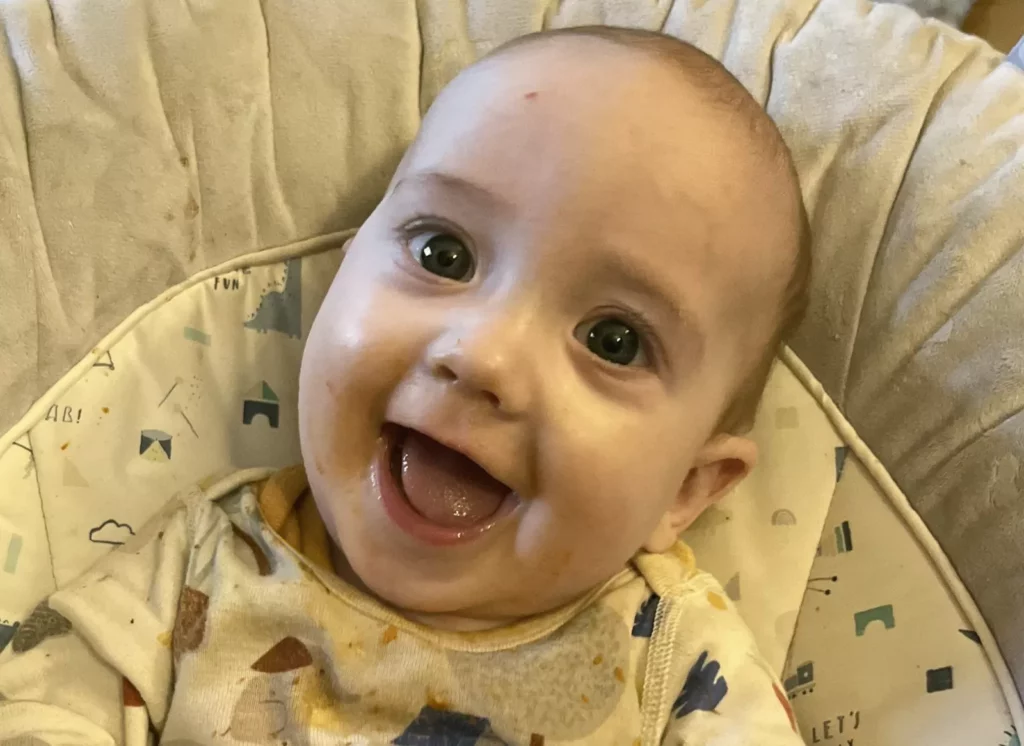
A one-year-old boy died suddenly and inexplicably in April 2023, leaving his family in Inverness to navigate a grief that remains as unexplained as the death itself. Albie McKenzie, the fourth son of Daisy and Eion McKenzie, had just celebrated his first birthday with a big chocolate cake and a family singalong. His mother, Daisy, 37, remembers him as a boy who loved clapping, playing with dinosaurs in the garden, and climbing the wrong way up slides.
A happy last day
On Thursday, April 27, 2023, Albie went to nursery and took his very first bus ride. Back home, he ate his dinner but was tired from the day, so Daisy took him up to bed early. “His dad was tickling him on his nose and tummy which was making him laugh,” Daisy recalled. “He fell asleep happy and healthy.”
Albie was the family’s fourth boy, with older brothers Caden, now 18, Jacob, 16, and Milo, five. The McKenzies lived together in Inverness, where the family’s routine was full of the ordinary chaos of raising four young sons. Nothing had suggested anything was wrong.
Sudden collapse and the arrival of police
On the morning of Friday, April 28, Daisy went to check on Albie and found him unresponsive. “I remember doing CPR, shouting to Eion to call 999, and the rest is a blur,” she said. Paramedics arrived and fought for Albie’s life, but eventually Daisy was given the devastating news that her little boy had died. “It was like nothing I’ve ever felt before,” she said.
While Daisy held Albie in her arms, paramedics warned that police officers would soon arrive. In Scotland, unexpected deaths of children are reported to the Procurator Fiscal, who may then instruct Police Scotland to investigate. The charity SUDC UK states that police involvement is standard procedure and does not imply suspicion of parents, but for Daisy it was deeply distressing. “I suddenly felt like I was under suspicion of some sort,” she said. “I thought: ‘Gosh, did I do something wrong?’ Even though I knew I hadn’t.” Officers took some of Albie’s belongings, including his bedding and the rainbow pillow he slept with.
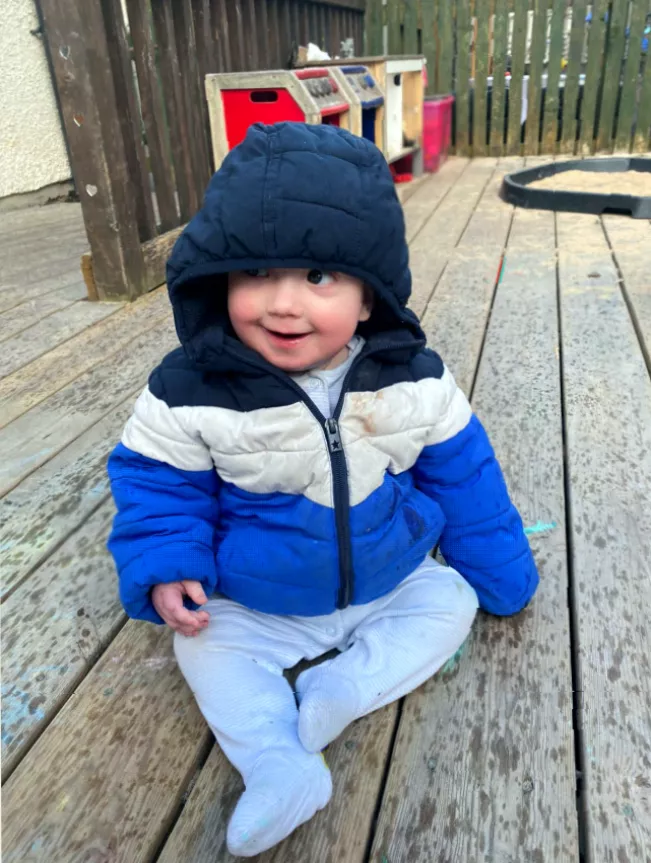
Albie was taken to hospital, and Daisy accompanied him. She was asked to give a statement and blood samples. “A nurse held Albie in another room, while I gave my statement,” she said. “It took an hour. I wish I’d had that with him.”
The search for answers
Albie was then taken to a hospital in Aberdeen, more than two hours away, for a post-mortem examination. The family were not able to see him for three weeks. “Every day just felt so long because I wanted him back in Inverness,” Daisy said. “I was phoning every day to ask if there was an update. I was so full of fear that I might have done something wrong, or missed that he was unwell in some way. I just wanted answers.”
Around three weeks later, the family were told that Albie’s cause of death was Sudden Unexplained Death in Childhood (SUDC), meaning there was no explanation for why he passed away. SUDC is defined by the charity SUDC UK as the unexpected death of a child aged between one and 18 years that remains unexplained after a thorough investigation, including a complete autopsy and review of clinical history. It is a diagnosis of exclusion. Around 40 children are affected every year in the UK, comparable to 1–2 seemingly healthy children dying every fortnight, often going to sleep and never waking up. According to the National Child Mortality Database, SUDC is the fourth leading category of death for children aged 1–4 in the UK, and there are more unexplained childhood deaths between ages 1–9 than deaths from traffic accidents, fires, or drowning. In Scotland, Police Scotland has a duty to investigate unexpected child deaths, and investigations including post-mortem examinations can take several months.
For Daisy, the lack of a cause was agonising. “That was difficult for us because I wanted information,” she said. “I wanted to know if there anything I could have done. But there’s no way to prevent it and there’s no way to predict it.” Emerging research points to heterogeneous causes including genetic variants linked to cardiac disease and epilepsy, and links to febrile seizures. However, there is currently no dedicated public funding for SUDC research in the UK; funding comes largely from charities like SUDC UK, which since its founding in 2017 has awarded £890,000 to medical research.
Supporting the family through grief
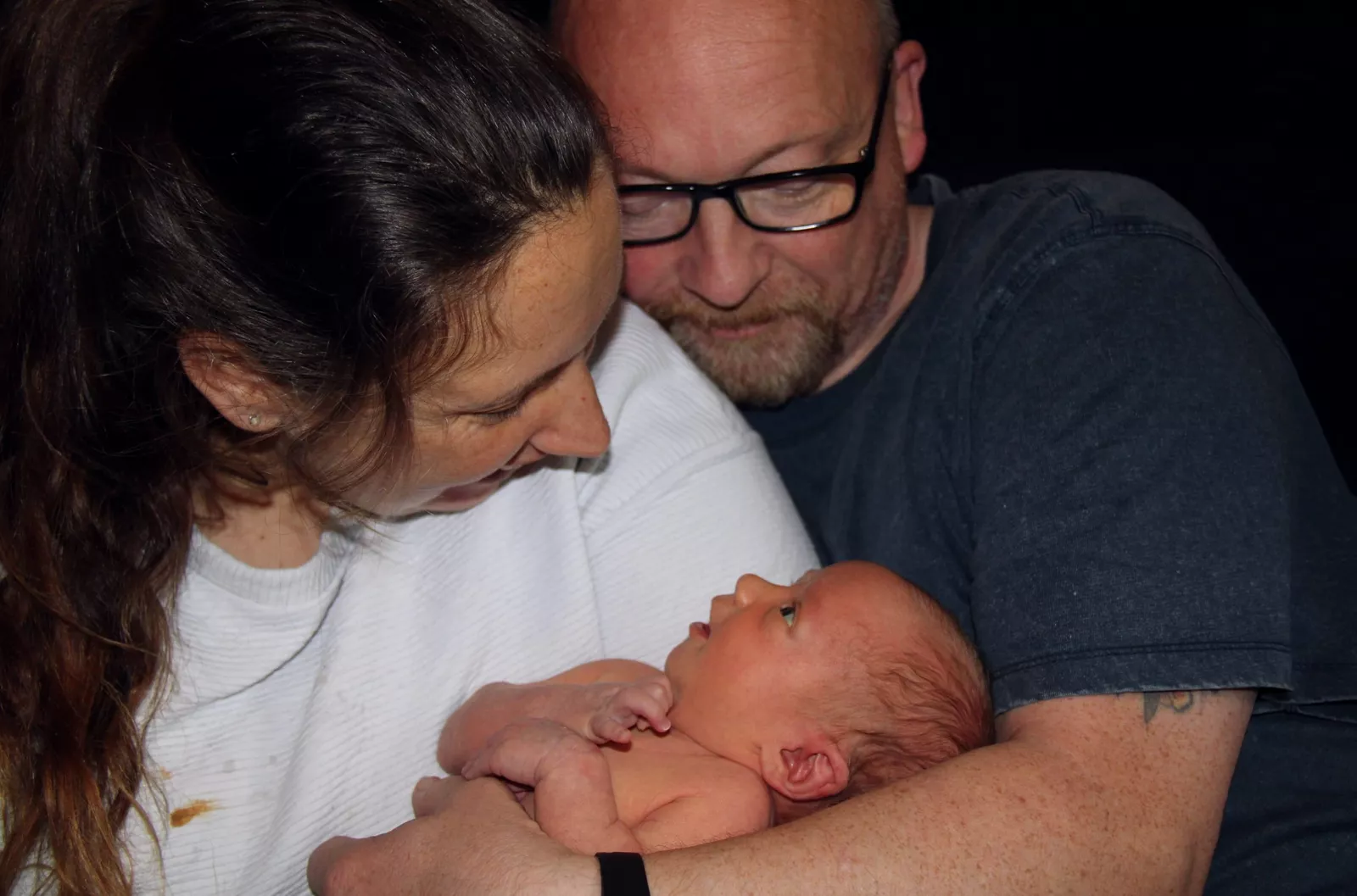
As Daisy and Eion struggled to understand what had happened, they also had to support their other children. The boys’ school offered counselling and allowed them to leave lessons whenever needed. “I was so worried about them,” Daisy said. “I was still a mum to them, so I was so conscious thinking, ‘How are they coping?’”
With Albie still in Aberdeen, Daisy would visit him at the funeral home. “They let me go at all hours of the day,” she said. “They even stayed open late.” Albie was laid to rest on May 24, 2023. “I spoke at his funeral, there was so much I still wanted to say to him,” Daisy said. “It was probably a blubber and mess, but it didn’t matter. We played Taylor Swift. Everyone was remembering him and talking about how wonderful he was.”
One year and eight months after Albie’s death, the police investigation was officially closed. Due to a backlog of other cases, it took longer than expected. Daisy described the closure as a “relief”.
Living with grief, remembering Albie
Almost three years on, Daisy says grief remains difficult to navigate. “I can feel about five emotions in one day. My stages of grief haven’t followed a neat timeline at all. They’ve been messy and jumbled together.” The SUDC Foundation, which works alongside SUDC UK, emphasises that grief is normal and unique to each individual. Daisy said she has been surprised to learn that happiness and sadness can exist together. That coexistence became particularly real when she welcomed a new baby boy, Bhodi. “Having Bhodi was quite a whirlwind because when I was pregnant, I was so anxious,” she said. “But since he’s been here, he’s just such a fun little baby. I feel like Albie sort of chose him for us because he knew what we needed.”
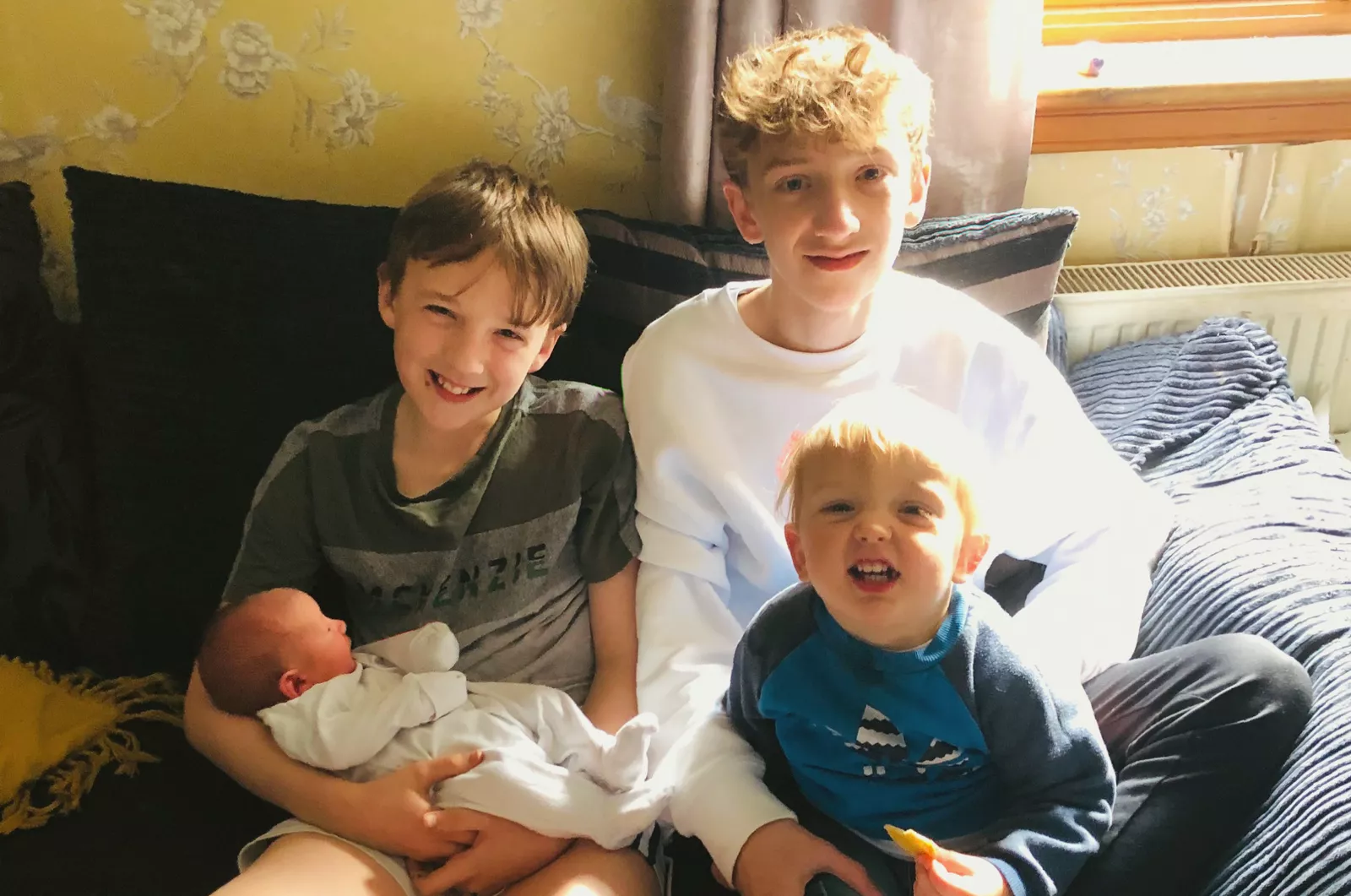
Bhodi’s middle name is Albie. “I thought that’ll be quite nice when he grows up and people say, ‘What’s your middle name after?’” Daisy said. “He’ll be able to say, ‘That’s the name of my big brother.’” She was extra cautious with Bhodi, particularly around the time of his first birthday and the two-week mark – the age at which Albie died. “I probably had him at the doctors quite a few times that month just to get him checked over.”
The family now marks Albie’s birthday each year with charitable projects that reflect the things he would have loved. Daisy is raising money for a community garden, because Albie loved being outdoors. Albie remains woven into everyday family life. Daisy and Eion buy each child a Christmas bauble every year, including one for Albie. During beach trips to Nairn Beach, about five miles from home, they write his name in the sand. A teddy bear made from Albie’s baby clothes accompanies the family on holidays and special days out. Recently, Caden turned 18 and got Albie’s date of birth tattooed on his forearm. “Usually parents would be probably a bit annoyed about a tattoo, but I’m so proud that he did that,” Daisy said.
When people ask how many children she has, Daisy’s answer is simple. “Sometimes I think maybe it makes people a little bit uncomfortable, but it would make me more uncomfortable not to mention Albie. I always say I’ve got five boys.”