

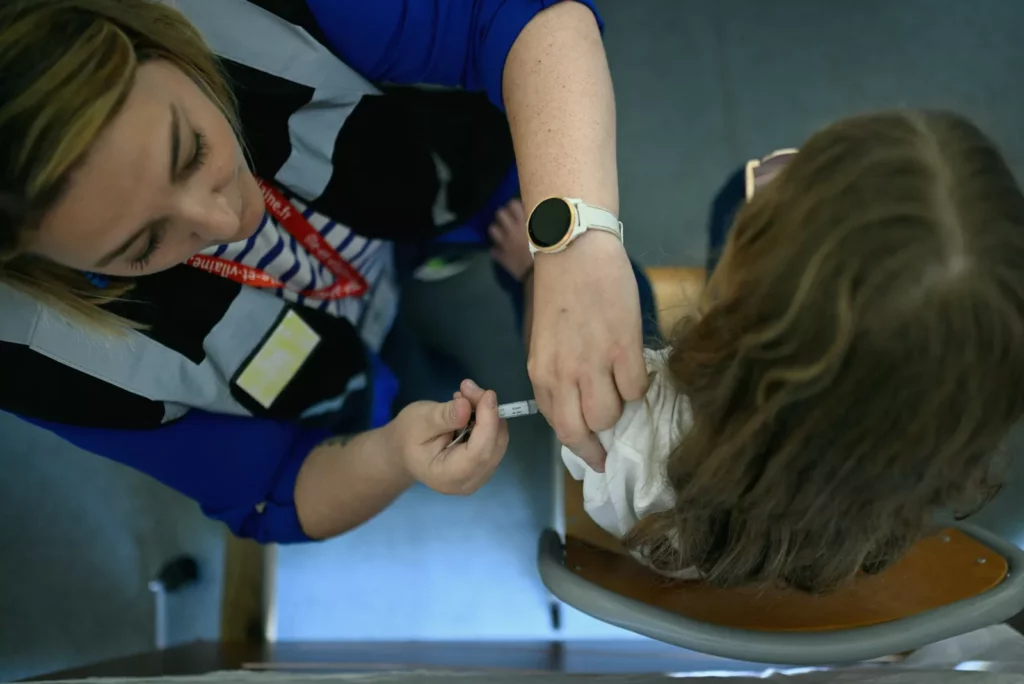
England has recorded zero cervical cancer deaths among women aged 20 to 24 between 2020 and 2024 — a historic first that researchers say is a direct result of the human papillomavirus (HPV) vaccination programme. Without the jab, around 23 deaths would typically have been expected in this age group.
Saved lives and a near-zero risk
The HPV vaccine has already prevented an estimated 200 deaths from cervical cancer in England, according to research led by Queen Mary University of London and funded by Cancer Research UK, published in The Lancet. That figure is projected to rise significantly as vaccinated cohorts grow older. Children who received the jab at age 12 or 13 now face a near-zero risk of dying from the disease before they turn 30.
Between 2015 and 2019, cervical cancer deaths among women aged 20 to 24 fell by 80 per cent. The study is the first to demonstrate the vaccine’s direct impact on mortality, not just infection or pre-cancer rates. Professor Peter Sasieni, the lead author from Queen Mary, described the 200 saved lives as “just the tip of the iceberg”.
HPV is a group of viruses transmitted through sexual contact that often cause no symptoms. Around 13 high-risk types are responsible for 99.7 per cent of cervical cancers. The vaccine, which uses the Gardasil 9 formulation in the NHS programme, protects against nine strains, including those that cause most cervical cancers and genital warts. It also guards against other HPV-linked cancers of the mouth, throat, anus, penis, vulva and vagina.
The programme began for girls in 2008 and was extended to boys in 2019. Since September 2023, a single dose is offered to everyone under 25, replacing the earlier two-dose schedule. Catch-up vaccinations are available up to age 25, and a national campaign is running until 31 March 2026 to encourage uptake among 16- to 24-year-olds. Men who have sex with men up to age 45 can also receive the vaccine free at sexual health and HIV clinics.
Falling uptake threatens progress
Despite these successes, vaccination rates have dropped, raising fears that hard-won gains could be eroded. In the 2024–2025 academic year, 71.7 per cent of girls in Year 8 were vaccinated, along with 67 per cent of boys. By Year 10, coverage rose to 75.5 per cent for girls and 70.5 per cent for boys — still well below the World Health Organisation’s target of 90 per cent for girls by age 15 and lower than the previous year.
London recorded the lowest rates: 62.6 per cent of girls and 57.7 per cent of boys. The East of England fared best. Cancer Research UK warns that around one in four young people now leave school without protection.
The decline has multiple roots. Uptake remains substantially below pre-pandemic levels, and data show coverage is lower in more deprived areas and within communities of colour — the same communities that already face higher cervical cancer incidence rates. Barriers to vaccination include misinformation, logistical hurdles and varying levels of engagement with school-based immunisation programmes. The NHS and local authorities run catch-up drives in Years 9 and 10, but these have not closed the gap.
Socioeconomic disparities are mirrored in cervical screening, where attendance has also fallen over the past decade, particularly among younger women and underserved groups. Screening remains essential because the vaccine does not cover all cancer-causing HPV strains. Barriers cited include pain, discomfort, embarrassment and time constraints, while facilitators include easy appointment booking and the peace of mind testing provides.
Experts call for urgent action
Cancer Research UK’s chief executive, Michelle Mitchell, said the findings were “a powerful example of what’s possible when science is backed by strong public health programmes” but stressed that falling uptake puts that progress at risk. “It’s essential that the UK government and health systems urgently address this with targeted action to reach communities where uptake is the lowest,” she said. “Every parent and guardian can support this by making sure children and young people get the HPV vaccine. It’s also important that people take up cervical screening when invited, even if they have had the HPV vaccine.”
Professor Sasieni emphasised that the 200 deaths prevented are only the beginning. “As vaccinated generations grow older, we’ll see many more lives saved from cervical cancer.”
The NHS has set an ambition to eliminate cervical cancer as a public health problem by 2040, defined as an incidence rate below four per 100,000 woman-years. Without improvements in vaccination and screening, current projections suggest elimination would not be reached until around 2050 — a decade late. The WHO has set global targets for 2030: 90 per cent of girls vaccinated by age 15, 70 per cent of women screened by 35 and again by 45, and 90 per cent of women with pre-cancer or invasive cancer treated or managed.
Caroline Temmink, NHS director of vaccination, said the zero-death milestone was “incredibly exciting”. “It’s a safe and effective vaccine and we urge everyone eligible to take up the offer when invited,” she said. “Alongside cervical screening, HPV vaccination is central to the NHS ambition to eliminate cervical cancer by 2040.”