

A ‘dead’ part of his prostate: Jeremy Clarkson reveals aggressive cancer diagnosis
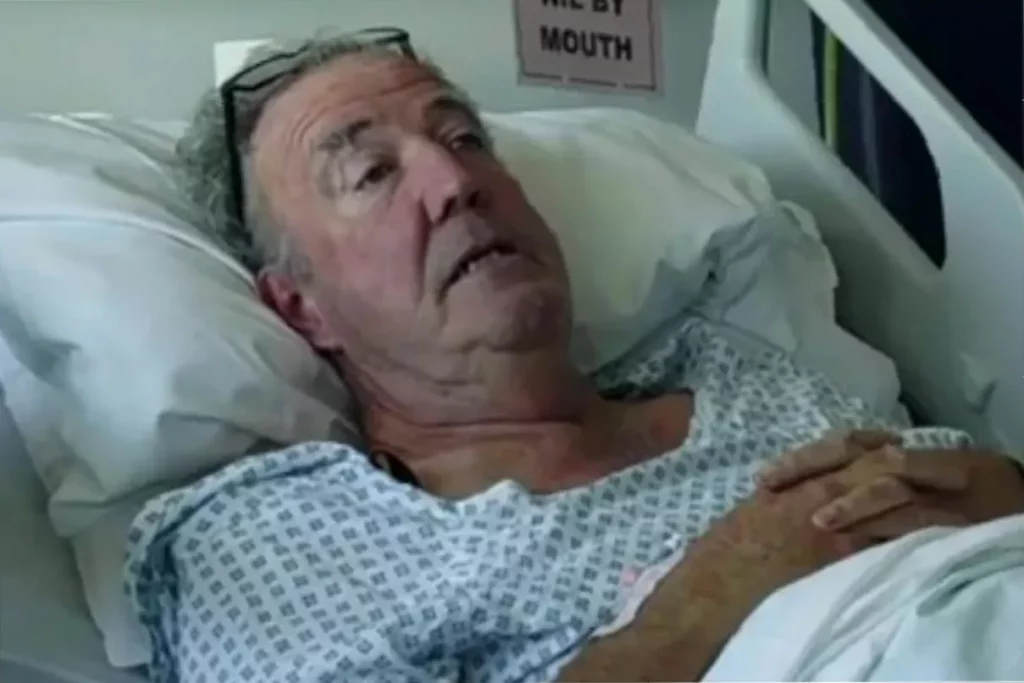
Jeremy Clarkson has disclosed that he was diagnosed with an aggressive form of prostate cancer, a revelation he made during the most recent series of his television programme. The presenter told viewers that ten per cent of his prostate — “where the cancer is” — is “dead”. Clarkson underwent surgery to remove that portion of the gland. He has also experienced complications: at one point he was filmed in a hospital bed, saying, “Some of the treatment has gone awry, let’s say. I’ll probably be here for a little while.”
Filmed between late 2024 and September 2025, the series documented Clarkson’s diagnosis in May of last year. He has indicated that he will not know whether the treatment has been successful until November, and expressed uncertainty about the future of his show. “If this is all successful, I’ll see you for season six,” he said, “and if it isn’t, I won’t.”
What is prostate cancer?
Prostate cancer is the most common cancer affecting men. It usually develops slowly over many years, beginning when cancer cells start to grow in the prostate — a small gland located just below the bladder that helps produce semen. Symptoms often do not appear until the prostate has enlarged enough to press on the urethra, the tube that carries urine from the bladder out of the body.
In 2022, 50,751 men were diagnosed with prostate cancer in England alone. More recent figures show that over 56,000 men are now diagnosed annually in England, and more than 64,000 across the UK each year. Around one in eight men will receive a diagnosis in their lifetime. The disease is the second most common cause of cancer death in men in the UK, accounting for 14 per cent of all male cancer deaths, with more than 12,000 men dying from it annually. However, survival rates have improved significantly: around eight out of ten men now live for at least ten years after diagnosis. For all stages combined, approximately 80 out of 100 men survive for a decade or longer. For those diagnosed at Stage 1, almost 100 per cent survive for five years or more.
Symptoms of prostate cancer
Many men with early prostate cancer have no symptoms at all. When they do occur, the most common signs involve changes to urination. These include needing to urinate more often — particularly at night — a sudden and urgent need to pee, difficulty starting or stopping the flow, a weak or interrupted urinary stream, and a feeling that the bladder has not fully emptied. Straining to pass urine is also a frequent complaint.
It is important to note that these symptoms are also common in benign prostatic hyperplasia (BPH), a non-cancerous enlargement of the prostate, and do not necessarily mean cancer is present. Nonetheless, men who experience them should see their GP for a check-up.
Other potential indicators of prostate cancer — especially in more advanced stages — include blood in the urine or semen, erectile difficulties, persistent lower back, hip or pelvic pain, unexplained fatigue, and unintentional weight loss.
Causes and risk factors
Scientists do not know the exact causes of prostate cancer, but several factors are known to increase the risk. Age is the strongest: the vast majority of cases occur in men over 50, and the risk rises sharply with age. Family history also plays a central role. Men whose fathers or brothers have had prostate cancer are at increased risk, and having a father or brother diagnosed before the age of 60 more than doubles the average risk. Inherited genetic mutations, including those in the BRCA1, BRCA2 and HOXB13 genes, are also linked to higher risk. A family history of breast, ovarian or pancreatic cancer can indicate a heightened risk because of shared genetic factors.
Ethnicity is an important factor. Black men are approximately twice as likely to develop prostate cancer as white men, and one in four black men will be diagnosed in their lifetime. They are also more likely to be diagnosed at a later stage and to die from the disease. For reasons not yet understood, prostate cancer is less common in Asian men. Obesity is linked to an increased risk of advanced or aggressive prostate cancer and a greater chance of the cancer spreading; obese men also have a higher risk of dying from the disease.
How is prostate cancer diagnosed?
Doctors have a range of tests to diagnose prostate cancer. These include a digital rectal examination (DRE), in which the prostate is felt through the wall of the rectum; blood tests; biopsies, in which small samples of prostate tissue are taken; and MRI scans.
A blood test known as the prostate-specific antigen (PSA) test is also used. This measures the level of PSA, a protein produced by the prostate. High levels can be a sign of a prostate condition, such as an enlarged prostate or prostate cancer. However, the PSA test is not used in routine NHS screening because it is not considered reliable enough to detect prostate cancers that need treatment without causing overdiagnosis and overtreatment. There is no national screening programme for prostate cancer in the UK. Men over 50 can request a PSA test from their GP, and anyone with urinary symptoms should always seek a GP assessment.
Research is ongoing to improve diagnosis. A potential spit test for identifying prostate cancer risk has shown promise in detecting the disease earlier. Targeted screening is also being recommended for men who carry BRCA gene mutations.
How is prostate cancer treated?
The treatment a man receives depends on the stage and aggressiveness of the cancer. For early-stage cancers that are not causing troublesome symptoms, doctors may recommend “watchful waiting” or “active surveillance” — close monitoring to see whether the cancer progresses. This approach is often taken because treatments can have side effects, including erectile dysfunction and increased urinary frequency.
If treatment is needed, options include surgically removing the prostate (radical prostatectomy), or radiotherapy — which can be delivered externally (external beam radiotherapy) or internally (brachytherapy). Radiotherapy may be given alone or alongside hormone therapy. Hormone therapy, also known as androgen deprivation therapy (ADT), works by either stopping the body from producing testosterone or preventing testosterone from reaching cancer cells. Since prostate cancer usually needs testosterone to grow, this is a key treatment. It can shrink tumours or slow their growth, though it does not cure the disease.
When the cancer has spread to other parts of the body — such as the bones or lymph nodes — it cannot be cured, but treatment is still available. This may involve hormone therapy alone or chemotherapy combined with hormone therapy. External beam radiotherapy, when used alongside other treatments, has been shown to help some men live longer. The drug abiraterone, discovered by UK researchers, is a key treatment for advanced prostate cancer. Emerging therapies include high-intensity focused ultrasound (HIFU) and cryotherapy.
Drug plans are tailored to each patient, and men should speak to their doctor about the best treatment for their individual circumstances.