


Close Menu
    Useful
    • About Us
    • Contact Us
    • Advertise With Us
    • Health Explainers
    • Our Editorial Team
    Facebook
    HealthNewsDaily.co.uk
    • Home
    • NHS

      NHS hit with £300,000 fine over water contamination that killed chemo patient

      16 June 2026

      Woman, 60, quits job that moved online to start anew in nursing

      15 June 2026

      Cancer patients and unwell children in hospital delighted by dance sessions

      14 June 2026

      NHS warned its weekday-only approach is causing deaths and wasting billions

      13 June 2026

      Resident doctors announce four-day strike, dealing triple blow to NHS

      13 June 2026
    • Health Policy

      Sierra Leone first lady will not oppose FGM without evidence of harm

      17 June 2026

      Readers tell of days of suffering as assisted dying bill returns

      16 June 2026

      Ministers accused of inaction on protection of women and girls

      16 June 2026

      Taxi costing £70 almost used by NHS to deliver 50p pill to England’s former deputy chief medical officer

      15 June 2026

      Abolition of legal protections for disabled people creates dangers

      14 June 2026
    • Mental Health

      Bleech 9:3 discuss addiction, sobriety, and debut album

      17 June 2026

      Kathleen Chalfant excels in understated, sensuous memory loss play Familiar Touch

      15 June 2026

      William consoles mental health charity user overcome by emotion during tribute

      11 June 2026

      Mother spent £40,000 and four years trying for a baby – despite already having a child

      11 June 2026

      Drop in US suicide toll as one state defies national pattern

      10 June 2026
    • Wellness & Lifestyle

      Letter writers take issue with soap dispensers

      16 June 2026

      Dietitian advises morning drink to lower blood pressure in hours

      16 June 2026

      Experts outline sunscreen reapplication frequency as summer returns

      15 June 2026

      Rising demand for high-protein foods sparks shortage fears

      14 June 2026

      Heightened pollen season expected this year with advice on symptom avoidance

      14 June 2026
    • Disease & Prevention

      Doctors now regard condition affecting millions as akin to stroke and Parkinson’s

      17 June 2026

      Prostate cancer indicators and management methods outlined

      17 June 2026

      Unpleasant bug with no pain expected to spread in UK groins this summer

      17 June 2026

      Men’s skin cancer risk three times higher if sunscreen misses one body part, doctor warns

      16 June 2026

      Mobility equipment firm’s five-star assistance credited with saving holiday

      16 June 2026
    • Treatment & Research

      Plastic sheet could avert thousands of maternal haemorrhage deaths, trial suggests

      17 June 2026

      Behaviours tied to violent crime could be curbed by weight loss jabs

      17 June 2026

      Doctors do not recommend paracetamol for period pain, yet most women use it

      16 June 2026

      Mother baffled by death of one-year-old who was in good health

      16 June 2026

      Title-winning swimmer with rare brain cancer appeals for UK to boost support for fellow patients

      16 June 2026
    HealthNewsDaily.co.uk
    • NHS
    • Health Policy
    • Mental Health
    • Wellness & Lifestyle
    • Disease & Prevention
    • Treatment & Research
    Home » Disease & Prevention » Unpleasant bug with no pain expected to spread in UK groins this summer
    Disease & Prevention

    Unpleasant bug with no pain expected to spread in UK groins this summer

    Sophie HargreavesBy Sophie Hargreaves17 June 2026
    A person walking through long grass in a UK woodland during summer

    Lyme disease remains the most common vector-borne illness in England, with the UK Health Security Agency (UKHSA) reporting 1,168 laboratory-confirmed acute cases recorded in 2025 alone. While the overall number has fluctuated — 1,581 cases were confirmed in 2024, a 5.2% decrease from the previous year — health officials estimate the true annual figure in England and Wales could be between 2,000 and 3,000, as many cases are diagnosed clinically without laboratory testing. The warning comes as temperatures are expected to reach 33°C in parts of the UK next week, with warm weather and frequent rainfall creating the damp conditions ticks need to survive and remain active.

    Dr Suzanne Wylie, a GP and medical adviser for IQdoctor, has urged anyone spending time outdoors this summer to take extra care. “Higher temperatures and spells of rain create the damp conditions ticks need to survive and remain active,” she said. “So, people may be more likely to encounter ticks in long grass, woodland, heathland and other green spaces.” Ticks are not confined to remote countryside: they can also be found in local parks, nature reserves, woodland paths and even overgrown gardens. The dominant species in the UK is the sheep or deer tick (Ixodes ricinus), a main vector for Lyme disease, though other species such as Dermacentor reticulatus and Haemaphysalis punctata are also present.

    Health officials have pointed out that tick bites increase significantly during late spring and peak in June, making this one of the highest-risk periods of the year. Activity begins to rise from March, and milder winters and warmer springs — linked to climate change — are shifting seasonal patterns and allowing ticks to thrive. The expansion of urban areas into greenbelts and higher deer and animal populations also contribute to more favourable tick habitats and greater human exposure.
    A close-up view of a sheep tick on a green leaf in natural habitat

    The risks of untreated Lyme disease

    Most tick bites do not result in illness — in the UK, approximately 4% of ticks carry the bacteria that cause Lyme disease, though this can range from 0% to 20% in different areas and years, sometimes reaching 8–10% in specific regions. European studies suggest only 1% to 5% of tick bites lead to infection. “The good news is that the overall risk of developing Lyme disease remains relatively low, and not every tick carries the bacteria responsible for the infection,” Dr Wylie said. “However, it’s important not to dismiss symptoms if they develop after a bite.”

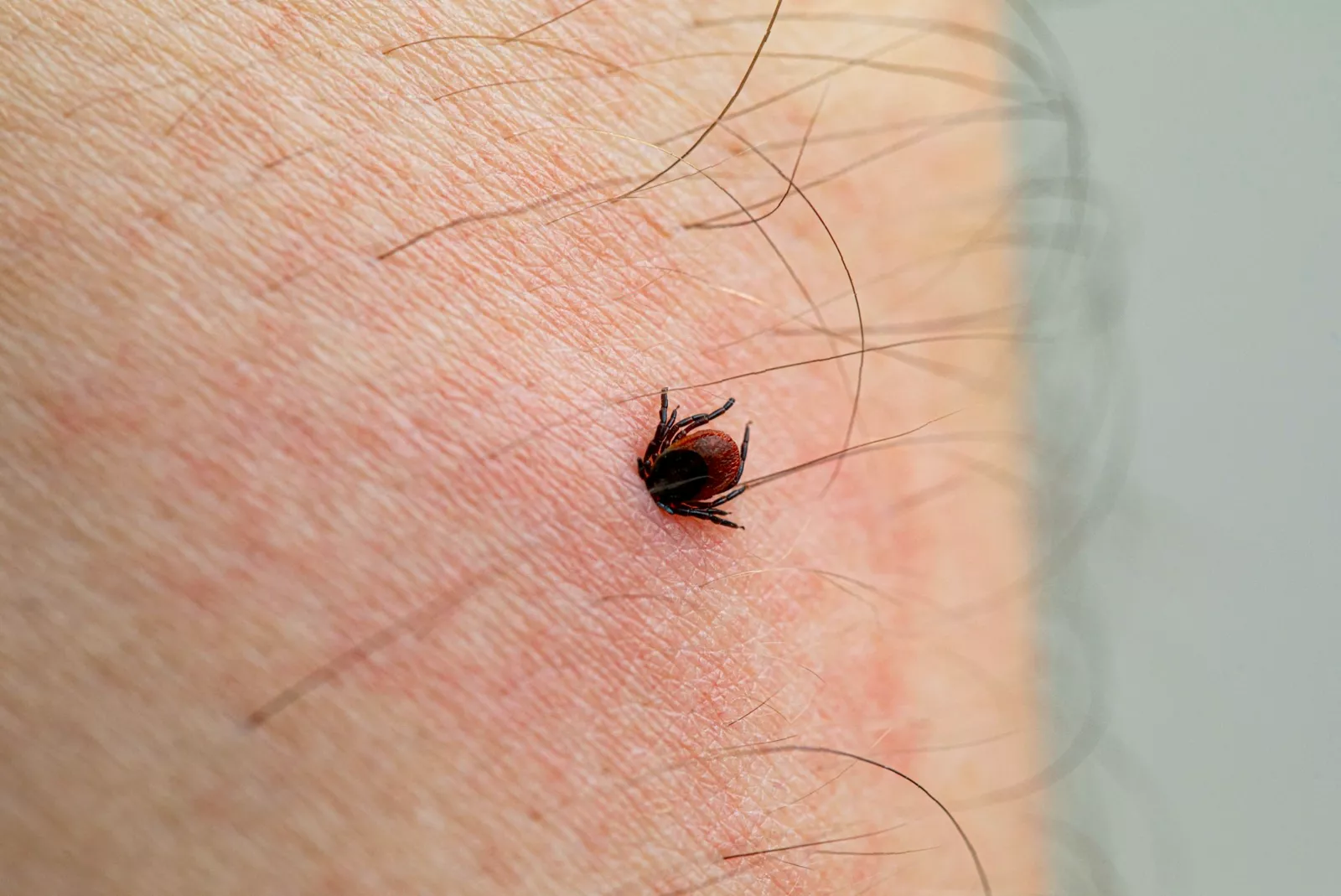
    The early signs of Lyme disease are often subtle. A spreading circular rash, described as a “bullseye” or target shape, appears in about 70% of cases. It can develop up to three months after a bite but is typically noticeable within the first month. On darker skin tones, the rash may not look like a classic bullseye and can instead resemble a bruise. About 30% of infected people do not develop a rash at all. Accompanying symptoms can include flu-like illness — fatigue, headaches, muscle aches, fever, and swollen lymph nodes. “One of the challenges is that many people never realise they’ve been bitten,” Dr Wylie explained. “Ticks can be extremely small, and their bites are usually painless. By the time symptoms develop days or weeks later, the original bite may have been forgotten.” Nymph ticks, which are less than 2mm in size, are particularly easy to miss.

    If Lyme disease is left untreated, it can lead to more serious complications. According to the US Centers for Disease Control (CDC), these include dizziness, nerve pain, facial paralysis, an irregular heartbeat, and arthritis. Severe cases may also involve severe headaches, neck stiffness, confusion, and memory problems. A small number of people treated for Lyme disease continue to experience long-term symptoms such as tiredness, aches, and loss of energy that can persist for years. The reason for this is not fully understood, but those affected are advised to return to their doctor. Treatment with antibiotics is most effective when started early — a GP will usually prescribe a course lasting 17 to 28 days. If the characteristic bullseye rash is present, treatment can begin immediately without waiting for a blood test. Blood tests may be negative in the early stages of the infection, and severe cases may require intravenous antibiotics in hospital. Prophylactic (preventative) antibiotics after a tick bite are not generally recommended in the UK.
    A person checking their lower leg for ticks after a countryside walk

    While Lyme disease is the primary concern, ticks in the UK can also carry other illnesses, though these are far rarer. Tick-borne encephalitis (TBE) has been found in specific areas such as Thetford Forest, the Hampshire/Dorset border, the New Forest, and the North Yorkshire Moors, but the risk to the public is considered very low, with only a small number of locally acquired human cases since 2019. Babesiosis, a parasitic infection that causes malaria-like symptoms, is also rare in humans in the UK, and cases of anaplasmosis and ehrlichiosis are very few.

    How to prevent tick bites

    Prevention remains the most effective strategy. Dr Wylie recommends that when walking in areas where ticks are known to be present, people should wear long trousers and long sleeves where practical and consider tucking trouser legs into socks. Light-coloured clothing makes it easier to spot ticks before they attach. Insect repellents containing DEET offer additional protection, and permethrin-treated clothing can also be used. Sticking to clearly defined paths and avoiding brushing against vegetation helps reduce exposure.

    After spending time outdoors, a thorough tick check is essential. Ticks commonly attach behind the knees, around the waistline, in the groin, under the arms, and along the scalp. “Checking children and pets is also important, as ticks can easily go unnoticed,” Dr Wylie said. Clothes worn outdoors should be washed at 60°C or above, and tumble drying on high heat can kill any remaining ticks.

    A park sign warning about ticks and Lyme disease near a nature reserve

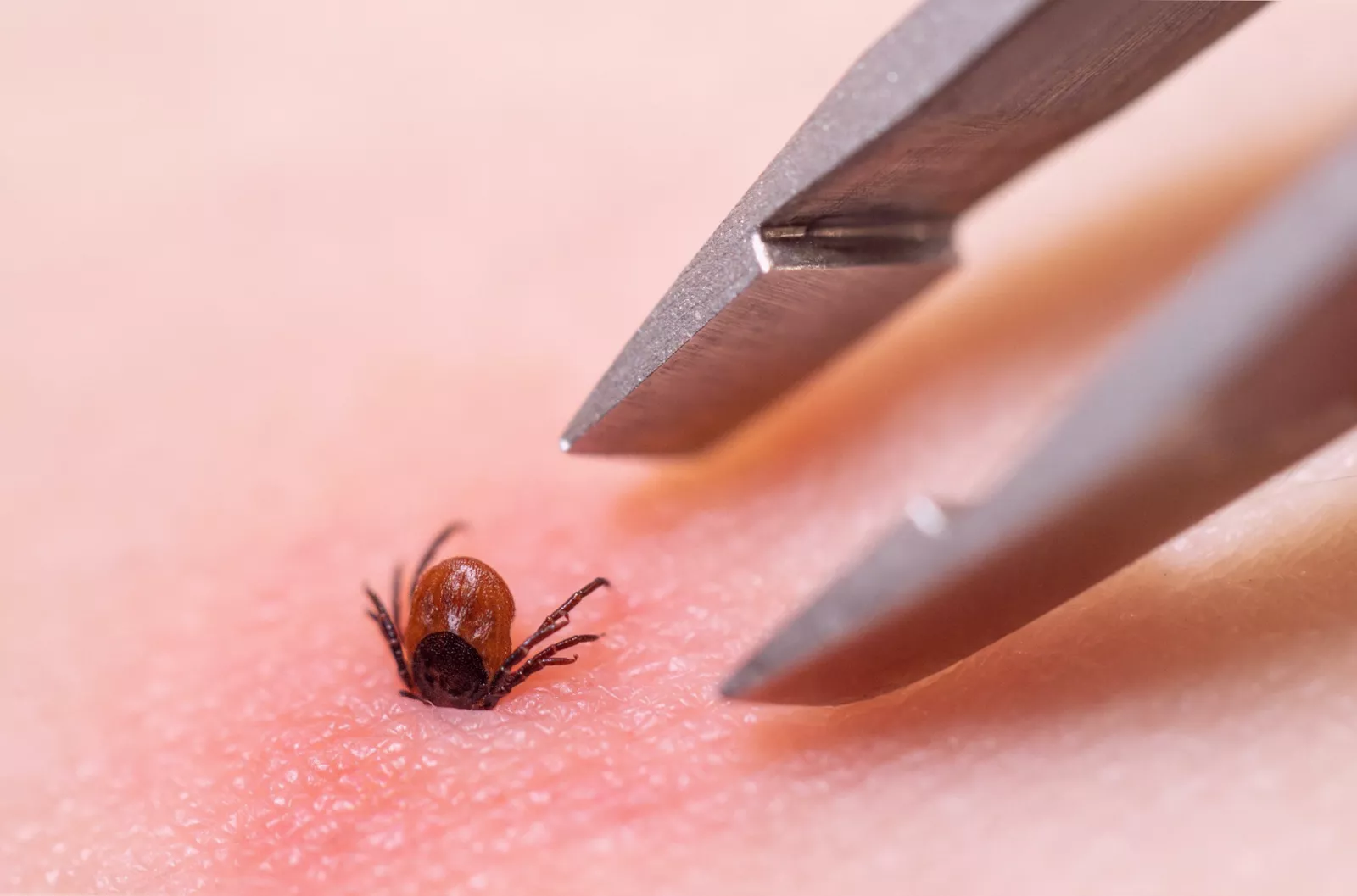
    If a tick is found attached, it should be removed as soon as possible. Use fine-tipped tweezers or a tick-removal tool, grasp the tick as close to the skin as possible, and pull upwards steadily without twisting, squeezing, or crushing it. Clean the bite area with antiseptic or soap and water. “Avoid twisting, squeezing or attempting home remedies such as petroleum jelly, nail varnish or heat, as these methods can increase the risk of complications,” Dr Wylie said. If mouthparts break off in the skin, they should not be dug out — they will usually fall out naturally, and digging can increase infection risk.

    Local reactions to tick bites, such as a red lump, swelling, itchiness, blistering, or bruising, are usually harmless. The NHS provides detailed guidance on removal. The key message, however, is not to let fear of ticks deter people from enjoying the outdoors. “People should absolutely continue to enjoy the outdoors,” Dr Wylie said. “Walking, cycling and spending time in nature are fantastic for both physical and mental health. However, a quick tick check at the end of the day could be one of the simplest health precautions people take this summer.”

    Antibiotics Flu UKHSA Walking
    Share. Facebook Twitter LinkedIn WhatsApp Telegram
    Sophie Hargreaves
    Sophie Hargreaves

    Health Correspondent
    Sophie Hargreaves covers medical research, new treatments, disease outbreaks and prevention for Health News Daily. She holds a Master's degree in Health Sciences from the University of Leeds and has spent several years translating complex medical science into clear, accessible reporting for a general audience. Sophie focuses on the latest clinical trials, NICE and MHRA approvals, vaccination programmes and emerging health threats, always with an eye on what these developments mean for people in the UK.
    · MSc Health Sciences (University of Leeds), science communication volunteer, medical research literacy
    · Clinical trials and drug approvals (NICE, MHRA), cancer screening programmes, vaccination and outbreak response, women's health (endometriosis, PCOS, menopause), weight management treatments, AI in diagnostics

    Related Posts

    Disease & Prevention

    Doctors now regard condition affecting millions as akin to stroke and Parkinson’s

    17 June 2026
    Disease & Prevention

    Prostate cancer indicators and management methods outlined

    17 June 2026
    Disease & Prevention

    Men’s skin cancer risk three times higher if sunscreen misses one body part, doctor warns

    16 June 2026
    Disease & Prevention

    Mobility equipment firm’s five-star assistance credited with saving holiday

    16 June 2026
    Join Our Community & Win

    Each month we select one lucky follower to receive a prize from our partners. Follow us on our social channels for your chance to win.

    • Facebook
    Latest
    Disease & Prevention

    Doctors now regard condition affecting millions as akin to stroke and Parkinson’s

    17 June 2026
    Treatment & Research

    Plastic sheet could avert thousands of maternal haemorrhage deaths, trial suggests

    17 June 2026
    Mental Health

    Bleech 9:3 discuss addiction, sobriety, and debut album

    17 June 2026
    Disease & Prevention

    Prostate cancer indicators and management methods outlined

    17 June 2026
    Treatment & Research

    Behaviours tied to violent crime could be curbed by weight loss jabs

    17 June 2026
    Health Policy

    Sierra Leone first lady will not oppose FGM without evidence of harm

    17 June 2026
    News Categories
    • NHS
    • Health Policy
    • Mental Health
    • Wellness & Lifestyle
    • Disease & Prevention
    • Treatment & Research
    Help
    • About Us
    • Contact Us
    • Advertise With Us
    • Health Explainers
    • Our Editorial Team
    About Us
    About Us

    Health News Daily provides trusted UK health news, covering NHS updates, medical research, public health and wellbeing with clear and reliable reporting.

    Facebook
    • Cookie Policy
    • Privacy Policy
    • Complaints Policy
    • Corrections Policy
    • AI Disclosure Policy
    • Editorial Policy & Ethics
    • Accessibility Statement
    • Medical Disclaimer
    • Terms & Conditions
    • Sponsored Content Disclosure
    • Copyright Notice
    © 2026 Healthnewsdaily.co.uk. All rights reserved.

    Type above and press Enter to search. Press Esc to cancel.