

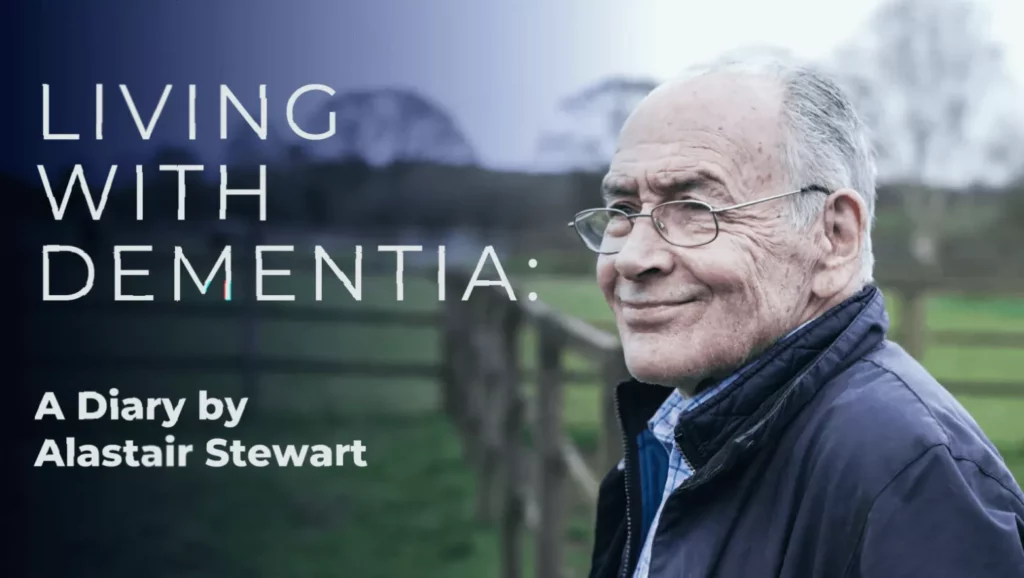
The moment a consultant told Alastair Stewart he did not have Alzheimer’s should have been a relief. Instead, the journalist recalls the clinician’s stark follow-up: vascular dementia can, in many cases, be more debilitating and more likely to prove fatal. Stewart, who announced his early-onset diagnosis in 2023, now lives with the daily reality of a condition caused not by the plaques of Alzheimer’s, but by impaired blood flow to the brain—the result, in his case, of a series of “minor strokes” he describes as “peppershots”.
His recent column, detailing life with the illness, begins with a routine GP visit for blood tests. The results showed ongoing anaemia, not considered a cause of strokes but requiring attention, alongside an increase in falls and dizzy spells. These are now part of the fabric of his days, alongside struggles with simple motor tasks like tying shoelces. He has quit smoking, takes long dog walks, and does puzzles to stay active, but no longer drives. “Unless research is successful,” Stewart has warned, “50 per cent of us will either have dementia or will be caring for somebody with dementia,” echoing Alzheimer’s Society statistics that one in three people born in the UK today will develop it.
The ‘breakthrough’ drug debate
It was with a sense of poignancy, then, that Stewart read recent influential analysis concluding that so-called “breakthrough” Alzheimer’s drugs are unlikely to benefit patients significantly. Researchers suggested their impact was “well below” what is needed to make a meaningful difference. The report, however, has sparked a fierce backlash from other highly respected scientists who argue the conclusions are fundamentally flawed. For Stewart, an Alzheimer’s Research UK spokesperson, the debate underscores a vital truth: research must continue, and public support for charities like Dementia UK and Alzheimer’s Research UK remains critical.
The specific challenge of vascular dementia
While public conversation often centres on Alzheimer’s, vascular dementia presents a distinct and formidable set of challenges. It is typically caused by conditions that damage blood vessels in the brain, such as high blood pressure or the cumulative effect of small strokes. This can lead to a stepwise progression where abilities decline noticeably after each new vascular event, unlike the often more gradual slide of Alzheimer’s. Symptoms can be particularly varied, affecting planning, judgement, and concentration more than memory in the early stages, and are frequently accompanied by physical signs like problems with mobility or balance. Stewart’s own experience of dizziness and falls illustrates this physical dimension, a stark contrast to the common perception of dementia as purely a memory disorder.
His thoughts turned to a colleague facing a related health crisis, sending well-wishes to GB News and former ITV presenter Eamonn Holmes, who is currently in hospital recovering from a stroke. Holmes, who has a history of back problems and mobility issues, is said to be responding well to treatment.
Local frustrations and a national vote
Stewart’s perspective on public services is sharpened by his condition. Over lunch with two old friends and loyal supporters—property man Bob Sperring and communications consultant Khalid Aziz—conversation turned to the quiet run-up to the local elections on 7 May 2026. Leaflets had arrived from the Liberal Democrats and Conservatives, and Aziz had one from Reform UK, though Sperring had heard from no one. Their frustration was less about the campaign and more about the services on offer. Aziz was angry that, despite paying business rates, he receives no refuse collection for his premises and must pay an additional £500 a month for a private service.

They also discussed the costly and, to them, illogical reorganisation of local government in Hampshire, which plans to merge disparate areas like the New Forest with Southampton, and rural East Hampshire with Basingstoke and Aldershot. “None of it seems especially sensible,” Stewart noted, “none of it is widely welcomed, and all of it comes at considerable expense.” The friends shared a broader dismay at what they see as the poor calibre of many modern politicians and civil servants, describing the era as “bleak”.
Economic warnings and defence ‘complacency’
That bleakness extends to the economic horizon. The Organisation for Economic Co-operation and Development (OECD) has expressed growing concern about the UK’s prospects, lowering its GDP growth forecast for 2026 to 0.7% and raising its inflation forecast to 4.0%. It attributes some pressure to geopolitical uncertainty, including the ongoing conflict in Iran—a topic discussed at the recent IMF and World Bank Spring Meetings in Washington, which Stewart recalled covering as a correspondent.
On another strategic front, a powerful warning was issued by former Defence Secretary and NATO Secretary General George Robertson. At a dinner Stewart attended with him and friend Alastair Bruce at the London Scottish Regiment headquarters, Robertson argued that Britain is under attack and under-defended, possessing a welfare strategy but no coherent defence strategy. This critique finds a discordant echo in Westminster. While Labour leader Keir Starmer has spoken strongly on defence at Prime Minister’s Questions and committed to raising spending to 2.5% of GDP by next April, aiming for 3.5% by 2035, he has publicly disagreed with Robertson’s characterisation of “corrosive complacency”. A Defence Investment Plan is expected soon, but reports suggest a £28bn shortfall and disagreements between the Ministry of Defence and the Treasury.
Meanwhile, the Home Office confirmed it is investigating allegations uncovered by a BBC investigation of a network helping asylum seekers fabricate claims by falsely stating they were gay. The department stated that exploiting the asylum system is a criminal offence, while LGBTQ+ asylum charities cautioned against misrepresenting genuine claimants based on isolated cases.
For Alastair Stewart, navigating the complexities of his health, the conversation continues—from the intimate challenge of choosing a shirt to the vast ones of national defence and economic stability. As the local elections approach, he observes a electorate preparing to send a message, wondering who will listen, and how those in power will finally match rhetoric with action.