

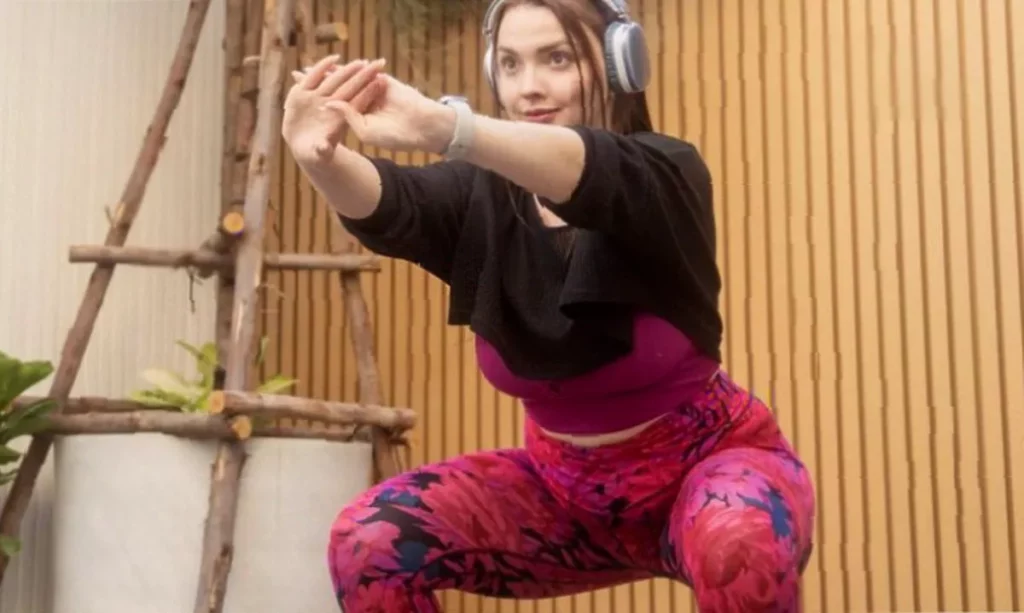
Women are significantly less likely than men to take up strength training, with only 24 per cent doing so twice a week compared with 29 per cent of men, according to a 2022 UK study. Broader figures from a report by ukactive and Les Mills suggest the gap is even wider: 24 per cent of women aged 19 to 65 meet official strength guidelines, against 34 per cent of men. Nearly half of all UK adults (43 per cent) are failing to meet the Chief Medical Officer’s (CMO) recommendation of at least two muscle-strengthening sessions per week, and one in three (32 per cent) do no such activity at all.
Benefits for women
The demographic least likely to be doing strength training – older women – in fact have the most to gain from it. Strength work not only maintains muscle but also bone density, which is critical because women are far more prone to osteoporosis. In the UK, 21.9 per cent of women aged 50 and over have the condition, compared with 6.7 per cent of men in the same age bracket; internationally, osteoporosis causes an estimated 650,000 fractures per year in the EU, and half of all women over 50 will suffer a low-trauma fracture. As oestrogen levels drop after menopause, the bone-protective effect of resistance exercise becomes especially valuable. The activity also helps counteract age-related muscle loss, which slows metabolism and reduces strength. Building muscle boosts metabolism because muscle tissue is more metabolically active than fat, aiding weight management. Strengthening the muscles around joints improves stability, reduces injury risk, and helps prevent falls – a major cause of harm in older adults. Beyond the physical, strength training boosts mood by increasing dopamine and serotonin, and can help manage symptoms of depression and menopausal mood swings.
Common misconceptions
A persistent idea is that women should ease off strength training at certain points in their menstrual cycle, often claimed to be the two weeks before a period or during it. The rationale is that lower oestrogen levels reduce performance. Yet this claim is not supported by good evidence. A 2023 review found that when only higher-quality research was examined, nine out of ten studies detected no difference in strength performance between menstrual cycle phases. Dr Emily Hansell, a sports science academic at Loughborough University who works with elite athletes, notes that “if we look at when medals have been won and personal records have been set, that’s occurred at every single phase of the menstrual cycle.” Some research suggests that perceived performance may dip during the early follicular and late luteal phases, but objective measures show no consistent effect. Elite British track and field athletes themselves perceive a negative impact, particularly in the late luteal and early follicular phases, though high-quality data does not confirm a significant drop in strength. One study observed that dynamic strength peaked during the late follicular phase and ovulation, while mood declined in the late luteal phase, pointing to the need for individualised training rather than blanket rules.
Advising women to “cycle sync” has potential downsides. Dr Hansell warns that it makes starting and sticking to a programme seem complicated and could put people off entirely. Crucially, it can also prevent the steady increase in intensity that is fundamental to getting stronger. “If you’re chopping and changing your programme throughout a month, you’re not achieving progressive overload,” she says. Personal trainer Niki Woods, a qualified nutritionist who runs a Facebook group for midlife women, disagrees with the common advice to routinely swap weights for yoga during low-oestrogen phases. “The negative impact of that is just too great,” she says. “It’s better to carry on and potentially adapt that day, if you feel like you need it.”
Progressive overload: the key to gains
Because women tend to be smaller and less muscular than men to begin with, there is a mistaken assumption that they need a fundamentally different approach to strength training. In fact, the principles are broadly the same – though women may need to start at lower intensities. The single most important concept for everyone, Dr Hansell stresses, is “progressive overload”: gradually raising the intensity of exercise over time, either by increasing the number of repetitions of each movement or by lifting heavier weight. “There is this notion that women shouldn’t lift heavy, but we need to be lifting heavy, while safely, and we need to get there through progressive overload,” she says. “It is the single most important determinant of someone’s strength gains.” This applies across a wide variety of exercises – bodyweight moves like press-ups and squats, free weights, or machine-based work. The goal is to gradually increase the volume of load being lifted. Women who are untrained see enormous benefits even from modest efforts, but without systematic progression, gains will plateau. Progressive overload also works in harmony with proper nutrition and recovery; cutting up a programme to fit menstrual phases can undermine the consistent loading needed to trigger adaptation.
Practical steps and nutrition
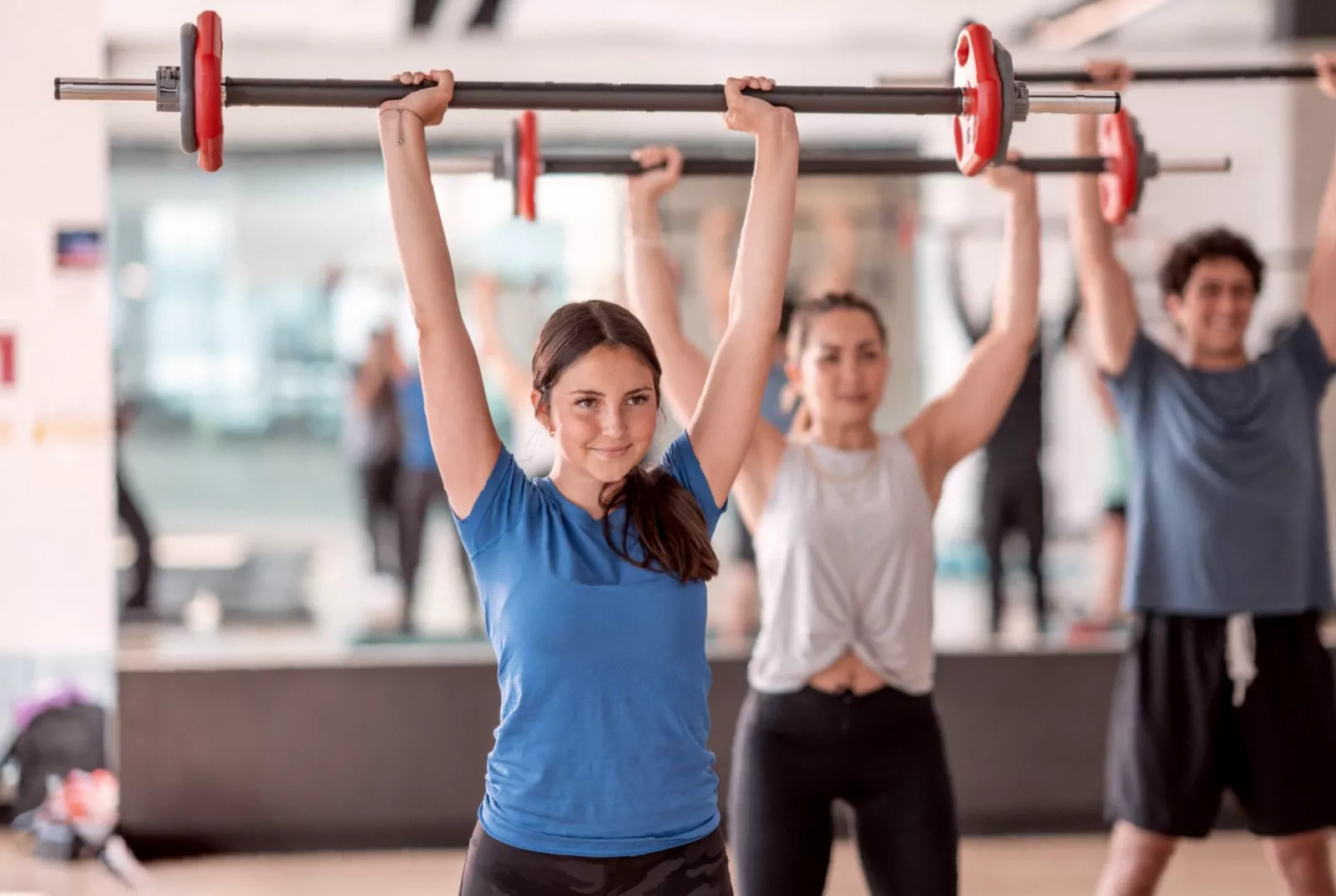
Time poverty is a major barrier for women, says Dr Anna Lowe, a researcher at Sheffield Hallam University. Home workouts offer a practical solution, and the British Heart Foundation provides weights and resistance bands for home use. Updated US exercise guidelines published in March this year confirm that complex routines are unnecessary and that resistance training at home is perfectly effective. “It can be 15 or 20 minutes at home with resistance bands or a couple of dumbbells, and you can make enormous gains in your strength, flexibility and mobility,” Dr Lowe says. For the completely untrained, even a minimal amount of strength work can deliver substantial benefits. She also notes that weakened pelvic floor muscles after childbirth can cause urinary leakage during exertion, and advises affected women to exhale as they exert themselves rather than holding their breath. Core-strengthening exercises such as the plank can help reduce leakage.
Nutrition is another key element. Both men and women aiming to build muscle need adequate protein. The NHS recommends 0.75 grams per kilogram of body weight per day, but more recent guidelines from the British Association of Sport and Exercise Sciences (BASES) advise that people over 60 should aim for 1.0 to 1.2g per kg per day to combat age-related muscle loss, while athletes need 1.6g per kg per day. The British Nutrition Foundation notes that average protein intake in the UK is generally sufficient, but older adults and athletes have higher requirements, and BASES emphasises that the majority of protein should come from whole-food sources. Women who menstruate may need more iron, found in red meat, and ensuring adequate vitamin D and calcium – from dairy products, for instance – supports bone strength, according to nutritionist Ella Rauen-Prestes.
There is some evidence that women’s muscles are less “fatigable” than men’s, meaning they can sustain a proportional force for longer. Niki Woods finds that women may need less recovery time between sets and can cope better with “supersets” – moving straight from one set of repetitions to another. “I generally programme more supersets for women than for men,” she says. However, the most important thing is simply to start. Dr Lowe, whose work at Sheffield Hallam University includes developing an app for midlife women to promote strength training, sums it up: “If you’re untrained, you really don’t need to do much to get massive benefits from engaging in strength training.”