

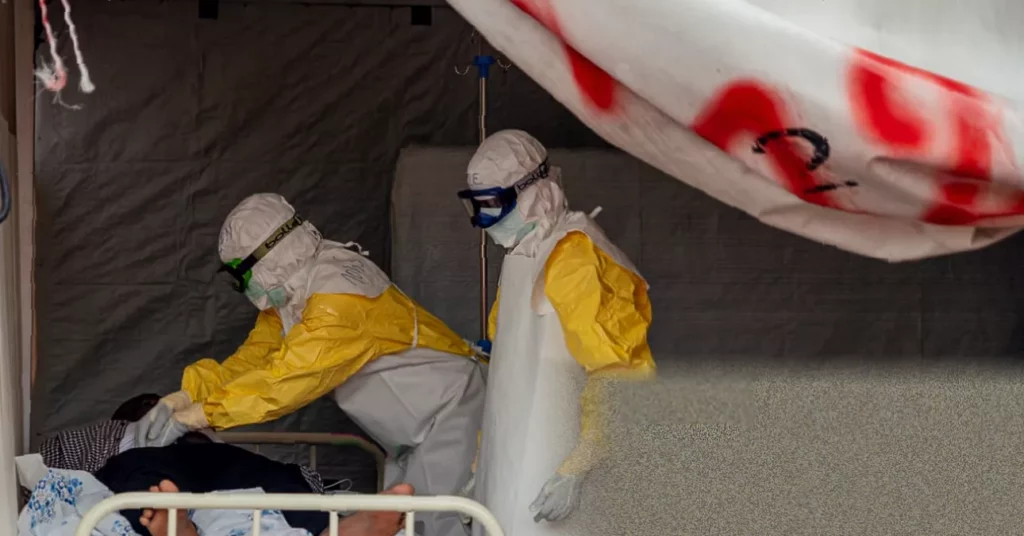
The Ebola outbreak in the Democratic Republic of the Congo may have begun as early as January, giving the virus a substantial head start before it was even identified, the head of the World Health Organization has stated. Dr Tedros Adhanom Ghebreyesus warned that the response is still playing catch-up, with the virus likely circulating undetected for months in a region already grappling with conflict and displacement.
A hidden start and the challenge of catching up
Since the outbreak was officially recognised in mid-May, the Bundibugyo strain of Ebola has caused 344 confirmed cases and 60 deaths in the DRC, as well as 15 confirmed cases and one death in neighbouring Uganda. However, Dr Tedros said the first identified case — a nurse who visited a health centre on 24 April — was unlikely to represent the true beginning. “It could be January, it could be February, March, April,” he told reporters, suggesting a prolonged period of silent transmission that has left responders “still behind”. The epicentre is Ituri province, a region wracked by insecurity, with cases also reported in North Kivu and South Kivu. The virus has spread into Uganda’s capital, Kampala, and the adjacent Wakiso district.
The Bundibugyo virus, first identified in Uganda in 2007, typically carries a lower case fatality rate than other Ebola species — between 25 and 50 percent — but there are currently no approved vaccines or specific treatments for this strain. Dr Tedros noted that the recovery of six people in the DRC and two in Uganda demonstrated that survival was possible if patients reached care quickly and received supportive treatment. Yet the outbreak has already taken a heavy toll on health workers, who account for up to 20 percent of cases in some estimates, a figure that has forced some facilities to close.
Barriers to containment: mistrust, insecurity and travel bans
Community mistrust stands as one of the most significant obstacles to an effective response. During a visit to the DRC last week, Dr Tedros said some community leaders told him they did not believe Ebola was real, while others worried that the response would drain resources from other essential health services. This deep-seated suspicion has, in some instances, spilled over into attacks on Ebola treatment centres, complicating efforts to isolate patients and trace contacts. The WHO chief stressed that building trust is vital, but that it requires time and sustained engagement — both scarce commodities in the midst of an outbreak.
Insecurity and population displacement in Ituri province have further hampered the response. Contact tracing, a cornerstone of infectious disease control, is running at only about 45 percent of identified contacts being followed up. Dr Tedros said that number needed to rise above 90 percent to get ahead of the outbreak. “To get ahead of the outbreak we need to get that number up to above 90%,” he said. The region’s inadequate isolation, care and referral systems, combined with limited access to laboratory testing and diagnostics, have made it even harder to break transmission chains.
Blanket travel restrictions imposed by some countries, including the United States, are also disrupting the response. Dr Tedros called on those nations to lift such bans, arguing that they hinder supply chains and the movement of health workers and equipment. The WHO recommends exit screening at airports, ports and border crossings as a more measured alternative. Uganda has already closed its border with the DRC, allowing only essential traffic and requiring a 21-day quarantine for anyone entering from the DRC, while Canada has suspended certain immigration documents for residents of the DRC, Uganda and South Sudan. The United States, Mexico and Canada have aligned their public health travel measures for individuals arriving from high-risk African regions.
International response: scaling up, funding and research
Despite the setbacks, Dr Tedros said the response was starting to catch up, with treatment centres now established across Ituri province. A key priority is scaling up laboratory and diagnostic capacity in the most affected areas as well as in neighbouring provinces and countries. The number of suspected cases in the DRC fell sharply on Tuesday from more than 1,000 to 116, after officials worked through a testing backlog to either confirm or rule out each case — a sign that diagnostic bottlenecks are beginning to ease.
The United Kingdom has stepped up its involvement. The Foreign, Commonwealth and Development Office has announced the launch of a multi-hazard research network through which experts from the UK and international partners can provide rapid advice and evidence on emerging infectious diseases, including the current Ebola outbreak. In addition, Britain has committed up to £20 million in new funding to support containment efforts in the DRC, focusing on disease surveillance, support for health workers, improving infection prevention and control, and ensuring access to care. The UK Health Security Agency has activated its Returning Workers Scheme to monitor individuals travelling from the UK to affected areas.
The United States has been a major financial contributor, with commitments exceeding $162 million for the Ebola response, and has implemented enhanced travel screening and entry restrictions for travellers from affected regions. The United Nations has allocated $60 million from its Central Emergency Response Fund. International organisations including the International Medical Corps and the International Rescue Committee are deploying rapid response teams, constructing treatment centres and providing essential supplies. UNICEF has classified the outbreak as a Level 3 emergency, its highest classification, to accelerate deployment and operational procedures.
This is the 17th Ebola outbreak in the DRC since the virus was first identified in 1976, and the country has a history of successfully containing previous episodes. Yet the combination of a hidden early start, a strain without a dedicated vaccine or treatment, deep community mistrust, ongoing armed conflict and cross-border spread has made this one of the most challenging. Dr Tedros acknowledged the scale of the task, but pointed to the recoveries in both countries as evidence that the outbreak can be controlled. “It could be January, it could be February, March, April,” he said. “But I think the focus now should be on the response.”