


A surgeon has lifted the lid on a little-known hair washing technique she claims can deliver salon-worthy volume and smoothness in a single wash. Dr. Divya Shokeen, a board-certified dermatologist and hair transplant surgeon based in California, has described the method as her “most elite way to wash your hair.” Speaking in a recent TikTok clip, she told viewers that she recommends the approach to her patients “day in and day out” as the best way to achieve both volume and a sleek finish without flyaways.
Dr. Shokeen, who founded the OSVI Dermatology and Surgical Institute and is a graduate of UCLA, has been recognised annually as a “Super Doctor” since 2019 and has been named a Castle Connolly “Top Doctor” for four consecutive years. Her expertise spans hair restoration, including follicular unit transplantation (FUT/FUE), platelet-rich plasma (PRP) therapy, and medical management for thinning hair. She has also been featured in Vogue, Elle, and Women’s Health. The technique she advocates is called the “shampoo sandwich” — a term she noted is commonly associated with retinoid skincare routines, but which she believes is “way more effective” when applied to hair.
How the ‘shampoo sandwich’ works step by step
The method is designed to solve a common hair care dilemma: how to cleanse the scalp thoroughly without stripping moisture from the lengths and ends. Dr. Shokeen explains that the process involves three distinct stages, each serving a specific protective and cleansing function.
Step one: pre-condition. The first stage is to apply conditioner to the mid-lengths and ends of the hair, carefully avoiding the scalp. This coating acts as a protective barrier, shielding the drier and more fragile sections of the hair from the shampoo that follows. Dr. Shokeen advises that the conditioner should be applied to “the entire length of your hair but not the top of your scalp.”
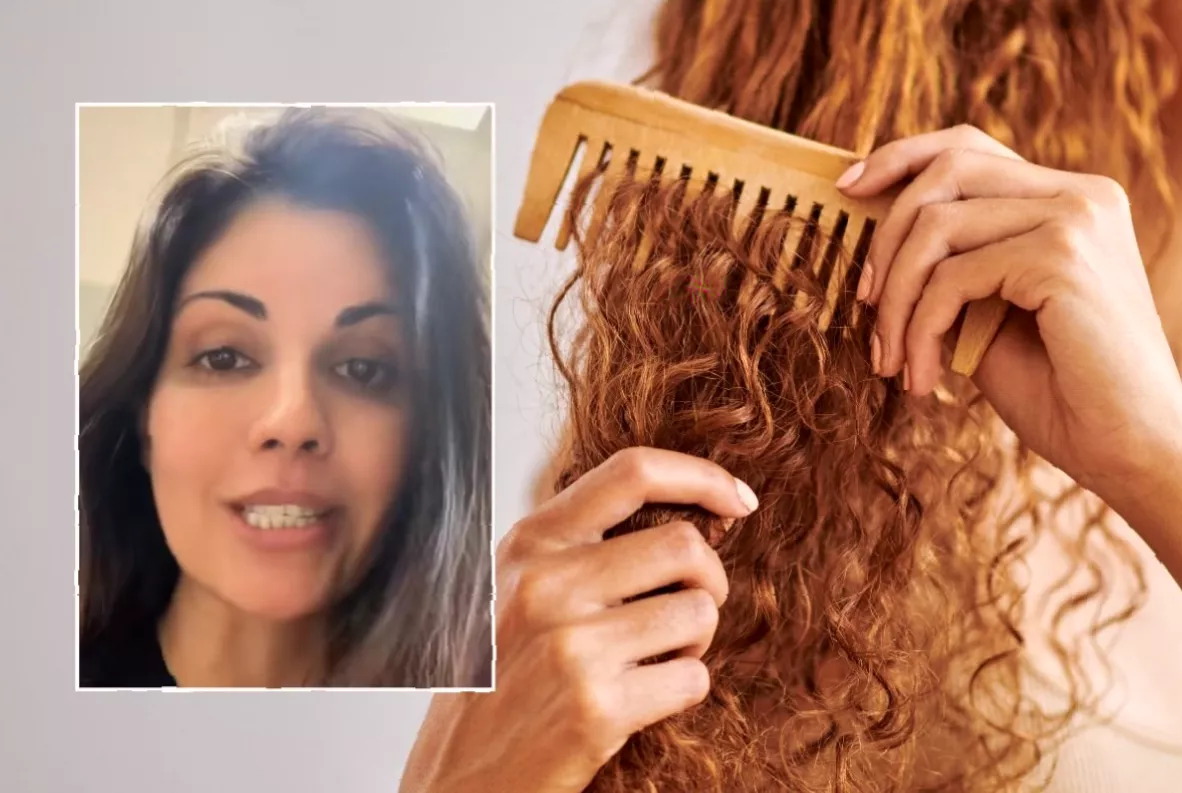
Step two: shampoo with the conditioner still on. With the pre-conditioning layer still in place, shampoo is applied directly to the scalp and massaged in. The conditioner on the lengths prevents the shampoo from stripping moisture from those areas. As the surgeon explained, this step “will help to make sure that you get rid of unnecessary buildup that you have on your scalp without overdrying the rest of your hair.” The shampoo is then rinsed off along with the initial layer of conditioner.
Step three: rinse and re-condition. After rinsing, a second round of conditioner is applied, again focusing on the mid-lengths and ends. This final conditioning step is intended to seal the hair cuticles. Dr. Shokeen said this ensures the cuticles are “actually sealed” and helps lock in smoothness and shine. The entire process, she told viewers, is “the best way to wash your hair.”
Benefits for volume, shine, and scalp health
The sandwich method is effective because it tackles two common hair problems simultaneously. By lifting grease and buildup from the scalp while locking hydration into the hair shaft, it leaves roots feeling cleaner and ends looking glossier. Dr. Shokeen noted that this makes it particularly useful for anyone whose roots tend to oil up quickly while their ends remain parched.
The technique also offers significant advantages for colour-treated hair. Because the pre-wash conditioner acts as a buffer, it essentially reduces colour fade during shampooing. Anyone with wavy or curly hair stands to benefit too, as the extra moisture retention translates into better shine and definition over time. The dual conditioning helps to smooth the hair cuticle, leading to reduced frizz and fewer flyaways.
Hair care professionals and trichologists support variations of this method, with some suggesting a hair mask as the initial conditioning step. The core principle remains consistent: protecting the hair strands while effectively cleansing the scalp.
One caveat for fine hair
Dr. Shokeen acknowledged that the layered approach using shampoo and conditioner can feel heavy on very fine hair. She advises anyone with thin strands who wants to try the method to opt for a lightweight, silicone-free pre-treatment to avoid weighing the hair down.
The surgeon’s broader philosophy, as outlined in her professional profile, is that great dermatology goes beyond cosmetic upgrades, focusing on empowerment and education. Her solution-based, strategic approach to individualised treatment plans for hair restoration reflects the same principle behind the sandwich method: a targeted, stepwise process designed to deliver measurable results.