

Young women are experiencing a spike in temporomandibular joint disorder (TMJ), a painful condition of the jaw that can radiate through the face, neck and back, leaving some sufferers trapped in a cycle of chronic pain and psychological distress.
Sofia Stidham was just 21 when a “sharp ache” settled in her jaw and refused to leave. “I tried to ignore it,” the now 22-year-old from London said. “But every time I ate, or opened my mouth, it was so, so painful.” She thought her wisdom teeth were to blame. Two different dentists told her they could see no issues. “I almost felt like I was making it up, but the pain was so sharp, so severe, and so constant — I’d rather break my foot than experience this pain.” Only after turning to a private maxillofacial surgeon and undergoing multiple X‑rays and an MRI did she learn she had stage four TMJ – a condition she had never heard of.
For Maryam Osman, 28, from Surrey, the diagnosis came by chance. Months of headaches and jaw pain were initially put down to teeth grinding, and her dentist gave her a mouthguard. The tension in her jaw was so strong that the guard shattered in her mouth within a day. “I spent the next two years in chronic pain — my face began to swell up with how much pressure my jaw was under. It was unbearable, and at 24, I had 12 vials of Botox injected into my face.”
Both women eventually sought private treatment because accessing care on the NHS was so difficult, with costs starting at around £300. The lack of information surrounding TMJ remains a major barrier to young people getting help, according to the Trigeminal Neuralgia Association (TNA UK), a charity that supports people with severe facial pain. Its chief executive, Aneeta Prem, said: “We regularly hear from people who have felt frightened, isolated and passed between services before reaching the right help.”
What is TMJ and why is it surging among young women?
Temporomandibular joint disorder – often shortened to TMJ or TMD – affects the jaw joint and the muscles that control it. Symptoms include pain around the jaw, ear and temples; clicking, popping or grinding noises; headaches; difficulty opening the mouth fully; and locking of the joint. In severe cases, facial swelling can occur. The condition is categorised from stage one (mild pain) to stage five (arthritis of the jawbone and extreme facial pain), according to the NHS.
Up to 6.7 million people in the UK are affected, and women are twice as likely as men to experience symptoms, the NHS states. Some estimates from other sources suggest the gap may be far wider: women may be five to nine times more likely to suffer from the condition, with symptoms often more severe. The disorder predominantly affects people between the ages of 20 and 40.
Dr Amir Amini, a maxillofacial surgeon at 107 Harley Street in London, has seen a sharp rise in young women seeking treatment. “Recently, I’ve seen the number of young women seeking treatment for TMJ spike: I’m now dealing with about 80 female patients experiencing TMJ-related pain every month,” he said. “Although we don’t know why young women are experiencing this more, the stresses of everyday life are definitely a primary contributor to this increase.”
Why women are disproportionately affected
The exact reasons for the gender gap remain unknown, but several factors are thought to play a role. Hormones are a potential driver: TMJ is often diagnosed during a woman’s childbearing years when oestrogen and progesterone levels are high. Some research suggests that a misaligned jaw may interfere with oestrogen receptors, making symptoms more painful for women. Hormone fluctuations can also mean that a woman’s pain experience changes throughout the month, with oestrogen generally having a pain‑relieving effect. Anatomical differences between male and female jaws may also be a factor.
Stress is a major trigger. The body’s “fight or flight” response causes muscle tension, including in the jaw, and can lead to subconscious teeth clenching or grinding (bruxism). Women generally report higher levels of stress and anxiety than men, which may contribute to the higher prevalence of TMJ in this group. Chronic stress can also alter posture and lead to inflammation, further aggravating the joint.
How Botox treats TMJ – and why it is not a quick fix
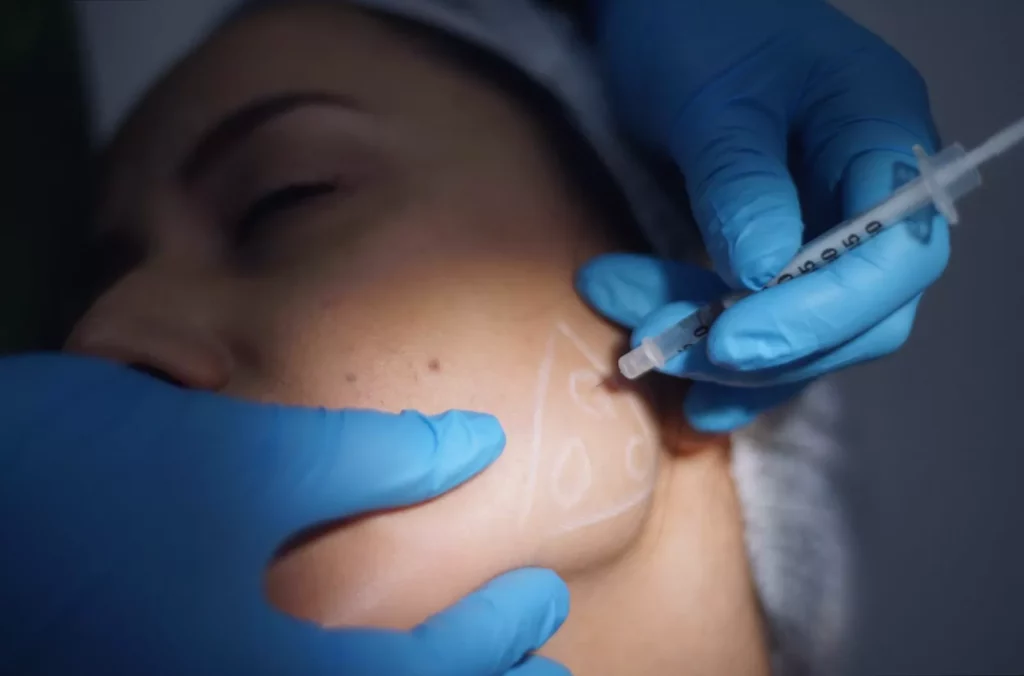
While there is no cure for TMJ, a popular treatment to relieve symptoms is botulinum toxin‑A, better known by the brand name Botox. More commonly used cosmetically to prevent wrinkles, Botox is a purified neurotoxin that acts as a muscle relaxant. In TMJ cases, it is injected into the masseter and temporalis muscles – the large muscles used for chewing and clenching – partially paralysing them and preventing the jaw from clenching too tightly. This can ease pain, reduce joint strain and improve the range of jaw opening. A cosmetic side effect is a gradual slimming of the masseter muscle.
Both women who spoke about their experiences initially had reservations. “When I was offered Botox, I was shocked,” Ms Stidham said. “It’s still seen as a cosmetic treatment, and I was thinking, ‘What if my face completely changes?’” With no other options, she went ahead. “Honestly, it was life‑changing. It helped with the pain in a way nothing else had.” Ms Osman, who had 12 vials injected, also found relief.
Botox for TMJ is generally not available on the NHS, as it is considered cosmetic or non‑urgent. Privately, the cost varies widely: initial sessions can range from £250 for mild cases to £350–£450 for moderate to severe bruxism, treating both masseter and temporalis muscles. Some London clinics charge between £345 and £445 for up to 50 units, with additional charges for more units. The average cost can range from £300 to £1,500 per session, depending on the number of injections, the practitioner’s expertise, and the clinic’s location. The effects typically last three to six months, requiring repeat treatments.
The link between chronic pain, stress and mental health
Stress does not directly cause all TMJ disorders, but it can significantly worsen existing symptoms. Heightened pain perception due to stress can make the condition feel more intense, and the resulting pain itself creates more stress, trapping sufferers in a vicious cycle. Sleep bruxism – unconscious grinding at night – is strongly linked to stress and is particularly damaging because it often goes unnoticed.
The mental health toll of chronic facial pain can be severe. Studies suggest that 40–60% of individuals with chronic orofacial pain experience clinically significant depression, and 40–65% experience clinically significant anxiety. The Trigeminal Neuralgia Association UK noted that among those who experience TMJ or TMD, 34% said they had thought about suicide. Aneeta Prem, the charity’s chief executive, emphasised the need for greater awareness so that patients can reach specialists who understand facial pain before their condition deteriorates.
Ms Stidham concluded: “To me, it’s almost insane how none of the healthcare professionals I visited was able to identify I had TMJ. But it also sheds light on how little research we have on health issues that affect women. It feels like there is still so much more to be done in advancing female healthcare — TMJ impacts so many women, and at a significantly higher rate than men, yet we know so little about it — it just shows that we still have a long way to go.”
If you are experiencing feelings of distress, or are struggling to cope, you can speak to the Samaritans, in confidence, on 116 123 (UK and ROI), email [email protected], or visit the Samaritans website to find details of your nearest branch. If you are based in the USA, and you or someone you know needs mental health assistance right now, call or text 988, or visit 988lifeline.org to access online chat from the 988 Suicide and Crisis Lifeline. This is a free, confidential crisis hotline that is available to everyone 24 hours a day, seven days a week. If you are in another country, you can go to www.befrienders.org to find a helpline near you.