

Most side effects commonly blamed on statins are not caused by the drugs themselves, according to a major new analysis that challenges long-held assumptions about cholesterol-lowering medication. The study, published in The Lancet and funded by the British Heart Foundation (BHF), examined data from 123,940 individuals across 19 clinical trials who were monitored for an average of 4.5 years after starting treatment. Researchers compared the experiences of those taking statins with those on a placebo and found that for 62 out of 66 symptoms listed in patient information leaflets – including depression, sleep problems, fatigue, headaches, weight gain, erectile dysfunction and memory loss – there was no statistically significant increased risk associated with the medication itself.
The findings point strongly towards the “nocebo effect”: patients experience symptoms because they expect them to occur, not because the drug causes them. However, the research does acknowledge a small number of genuine risks. Muscle aches and pains remain the most commonly reported complaint, though studies suggest only a tiny proportion are actually caused by statins. In very rare cases, more severe muscle problems such as myopathy or rhabdomyolysis can develop. University of Oxford researchers have developed a new calculator designed to predict an individual’s risk of these serious muscle disorders, indicating that more than 98% of eligible patients are at low risk. Statins have also been shown to cause a small increase in blood sugar levels, which can slightly raise the risk of developing type 2 diabetes – particularly in those already at high risk and especially with higher doses. There is also a small increase in the chance of abnormal liver blood test results (raised transaminases), although this seldom leads to more serious liver disease. Routine liver monitoring is recommended when treatment begins.
The benefits of statins beyond cholesterol reduction
Statins work by inhibiting an enzyme in the liver that produces cholesterol, primarily lowering LDL – the “bad” cholesterol – and also helping to reduce triglyceride levels. “By lowering LDL levels in the bloodstream, this medication can help prevent plaque build‑up in the bloodstream and reduce the risk of heart attacks or strokes,” said Sindy Jodar, senior cardiac nurse at the British Heart Foundation. But their protective effects go further. They help stabilise the endothelium – the inner lining of blood vessels – making plaque less likely to form or rupture. They can improve the body’s ability to absorb existing cholesterol deposits in arteries, modulate platelets and affect the clotting cascade to reduce the likelihood of blood clots, and lower inflammation for those with elevated C‑reactive protein (CRP) levels.
Who gets prescribed statins and how GPs assess risk
Statins are commonly associated with high cholesterol, but the decision to prescribe them is far more nuanced. “People are usually prescribed statins if their cholesterol level is high,” said Jodar. “However, patients whose cholesterol levels are within a normal range but have a strong family history of premature heart disease, are diabetic, or have high blood pressure, smoke or are overweight might also be prescribed statins.”
The key tool used by GPs is a formal risk calculation – typically the QRISK algorithm – which estimates a patient’s 10‑year risk of developing cardiovascular disease (CVD) such as a heart attack or stroke. The calculation takes into account age, sex, ethnicity, blood pressure, cholesterol level, past medical history, family history, smoking status, weight, height and diabetes. “If the calculator shows that in the next 10 years, the risk of having a cardiovascular disease is 10% or more, then they will recommend going on a statin,” Jodar explained. “So, they don’t just take cholesterol levels solely into account.”
Current NICE (National Institute for Health and Care Excellence) guidance uses this 10% threshold for primary prevention – people without existing CVD. However, draft updated guidance suggests that statins could now be considered for individuals with a 10‑year risk score of less than 10%, as part of a shared decision‑making process between patient and GP. Statins are also prescribed for secondary prevention to people who already have CVD – such as those who have had a heart attack or stroke – to reduce the risk of further events. Additionally, they are recommended for individuals with familial hypercholesterolaemia, an inherited condition causing very high cholesterol.
Older adults are most commonly prescribed statins because age is itself a major risk factor. “This is because age is a significant risk factor in developing cardiovascular disease,” said Jodar. “However, some younger patients with very high cholesterol levels can also be prescribed statins.”
Types of statins, dosage and how they are taken
Five types of statin are available on prescription in the UK, according to the NHS: atorvastatin (Lipitor), fluvastatin (Lescol), pravastatin (Lipostat), rosuvastatin (Crestor) and simvastatin (Zocor). “You can’t choose what specific type of statin you want to go on, it’s really up to the clinician who will take into account your risk calculation and the side effects to see which one you will benefit from,” said Jodar. “The most commonly prescribed statin is atorvastatin.”
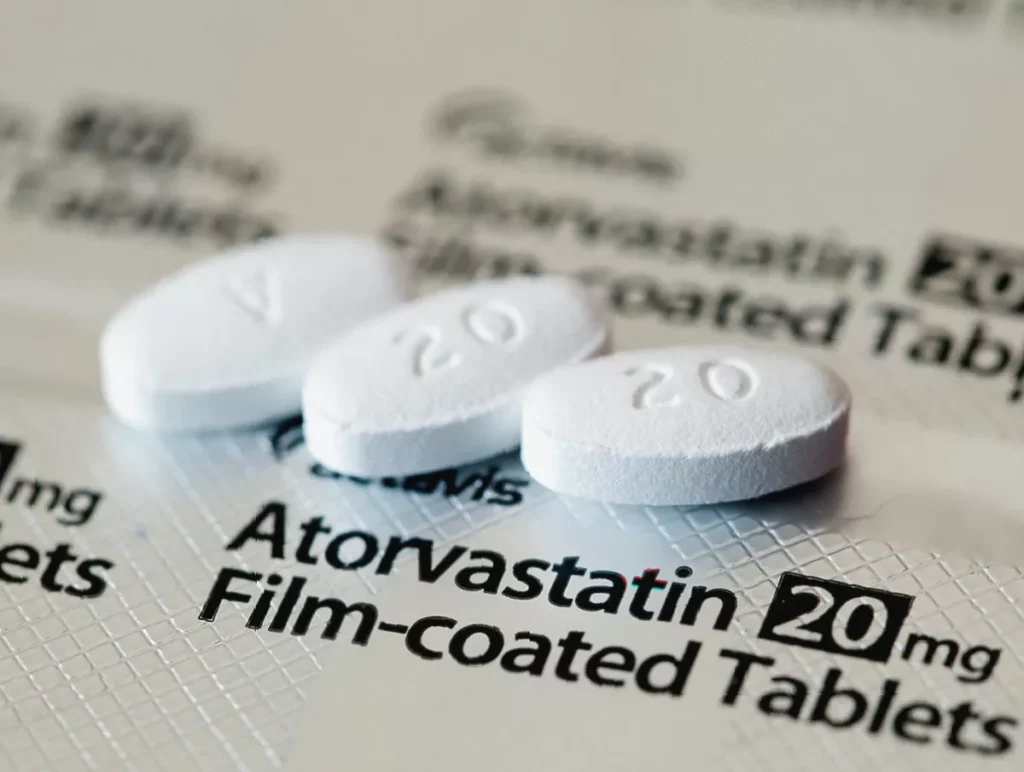
Doses vary and are categorised by intensity (low, moderate, high) based on their cholesterol‑lowering effect. For primary prevention in those with a 10‑year CVD risk of 10% or more, atorvastatin 20mg is often recommended. For secondary prevention in individuals with existing CVD, high‑dose atorvastatin (e.g., 80mg) is typically first‑line treatment.
Statins are usually taken once a day, with the NHS advising patients to take them at night after dinner. Before starting, a blood test checks cholesterol and liver enzyme levels. Follow‑up blood tests are then conducted to monitor progress. NICE recommends tests at baseline, within three months of starting, at 12 months, and then annually. Liver function tests are done at baseline, within three months and at 12 months. Creatine kinase (CK) levels – which can indicate muscle damage – are usually only tested if the patient reports muscle symptoms.
Patients are also advised to inform their GP about any other medications they take to avoid interactions. A notable dietary restriction concerns grapefruit. Grapefruit and grapefruit juice contain compounds called furanocoumarins that block the CYP3A4 enzyme, interfering with how certain statins are metabolised and increasing their concentration in the bloodstream, which raises the risk of side effects. For simvastatin and lovastatin, grapefruit should be avoided entirely. For atorvastatin, large quantities (over 1.2 litres of juice daily) should be avoided, though a small occasional glass may be safe. Rosuvastatin, pravastatin and fluvastatin are generally considered safe with grapefruit. Alcohol intake should be limited to less than 14 units per week, as heavy drinking can increase the risk of liver problems.
Statins work best alongside a healthy lifestyle. “By just taking statins, you will reduce your cholesterol levels, but they will be much more effective if you can implement the other healthy changes – such as quitting smoking, being physically active, following a balanced and healthy diet – into your lifestyle as well,” said Jodar.
Who may not be suitable for statins
Although most adults can take statins safely, they are not suitable for everyone. Atorvastatin, for example, may not be appropriate for those who have ever had an allergic reaction to atorvastatin or any other medicine, have liver or kidney problems, think they might be pregnant, are already pregnant, are breastfeeding, or have lung disease, according to the NHS website. “A statin reduces the production of LDL in the liver, and can sometimes affect liver enzymes, so if you’ve already got deranged liver enzymes, a statin might not be a good option for you,” explained Jodar.
The NHS also advises that patients should flag any of the following circumstances before starting statins: having previously had a stroke caused by bleeding into the brain; regularly drinking large amounts of alcohol; having an underactive thyroid; having had muscular side effects when taking a statin in the past; having ever had a muscle disorder (including fibromyalgia); or having a history of myasthenia gravis or ocular myasthenia. Severe liver disease and pregnancy (or trying to become pregnant without using contraception) are also clear contraindications.
Statins are a lifelong treatment
Statins are generally prescribed as a lifelong medication. “It’s important to have reviews and ongoing conversations with your GP because they know your individual set of circumstances and risk factors,” said Jodar. “If they see that you are reaching a good level of cholesterol, they might reduce the dose. If you come off it completely, there’s a risk that your cholesterol will start going up again. It’s important to remember that statins are not just a medication for reducing cholesterol, they also play a preventative role in protecting you from having cardiovascular disease in the future. So, if you are in the high‑risk category of developing this, coming off the statins means you will be going back to square one.”
The cost‑effectiveness of statins is best established for secondary prevention in patients with existing CVD, where they significantly reduce both mortality and morbidity. For primary prevention in people without established CVD, the cost‑effectiveness is lower but still considered acceptable for those at significant risk.