

Millions of older Americans on Medicare will soon be able to get popular weight-loss drugs for a flat monthly fee of $50, as the government launches a temporary pilot programme on Wednesday that covers most of the cost. The move marks the first time the federal health insurer has agreed to foot the bill for GLP-1 medications prescribed solely for weight management.
The programme, called the Medicare GLP-1 Bridge, began on 1 July 2026 and is scheduled to run until 31 December 2027. It operates outside the standard Medicare Part D prescription drug benefit, a distinction that matters because federal law generally prohibits Part D from covering drugs used only for weight loss. The Centers for Medicare & Medicaid Services (CMS) is using its authority under Section 402 of the Social Security Act to run the 18-month demonstration. The Trump administration, under CMS Administrator Dr. Mehmet Oz, chose this route after the previous administration’s attempt to reinterpret the statutory exclusion was not finalised.
The cost to taxpayers has not been disclosed, but projections provide a sense of scale. A 2025 analysis estimated that Medicare coverage of anti-obesity medicines could increase net federal spending by about $35 billion from 2026 to 2034. Another study put total Medicare drug costs for GLP-1 receptor agonists for obesity at $65.9 billion over ten years, with net increased spending of $47.7 billion after accounting for potential healthcare savings.
Who is eligible for the pilot?
Eligibility is tightly defined and hinges on body mass index (BMI) and the presence of certain health conditions. According to CMS, the programme is open to people aged 18 or older who are enrolled in Medicare Part D — either through a standalone prescription drug plan or a Medicare Advantage plan with drug coverage. That covers about 56.1 million beneficiaries, according to the non-profit health research group KFF. An analysis by KFF estimated that roughly 3.8 million Medicare beneficiaries could be eligible under the clinical criteria, or about 10 per cent of all Part D enrollees.
To qualify, a patient must have a prescription for a GLP-1 drug for weight loss and meet one of the following clinical thresholds:
- a BMI of 35 or higher;
- a BMI of 30 or higher with certain health conditions such as heart failure, uncontrolled hypertension or chronic kidney disease;
- a BMI of 27 or higher with additional risk factors including pre-diabetes, a history of heart attack or stroke, or symptomatic peripheral artery disease.
Patients who already have a GLP-1 drug covered through their Part D plan for another indication — such as Type 2 diabetes, moderate-to-severe sleep apnoea, fatty liver disease or cardiovascular risk reduction — are not eligible for the Bridge programme for those uses. They must continue to obtain the medication through their existing plan. Similarly, people with Type 2 diabetes, moderate-to-severe sleep apnoea or fatty liver disease are generally excluded from the pilot, because standard Part D plans already cover those conditions.
Certain Medicare plan types may also preclude participation. Beneficiaries enrolled in private fee-for-service plans, cost contract plans or PACE organisations may not be eligible if their only Medicare coverage comes from those plans.
Which drugs are covered and how much do they cost?
Three drugs are available through the programme, according to Dr Oz. They are:
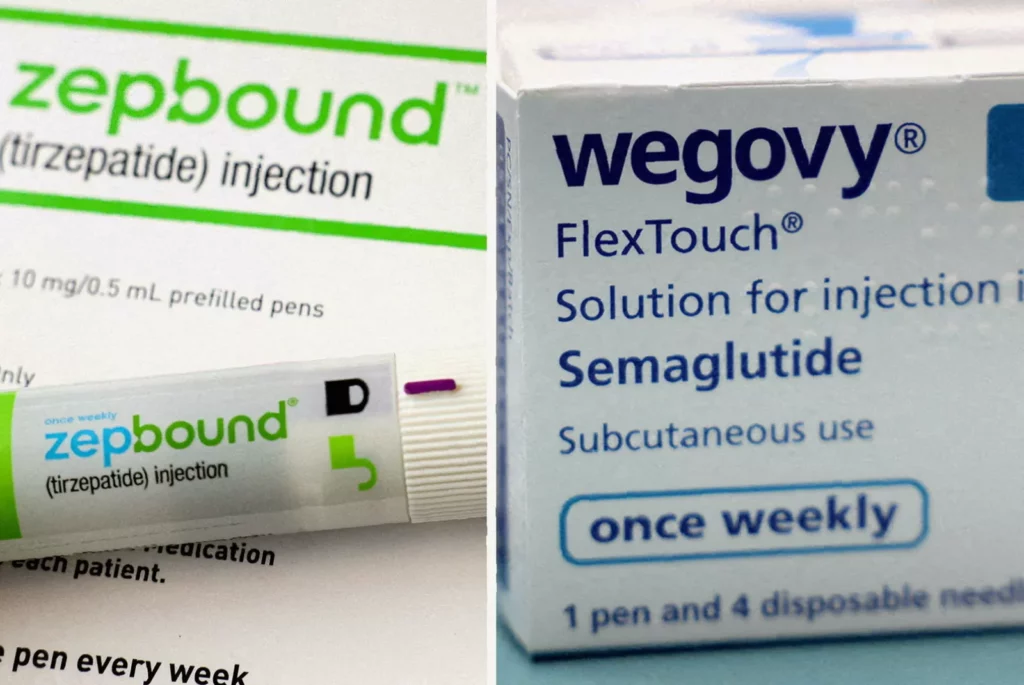
- Zepbound (injectable, KwikPen only — single-dose pens and vials are not covered), made by Eli Lilly;
- Wegovy (both injection and tablet versions), made by Novo Nordisk;
- Foundayo (oral tablet), also made by Eli Lilly.
Patients will pay a fixed $50 monthly copayment. This copayment does not count towards the annual Part D deductible or out-of-pocket limit, and it is not eligible for the Medicare Prescription Payment Plan. The drugs themselves typically cost hundreds of dollars a month even with insurance, and list prices have been a barrier to access. Under agreements with the Trump administration, Eli Lilly and Novo Nordisk are selling the drugs to the government for $245 per month.
Beyond the pilot, Novo Nordisk has announced significant price cuts for Ozempic and Wegovy effective 1 January 2027, reducing list prices by up to 50 per cent to $675 a month. Eli Lilly also offers discounts through its LillyDirect programme, with Zepbound available from $299 to $499 a month. Dr Oz has predicted that oral formulations, such as Foundayo, could eventually replace injections and cost about $150 per month.
Zepbound is regarded as one of the most powerful options, averaging nearly 21 per cent body-weight reduction after 72 weeks. Wegovy was approved by the FDA for weight loss in 2021 and is also authorised for cardiovascular risk reduction and to treat metabolic dysfunction-associated steatohepatitis (MASH). Zepbound was approved in November 2023 and is also approved to treat obstructive sleep apnoea in adults with obesity. Foundayo is FDA-approved as an oral GLP-1.
How to get the drugs and the prior-authorisation process
The programme operates in every US state and territory. If a patient qualifies, their doctor sends a prescription to a pharmacy and must complete a prior-authorisation request when asked. CMS requires the provider to certify that the patient is using the GLP-1 drug as part of a lifestyle programme that focuses on diet and exercise.
Prior authorisation is a health insurance requirement in which a plan must approve a service or drug before it is provided, to ensure medical necessity, safety and cost-effectiveness, according to the National Association of Insurance Commissioners. In the Bridge programme, this step is centralised: CMS has contracted with Humana as the claims-processing and payment contractor, meaning Part D plan sponsors are not directly involved in approvals.
Once approved, coverage is valid through 31 December 2027, unless the patient changes to a different GLP-1 drug. The programme’s rules are unclear on what happens if that occurs.
Why the programme is only temporary — and what happens next
The temporary nature stems from the federal law that prevents Medicare from covering weight-loss drugs. The Trump administration has used its demonstration authority to launch this pilot, but a longer-term solution — the BALANCE Model — has been indefinitely delayed. This leaves uncertain access for beneficiaries once the Bridge programme expires.
“When it expires, it is unclear how beneficiaries will access GLP-1 medications at an affordable price,” said Stacie Dusetzina, a health policy professor at Vanderbilt University, writing in The New England Journal of Medicine. That raises the prospect, she said, that patients will stop taking the drugs and regain weight, which will lead to “poor clinical outcomes.”