

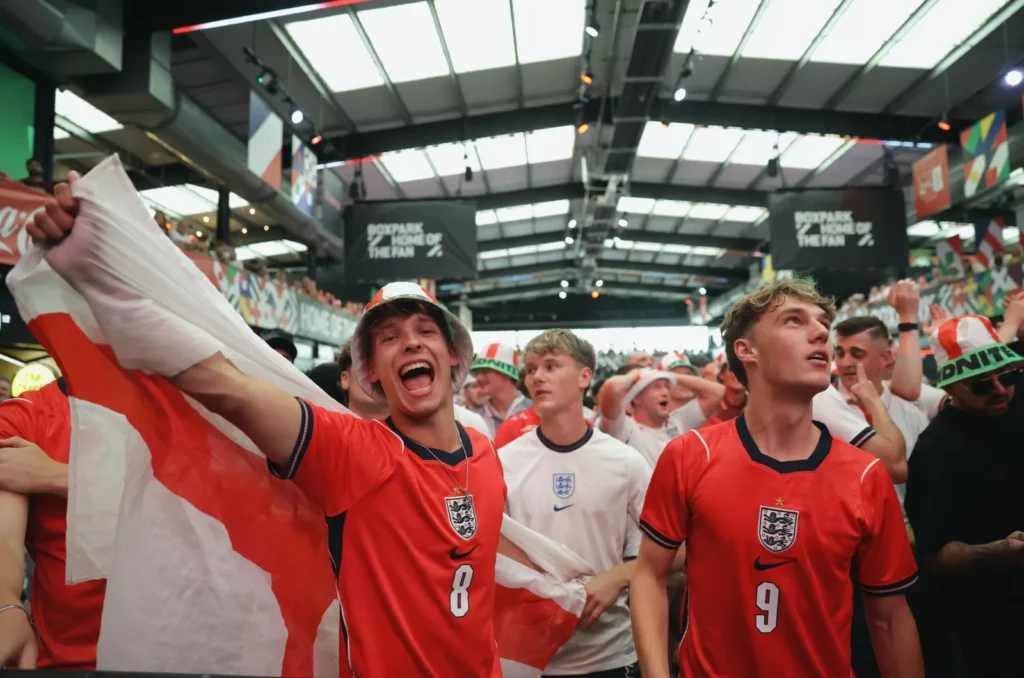
Pubs across England and Wales will be allowed to stay open until 5am on Monday to allow supporters to watch England’s World Cup Round of 16 clash against Mexico, after the Prime Minister granted a blanket extension of licensing hours. Announced by Keir Starmer on Thursday, the move follows calls from MPs and covers the 1am kick-off at the Estadio Azteca. Individual pubs do not need to apply for the extended hours, though the Night Time Industries Association and the British Beer and Pub Association have warned that not all venues will open, with some struggling to arrange staffing for the late session. The extension applies only in England and Wales; Scotland and Northern Ireland are excluded.
For fans with Monday morning commitments, the 1am start presents a real dilemma: stay awake for the blockbuster match or prioritise sleep. The decision is complicated by the fact that, if the game goes to extra time and penalties, it could finish as late as 4am. “Adults have to make their own decisions, but the outcome of the game will also affect how quickly they can wind down,” said Dr Dally Chalmers, a health psychologist and sleep expert at Keele University. “It’s not going to be a case as soon as the game finishes, you’re going to go straight to bed and when you hit the pillow you’re straight to sleep. No, you’ll need time to wind down from the excitement or the commiserations.”
Expert advice on managing sleep deprivation
Sleep experts are unanimous that the 1am kick-off cuts directly into the body’s deepest sleep cycle. Professor Charlie Pedlar, an expert in exercise science at St Mary’s University, described it as “counter-productive”. “The big trap for this match is if you’re watching at 1am, that’s right in the window where you’d expect to be sound asleep and get your deepest sleep,” he said. “There’s no two ways about it, it’s counter-productive. Basically, they need to find other opportunities to sleep, either by banking sleep beforehand – so trying to go to bed early the night before and the night before that, in order to try and get ahead of it and just rest around it.” He stressed that sleep loss is risky for health and urged fans to look after themselves.
Dr Chalmers advised against live viewing for those who are not natural night owls. “Maybe instead record it, that’s what I would encourage as a practitioner. Obviously it’s not the same vibe,” she said. She warned that when people get less sleep than they need, there are several knock-on impacts: grogginess, increased hunger and short memory lapses. However, she added that as a one-off, the lost sleep will not have a “detrimental impact” on fans’ health and wellbeing, though they will not be able to catch up on the deficit afterwards.
Dr Nerina Ramlakhan, a sleep expert and author of Tired But Wired, said supporters should minimise the stimulation they put themselves through while watching the match late at night. “The other thing is to be realistic that you may not sleep so well that night, and if you can put the emphasis on resting rather than sleeping,” she said. Dr Ramlakhan, who holds a doctorate in physiology from King’s College London and is a research fellow at Ashridge Business School, advocates for quality restorative sleep over a set number of hours. Her “Sleep Toolkit” suggests that forcing sleep is counterproductive.
For those determined to stay up, both experts recommended a short power nap. Dr Chalmers suggested 20 to 30 minutes, ideally taken before 4pm. “Any more than that, you risk going into the first cycle of sleep and you’ll just start falling into deeper sleep and you’ll wake up groggy,” she said. Dr Ramlakhan echoed the advice, recommending a 20-minute power nap between 2pm and 4pm on Sunday. “When you’re napping, you’re not trying to sleep,” she explained. “You’re putting the focus on rest. So you could be doing it sitting, you could be doing it on a noisy train. Just closing your eyes for 20 minutes. Focusing on your breathing, you might listen to something to guide you through it.” Skills minister Baroness Jacqui Smith told Sky News she planned to take a “disco nap” on Sunday afternoon and then stay up late – but Dr Ramlakhan noted that the disco nap is usually later in the day and instead recommended the earlier power nap window.
BBC coverage and catch-up options
The BBC said it will offer “stay up or catch up” coverage of the match. The game will be broadcast live on BBC One and streamed on BBC iPlayer, with audio commentary on BBC Radio 5Live. For those who choose not to stay up, BBC Two will show a full re-run at 7.10am, and BBC iPlayer will feature an extended 15-minute highlights programme, accessible at bbc.co.uk/nospoilers. The BBC Sport Football YouTube channel will also carry highlights.
Nap tips and practical advice
Beyond the power nap, Professor Pedlar recommended “banking” sleep in the days before the match. “Try to go to bed early the night before and the night before that, in order to try and get ahead of it,” he said. Dr Chalmers cautioned against letting children or even teenagers stay up. “I just wouldn’t encourage it because sleep is so important for their health and wellbeing and growing up,” she said. Instead, she suggested making Sunday evening special: “Make it a fun evening. Maybe have a football-themed supper. Make them feel part of the celebration.”
The government’s position on children watching was clear. The Prime Minister’s spokesperson said: “Kids should be in school on Monday.” Baroness Smith, while acknowledging parents’ decisions, noted that children might miss out on learning if they stayed up. England manager Thomas Tuchel has appealed to parents to let children watch, suggesting they could “write an excuse for school.”
On the morning after the game, Dr Ramlakhan advised getting natural daylight as soon as possible. “Getting natural daylight in the morning can reset the circadian timer, helping wake people to feel more awake in the morning and sleep better at night,” she said. Thunderstorms are forecast near the Estadio Azteca around kick-off, which could cause delays or suspensions – tournament rules stipulate a 30-minute delay after the last lightning strike, with the countdown resetting if further storms occur. England and Mexico have met only once in a World Cup, in 1966, when England won 2-0 at Wembley. The Estadio Azteca is notorious for its high altitude and hostile atmosphere, having been the site of England’s 1986 defeat to Argentina. The match is the Round of 16 tie, with England looking to build on recent semi-final and quarter-final appearances; Harry Kane has scored five goals in the tournament so far and Jude Bellingham has been a standout performer.