

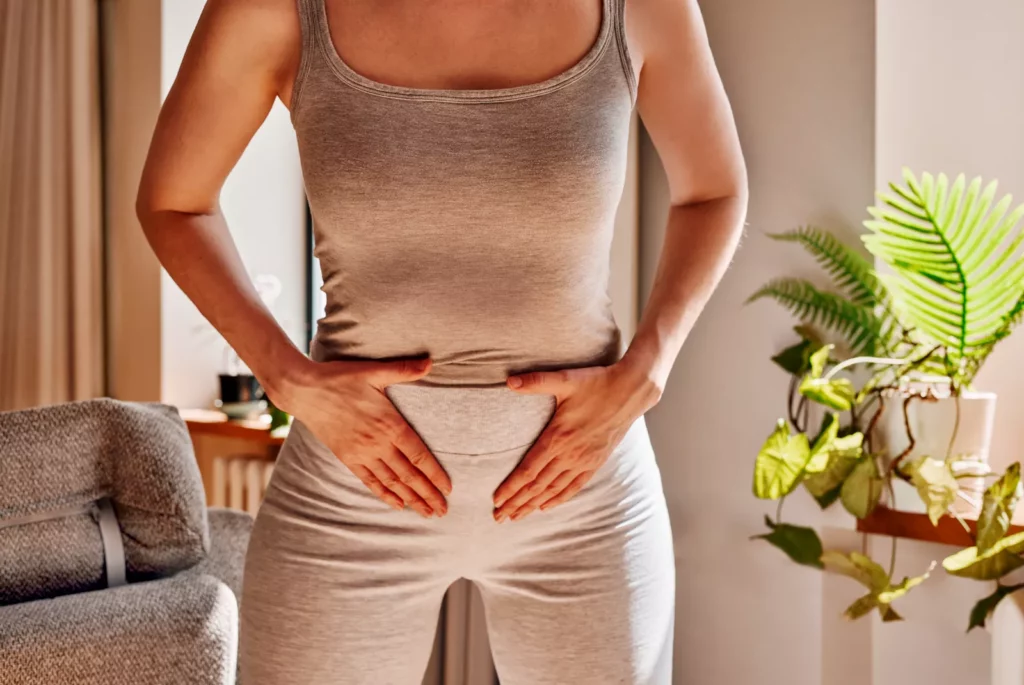
Women can maintain pelvic floor fitness throughout their lives, regardless of age — and official guidance from the NHS and the Pelvic, Obstetric and Gynaecological Physiotherapy (POGP) charity sets a clear benchmark for what a healthy pelvic floor should be able to do. According to this guidance, women should be capable of holding a pelvic floor contraction for 10 seconds, then resting for 10 seconds, and repeating that cycle 10 times. Following that, they should be able to complete 10 quick “pulses” — short, rapid squeezes. If you cannot manage this, performing pelvic floor exercises three times a day should help, or it may be time to seek specialist support.
Tiffany Sequeira, a specialist pelvic physiotherapist, explains that many women struggle to meet this target. “I often see women unable to manage this much, and this is where a pelvic health physio is important,” she says. “Think of us like a PT for your pelvic floor!” A pelvic health physiotherapist can assess function, check that exercises are being performed correctly, and may conduct an intimate examination. Embarrassment should not deter women, she adds, because the long-term benefits — bladder control and better sexual wellbeing — make it worthwhile.
What is the pelvic floor?
The pelvic floor is a group of muscles and ligaments that form a hammock-like structure at the base of the pelvis. It supports the bladder, bowel, and uterus, and plays a crucial role in bladder and bowel control, sexual function, and core stability. “I often describe the pelvic floor as a ‘hammock’ of muscles sitting at the base of the pelvis, supporting the bladder, bowel, and uterus,” says Sequeira. She stresses that while most people focus on “strengthening” the pelvic floor, relaxation is equally important: “A hypertonic or overactive pelvic floor can actually cause lots of symptoms too.”
How pelvic floor health changes with age
Throughout a woman’s life, the pelvic floor undergoes shifts influenced by hormones, pregnancy, childbirth, and natural ageing. Understanding what to expect at each stage can help women recognise when symptoms are not something to tolerate.
In your 20s, a healthy pelvic floor should be strong, responsive, and able to both contract and fully relax. Signs of good health include no leaking of urine when coughing, sneezing, laughing, running, or exercising; not regularly needing to wake during the night to pass urine; no feelings of heaviness, dragging, or pressure vaginally; being able to fully empty the bladder and bowels comfortably; a comfortable and enjoyable sex life, including the ability to orgasm without pain or tension; and being able to “hold on” when there is no toilet nearby. Sequeira warns that bladder leakage during intense exercise — often dismissed as “normal” on platforms like TikTok and Instagram — is actually a sign the pelvic floor may need support.
In your 30s, pregnancy and postpartum recovery place extra demands on the pelvic floor, regardless of whether a woman has a vaginal birth or a caesarean section. “During pregnancy, these muscles work much harder because they’re supporting both your organs and a growing baby,” Sequeira explains. “Hormonal changes also affect tissue elasticity and stability. After birth, the pelvic floor and abdominal system need time and rehab to recover just like any other muscle group after strain or injury.” Common postpartum symptoms include bladder leakage, constipation, urgency to urinate, pelvic heaviness (often described as feeling like a tampon is “stuck”), and pelvic pain. Sequeira emphasises that while these symptoms are common, they are not normal: “With the right rehab and guidance, many people can regain pelvic floor function comparable to pre-pregnancy levels within the first year postpartum – it’s not something to put up with.”

In your 40s, many women enter perimenopause, where declining oestrogen levels can affect pelvic floor tissue, bladder control, and vaginal health. Natural age-related loss of muscle mass also plays a role. “Muscle mass naturally declines with age too, which can increase pressure through the abdomen and pelvic floor if strength training and movement aren’t maintained,” says Sequeira. Symptoms to watch for include increased urgency, leaking, vaginal heaviness or dragging sensations, reduced core strength, difficulty “holding on” as long as before, and intercourse that “feels different” or difficulty climaxing. Again, these symptoms are common but should not be simply tolerated.
In your 50s, the same themes often continue, particularly around and after menopause. Additional signs that the pelvic floor may need attention include regularly waking multiple times at night to urinate, needing to press around the perineum to fully empty the bowels, and experiencing symptoms of prolapse or incomplete emptying.
In your 60s and beyond, hormonal changes, reduced tissue elasticity, muscle loss, chronic coughing, constipation, and reduced mobility can all affect pelvic floor function. Guidance from the charity Pelvic, Obstetric and Gynaecological Physiotherapy (POGP) maintains that women should still aim to perform 10 repetitions of pelvic floor holds with a 10-second rest at this age. “Although muscles can naturally become weaker with age, which may make these exercises feel harder, it’s still important to continue training them regularly and build up gradually if needed,” says Sequeira. She notes that waking once during the night to pass urine can be a normal part of ageing, but regularly waking multiple times can indicate bladder dysfunction, sleep issues, fluid timing problems, or pelvic floor concerns that warrant assessment. “That said, ageing doesn’t automatically mean severe bladder symptoms or prolapse,” she adds.
How to perform pelvic floor exercises correctly
One of the biggest misconceptions about pelvic floor exercises is that they are simply about squeezing. Technique matters enormously, and doing the exercises incorrectly can be ineffective or even counterproductive. The pelvic floor must be able to both contract — lifting and supporting — and fully relax afterwards.
The basic technique, as outlined in guidance from POGP and the NHS, is straightforward. Sit or lie comfortably. Imagine gently stopping wind and then urine at the same time — you should feel a gentle “lift” internally. Avoid clenching your buttocks, thighs, or holding your breath. Fully relax between repetitions.

There are two types of exercise to master. The first is the long, held squeeze: tighten the pelvic floor muscles and hold for up to 10 seconds, then relax fully for 10 seconds. Repeat 10 times. The second is the short, quick squeeze: tighten the pelvic floor muscles rapidly and then immediately relax. Repeat 10 times. Both types should be performed as part of a regular routine, ideally three times a day.
It may be necessary to start with shorter hold times or fewer repetitions and gradually build up. Improvement typically takes several weeks to months — usually three to six months — and consistency is key for long-term maintenance. If you struggle to identify or correctly perform the exercises, or if symptoms do not improve after consistent practice, seeking advice from a specialist pelvic health physiotherapist is recommended. These professionals can assess function, check technique, and provide tailored treatment plans that may include biofeedback, manual therapy, breathing exercises, and lifestyle advice on diet, fluid intake, posture, and weight management.
Pelvic health physiotherapy services are available through the NHS and private practices across the UK, and some offer online consultations. Apps such as “Squeezy” are recommended by physiotherapists to help women remember and track their exercises. Pelvic floor trainers or electronic toners can also be used as adjuncts to a tailored exercise programme, often for motivation or to target specific goals.
A healthy pelvic floor contributes significantly to overall physical, mental, social, and sexual wellbeing. Bladder leakage during intense exercise, while often brushed aside, is not a normal part of fitness — it is a signal that the pelvic floor may need support. Whether in your 20s or your 70s, training these muscles correctly and consistently is essential, and professional guidance is available for anyone who finds the target out of reach.