

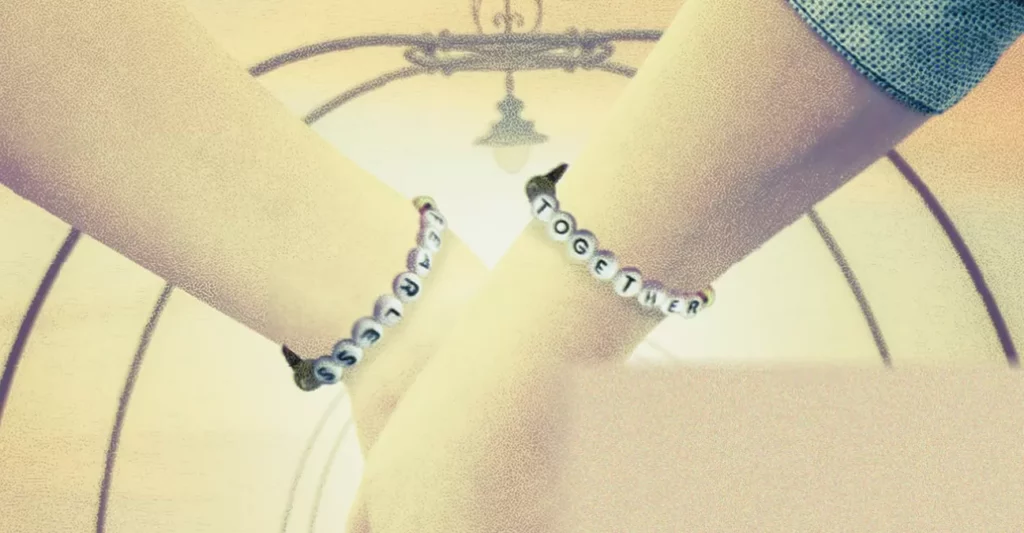
Survivors of a horrific attack on a children’s holiday club have reunited for the first time, nearly two years after a teenage assailant turned a Taylor Swift-themed dance workshop into one of the most brutal assaults on children in modern British history.
The girls – some of whom had not shared a room since 29 July 2024 – gathered in the Easter holidays for a carefully managed playdate. They did pilates, shared cupcakes and wore specially made yoga outfits designed to hide their scars. Watching on the sidelines, several of the parents were in tears. “I’m happy, I’m relieved, it’s OK to see me cry,” said the mother of one girl, Daisy, as her daughter comforted her.
For the families, the reunion was a milestone they had feared might never happen. After the gathering, one of the survivors, Bella, told her parents it was the “happiest she’d been in a long time”. The girls did not speak about what happened. “We all just knew,” she said.
The attack and acts of heroism
The attack took place on 29 July 2024 at The Hart Space, a dance studio on Hart Street in Southport, Merseyside. The event, a Taylor Swift-themed yoga and dance workshop organised by yoga teacher Leanne Lucas and Heidi Liddle, was attended by 26 children. Minutes before they were due to be picked up, a hooded teenager walked in carrying a 20cm chef’s knife that he had bought two weeks earlier.
Axel Rudakubana, then 17, murdered three girls: Bebe King, aged six, seven-year-old Elsie Dot Stancombe, and nine-year-old Alice da Silva Aguiar. Eight other children and two adults were stabbed repeatedly, with two girls and two adults initially in critical condition. A Midlands air ambulance crew, which happened to be returning from an abandoned job elsewhere, arrived to find one girl minutes from death. “She had finished bleeding out – she had no blood pressure or anything – and would have died on the scene,” said the mother of that child, Bella. She now cherishes a stuffed toy of the air ambulance, describing the timing as “divine”.
The bravery of primary school-aged girls emerged only through interviews with their families, who spoke on condition of anonymity. Daisy, aged seven at the time, put her arms around other girls as the attacker began stabbing. As they fled, she helped one girl down the stairs and shielded another by crouching over her. CCTV footage showed Daisy staggering outside, only to be grabbed by the killer and dragged back inside. She was stabbed 33 times, lost her entire blood volume and was in a coma for five days. Her mother said the world had no idea what her daughter had done: “I felt so devastated for her, that we’re at home building up this recovery for her, saying: ‘You saved yourself,’ when the world has no idea what she’s done.”
Bella, then ten, was nearest the door when Rudakubana arrived at 11.45am and was the first to be attacked. Stabbed three times to the back with enough force to penetrate her chest wall, she still managed to escape. Bethany, then ten, shielded her younger sister Amber, eight, from the blows, suffering several wounds herself. When she woke up in hospital, her first thoughts were about Amber: “Is she OK?” Charlotte, then nine, was stabbed three times to the back as she ran, fracturing her shoulder blade and vertebrae. Her mother described her as “immensely brave, extremely vulnerable and alone”, wearing her scars with “dignity and defiance”. The mother said: “Our daughter made the split-second decision to get out of that building whilst suffering incomprehensible injuries. She fled out of instinct – not direction or shielding.”
Rudakubana pleaded guilty on 20 January 2025 to three counts of murder, ten counts of attempted murder and possession of a bladed article. He had also been charged with offences under the Biological Weapons Act 1974 and Terrorism Act 2000 related to possession of ricin and an Al-Qaeda training manual. On 23 January 2025, he was sentenced to life imprisonment with a minimum term of 52 years, meaning he will be almost 70 before he can be considered for release. No motive was definitively identified; the prosecution suggested “the commission of mass murder as an end in itself”.
The long shadow of trauma
The psychological impact on the surviving children and their families is profound and far-reaching. Many of the girls receive support from psychologists and counsellors, but the memory of that day remains raw, with triggers everywhere: a song on the radio, a man walking alone, even other children.
Amber, now ten, is “constantly on alert of anyone, her trust is completely gone”, her mother said. After dropping Bethany at school one morning, they saw an old man walking his dog. Amber insisted her mother call the school to check Bethany was safe. The two sisters now refuse to shower alone because they do not want to be by themselves. Their mother described the daily trauma of seeing their scars: “I have to sit on the toilet while they shower and I see their scars all the time. As a parent it’s traumatising because it’s a constant reminder of what they have and still are going through.”
Bella, now 12, started secondary school last year. Her parents told her not to tell other children she was caught up in the attack. “Don’t make that who you are,” they said. She wears pressure garments for 23 hours a day and sleeps in a splint to help her scars heal. On her first day, an older boy found out and asked her: “Why aren’t you dead?” She sobbed. Before the attack she threw herself into drama; now she will not go. “She doesn’t like being with other kids she doesn’t know,” her mother said. At Christmas, the family took her to a pantomime where children were invited on stage. She refused, telling her father: “The last time I went out with a load of kids I got stabbed.”
Daisy, now nine, is still processing her memories. Her mother described the process using a bookshelf analogy: “Imagine your brain is a bookshelf. What happened to you has basically tipped all of your books on the floor and all the books are memories, they will be jumbled up now.” They told her some books might be scary and she could put them back in her own time. For a while she said there were two books on the floor that were “really scary” and she did not want to pick them up. They tucked them under the bookshelf. Last week, she decided it was time to describe one of them – the moment she was dragged back into the building. “So she’s still processing moments of that day that she hasn’t verbalised before, and we’re nearly two years on,” her mother said.
The parents themselves have struggled. Many have post-traumatic stress disorder, with flashbacks and night terrors from rushing into the building searching for their children and later finding them gravely injured. Yet many were entitled to only 12 sessions with a counsellor provided by the charity Victim Support, rather than a specialist psychiatrist. Daisy’s parents said they were forced to “ration” this support, saving some sessions for the criminal trial and public inquiry. Daisy’s father was refused more than 12 sessions because there was no funding. “It’s hard to have to justify why you’re traumatised,” her mother said. “We realised the basic counselling offer was not fit for purpose for what we had gone through.”
The statutory public inquiry into the attack, launched to examine the circumstances leading up to it, published its Phase 1 findings in April 2026. The inquiry ruled that the attack was “foreseeable and avoidable”. It identified five areas of systemic failure: absence of risk ownership by any single agency; critical failures in information sharing between agencies; misunderstanding of Rudakubana’s conduct as being due to his autism spectrum disorder; lack of meaningful oversight of his online behaviour; and significant parental failures. The inquiry found Rudakubana’s parents, Alphonse Rudakubana and Laetitia Muzayire, bore “considerable blame” for failing to set boundaries and report his escalating behaviour. They reportedly feared he would be arrested or taken into care if they reported his actions. Under UK law there is no explicit duty on parents to warn or report the criminality of their children, and Merseyside police concluded they were unable to prosecute. Bella’s father said: “If I had a dog and it killed a kid, who’s getting done for it?” In May 2026, the Ministry of Justice announced plans to strengthen and expand Parenting Orders, compelling parents to address their child’s behaviour or face penalties.
In the days after the attack, misinformation spread on social media falsely identifying the attacker as an asylum seeker, fuelling anti-immigration protests and riots across England. Most families were unaware of the unrest while in hospital. Bella’s mother described how one of the police officers who had helped their daughter, still with her blood on them, was attacked the following night by rioters in Southport: “They still had our daughter’s blood on them and they were getting bricks thrown at them.”
Slow steps towards recovery
The reunion in the Easter holidays was attended by six girls, including Daisy, Amber, Bethany, Bella and Charlotte. They did pilates, shared cupcakes and wore specially made yoga outfits to help those who wanted to hide their scars. Afterwards, the families went for pizza because the girls did not want to leave one another. Daisy told her mother: “It was like having big sisters.” The families plan to meet again at the end of May, this time with 17 of the girls who were in the room that day. For the parents, the sight of their daughters laughing and playing together was a moment of relief. As Daisy’s mother watched, she wiped away tears and said: “I’m happy, I’m relieved, it’s OK to see me cry.”