

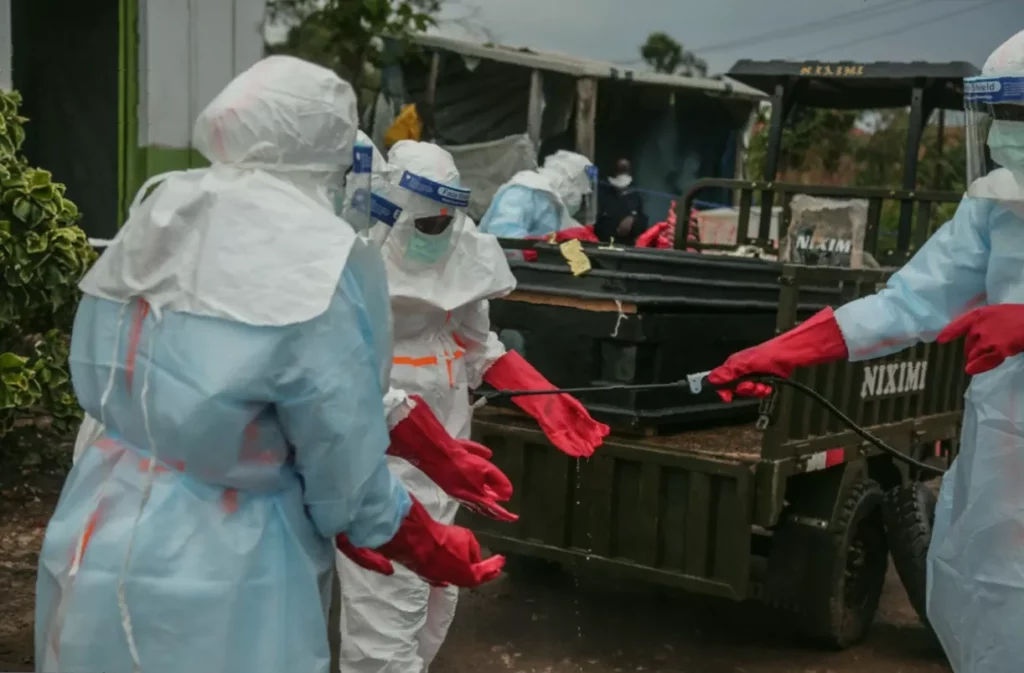
Oxford University scientists are racing to develop a vaccine for a new strain of Ebola that has triggered a Public Health Emergency of International Concern, with the virus already spreading across the Democratic Republic of Congo and into neighbouring Uganda.
Vaccine development
The vaccine candidate, named ChAdOx1 BDBV, is being designed to target the Bundibugyo strain of Orthoebolavirus bundibugyoense. A team at Oxford’s vaccine group and pandemic sciences institute is working urgently to progress the candidate to clinical trials, which the World Health Organization (WHO) has indicated could begin within two to three months. Animal testing is already underway at Oxford.
ChAdOx1 BDBV is a viral‑vector vaccine, a type of technology that uses a harmless, modified version of a virus – the vector – to deliver genetic instructions into human cells. Once inside the cells, those instructions prompt the immune system to recognise and respond to the target virus without causing disease. The ChAdOx1 platform is highly adaptable, meaning the same core vector can be quickly reprogrammed to target different pathogens. It was previously used in the development of the Oxford/AstraZeneca COVID-19 vaccine and has been applied to other emerging infectious diseases.
Oxford is collaborating with the Serum Institute of India (SII) to ramp up production. Once the university can supply medical‑grade material, SII will mass‑produce doses. Professor Teresa Lambe, head of vaccine immunology at the Oxford Vaccine Group and Pandemic Sciences Institute, said: “My hope is that this outbreak can be brought under control quickly and that vaccines are ultimately not needed. Nevertheless, our team and partners will continue working to ensure that potential vaccine options are available if they are needed.” She added: “The ability to move rapidly in situations like this has been built on many years of vaccine research and close collaboration with our global partners.”
Other vaccine candidates are also in development, including an rVSVΔG/BDBV‑GP candidate using technology similar to Merck’s approved Zaire Ebola vaccine, and an mRNA‑based candidate from Chinese researchers.
Outbreak details
The current outbreak is caused by the Bundibugyo strain, which was first identified in 2007 in Uganda and has been associated with only two previous documented outbreaks – one in Uganda (2007‑2008) and another in the Democratic Republic of Congo (2012). Those earlier outbreaks recorded case fatality rates of between 30% and 50%. There is currently no licensed vaccine or specific treatment for this strain, and existing vaccines designed for the Zaire strain may not offer reliable protection.
As of late May 2026, the DRC has reported 85 confirmed cases, including nine deaths (an 11% case fatality rate) and 176 suspected deaths, with more than 746 suspected cases in total. The outbreak is primarily concentrated in Ituri Province, with additional cases confirmed in North Kivu and South Kivu provinces. In Uganda, two confirmed cases have been recorded, including one death in Kampala.
The WHO has raised its risk assessment for the outbreak to “very high” at the national level in the DRC and “high” at the regional level, although the global risk remains “low”. Abdirahman Mahamud, WHO Director of Health Emergency Alert & Response Operations, said: “The potential of this virus spreading rapidly is high, very high, and that changed the whole dynamic.”
The outbreak is unfolding in a complex environment marked by insecurity, a humanitarian crisis, population displacement, mining‑related movement and frequent cross‑border travel. A fragile healthcare system and the possibility that symptoms may be mistaken for endemic diseases such as malaria further complicate containment. The DRC has experienced 17 recorded Ebola outbreaks since the virus first emerged in 1976.
UK funding
Britain has announced up to £20 million to support the international effort to contain the outbreak in the eastern Democratic Republic of the Congo and Uganda. The funding, provided by the Foreign, Commonwealth and Development Office, will be used to strengthen disease surveillance, support frontline health workers, improve infection prevention and control, and ensure access to lifesaving care.