

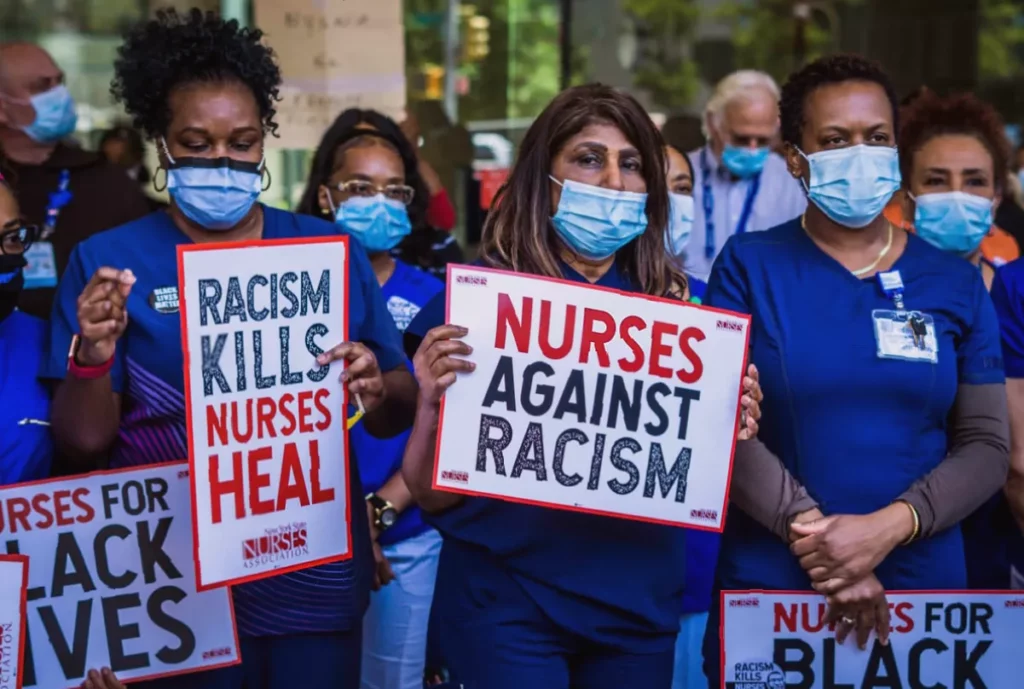
A nurse on the Isle of Man was refused service by a patient who objected to what he called her “foreign accent” — an encounter that exposes a pattern of racial abuse now believed to be far more widespread than official figures suggest.
Faridat Ibidun, a Black nurse working in the island’s health service, described the moment she picked up the phone to call a patient earlier this year. “I said hello, I gave my name, and before I could even say one more word, he said, ‘You have the foreign accent. I don’t want to speak to you’,” she recalled. The incident, she said, left her “emotionally drained”.
Ibidun is not alone. The Royal College of Nursing (RCN) has documented a dramatic rise in racist abuse directed at nursing staff across the UK. Between 2022 and 2025, more than 21,000 incidents were reported — a 78% surge. In 2025 alone, 6,812 reports of racial abuse were logged, equivalent to a new report every 77 minutes. But the RCN has warned these figures represent “just the tip of the iceberg”, estimating that if every NHS trust and health board had effective reporting systems, the true number over the four-year period could exceed 40,000.
The nature of the abuse is often vicious. Nurses have reported being called “monkey”, told to “go back to the zoo”, subjected to xenophobic demands for staff who “speak English”, and targeted with Islamophobic slurs, including remarks directed at those observing Ramadan. Some have had hot drinks thrown at them or been punched in the face. While much of the abuse comes from patients, the RCN also records instances of racial harassment from senior colleagues and fellow NHS workers.
The toll on healthcare professionals
The impact of this prejudice on nurses’ wellbeing is profound and well-documented. Studies cited by the RCN show that nurses who experience racist abuse frequently suffer from depression, anxiety about returning to work, and insomnia. The emotional fallout — fear, anger, and a sense of powerlessness — can erode their ability to care for patients. Workforce race discrimination has been shown to adversely affect patient safety and care quality, as bullied or demoralised staff become less engaged, less effective, and more likely to leave the profession altogether.
This exodus compounds existing staff shortages and burnout, creating a vicious cycle that ultimately harms the very patients the system is meant to protect. The RCN’s advice line has seen calls from ethnic minority nursing staff seeking help after racial abuse or discrimination rise by 70% between 2022 and 2025 — a clear sign that the problem is escalating and that many feel they have nowhere else to turn.
A major barrier to tackling the issue is a widespread lack of confidence in employers. The RCN accuses some health leaders of operating a “don’t know, don’t care” policy, pointing to the failure to collect adequate data on racist incidents. Many NHS trusts and health boards provide implausibly low figures, hold no reportable data at all, or simply refuse requests for information. The RCN warns that this normalisation of racism — the sense among some nurses that reporting is futile — only deepens the problem.
Steps towards accountability
Significant legal change is on the horizon. From October 2025, under the Employment Rights Act 2025, NHS employers will be held legally liable for harassment of their staff by patients or their families, unless they can demonstrate they have taken all reasonable steps to prevent it. The Equality Act 2010 already provides legal protection against racial discrimination, but the new legislation directly shifts responsibility onto employers to act proactively.
The RCN is campaigning for standardised, streamlined incident reporting across all NHS employers, requiring data on staff role, work area, and the reporter’s ethnicity. It is also developing a UK-wide programme to build staff confidence in addressing racism, including training, guidance, and support for reporting. NHS England has produced resources for nurses, midwives, and nursing associates, offering practical tools to challenge discrimination and encouraging a zero-tolerance approach.
On the Isle of Man, Faridat Ibidun has taken her own steps to support colleagues. In August 2025, she was accredited as the island’s first RCN Learning Representative, a voluntary role in which she advises nurses and support workers on training and professional development. She was selected to attend the RCN UK Representatives Conference in Leeds. The island itself has seen employment tribunal cases related to discrimination: in one, Manx Care was found not to have harassed, victimised, or discriminated against a senior lecturer based on his race, with the tribunal branding his arguments “trivial and flimsy”. Another case involved a nurse claiming unfair dismissal and disability discrimination, which was dismissed by the Employment and Equality Tribunal. These cases underscore that, while legal frameworks exist, the lived experience of many nursing staff — like Ibidun’s — remains one of being judged not by their skill, but by their voice.