


Eight measles cases have been confirmed in the Spanish tourist hotspot of Alcantarilla, Murcia, prompting health authorities to issue an urgent warning for British families heading to the region this summer. The number of infections has doubled since the outbreak was officially declared earlier this month, with regional health officials racing to contain the spread through intensive contact tracing.
The first case was identified on May 5, and by May 15 four people had tested positive — three adults and one infant. Since then, a further four cases have been confirmed, and authorities say half of all patients caught the virus through direct contact with another infected individual. Regional health minister Juan Jose Pedreño credited the Epidemiology Service’s contact tracing efforts with preventing the situation from escalating further. Investigators initially suspected the outbreak began at a christening ceremony in Alcantarilla, but this theory was dismissed after further enquiries.
Officials have also noted a significant improvement in their response time. Early cases took up to two weeks to diagnose after symptoms first appeared; more recent infections have been identified within just four days of patients becoming unwell.
How Measles Spreads and Its Potential Complications
Measles ranks among the most transmissible illnesses in the world, with an infection rate approaching 100 per cent. The virus remains active and contagious in the air or on infected surfaces for up to two hours, and one infected person can generate up to 18 secondary infections. The disease spreads through airborne droplets released when an infected person coughs or sneezes.
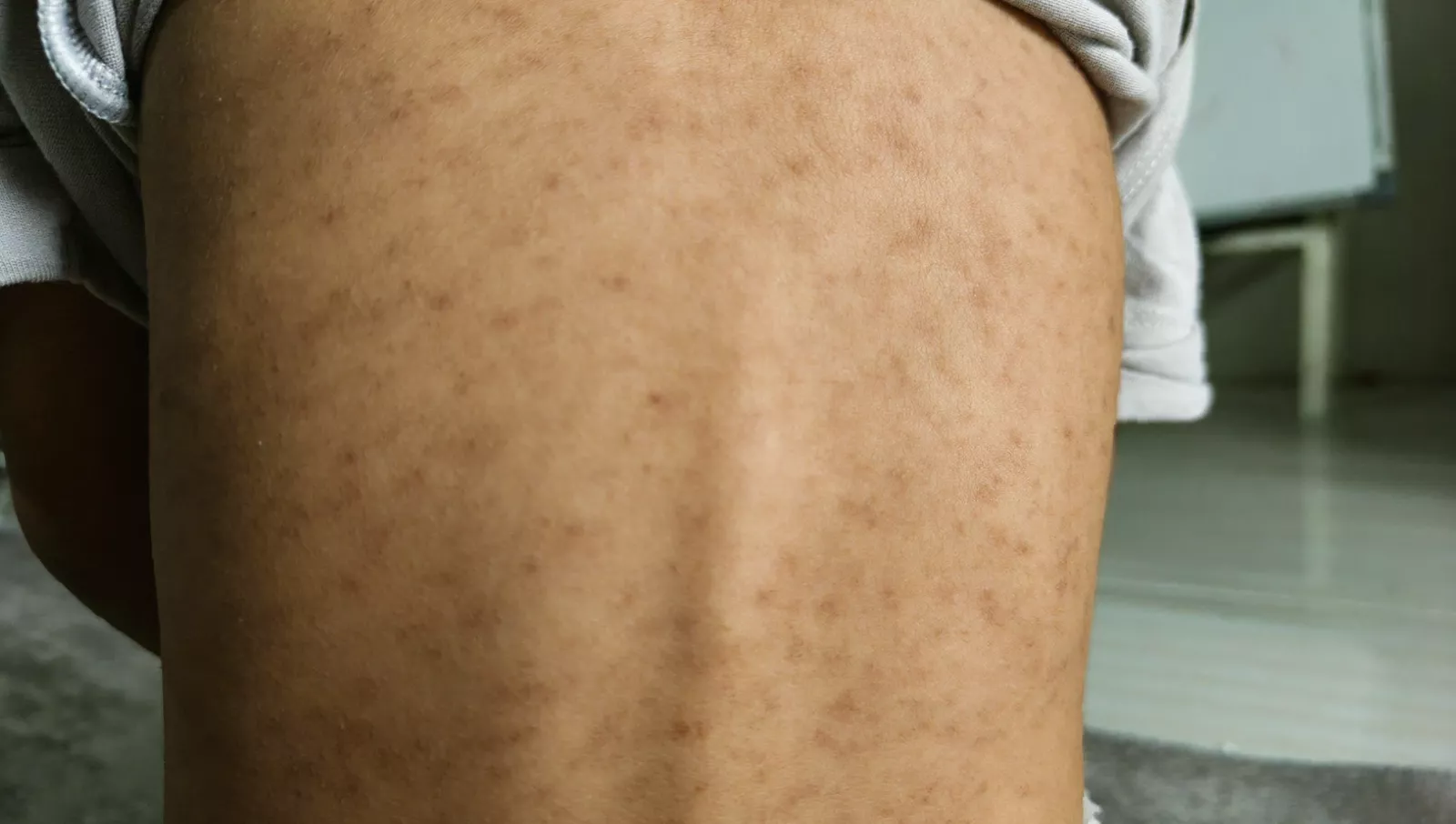
Initial symptoms, appearing seven to 14 days after exposure, typically include a high temperature that can spike to over 104°F (40°C), a persistent cough, a runny nose, red and watery eyes, and a distinctive blotchy skin rash. Small white spots with bluish-white centres — known as Koplik’s spots — may appear inside the mouth two to three days before the rash develops. The rash usually begins on the face and spreads downwards, lasting five to six days.
The European Centre for Disease Control and Prevention (ECDC) has described measles as a “serious disease that can lead to complications and even death”. Pneumonia is the most common cause of death in young children with measles. Other complications include encephalitis — swelling of the brain that can cause permanent damage — ear infections that may lead to hearing loss, severe diarrhoea and dehydration, blindness, and bronchitis. Subacute sclerosing panencephalitis, a rare but fatal neurological condition, can occur years after the initial infection. Pregnant women face added risks of premature birth, low birth weight, and miscarriage. Globally, an estimated 95,000 people died from measles in 2024, most of them children under five, despite the availability of a vaccine. About one in five unvaccinated people who contract measles require hospitalisation.
European Context
Across Europe, more than 6,000 measles cases were recorded in the 12 months between February 2025 and January 2026, with six fatalities. This represents a slight decrease from the previous year, when 7,655 infections and eight deaths were documented. Children under five accounted for 37 per cent of all European cases in that period — approximately 2,250 infections. Adults aged 15 and over represented a further 2,282 cases.
Spain lost its measles-free status in January 2026. The country had been recognised as measles-free in 2016, but the World Health Organization was unable to rule out a chain of transmission lasting longer than 12 months in 2024, leading to the withdrawal of that status. Spain reported 397 cases in 2025, up from 227 a year earlier. So far in 2026, Spain has recorded 24 cases in March and 36 cases in February, reflecting a broader resurgence across the continent.

The situation is mirrored in the United Kingdom, where 542 laboratory-confirmed measles cases were reported in England between January 1 and May 11, 2026. London accounts for 57 per cent of those cases, followed by the West Midlands (21 per cent) and the North West (10 per cent). The highest numbers have been reported in Enfield (100), Birmingham (76), and Islington (44). In 2024, England recorded 2,911 laboratory-confirmed measles cases, the highest annual number since 2012. No acute measles-related deaths have been reported in England so far in 2026.
Vaccination and Travel Advice
Vaccination remains the most effective defence against measles. Two doses of the MMR vaccine are 97 per cent effective in preventing the disease. From January 1, 2026, the MMRV vaccine — which also protects against chickenpox — replaced the MMR vaccine in the routine childhood immunisation schedule in the United Kingdom. Children born on or after January 1, 2025, receive one dose at 12 months and another at 18 months. Different schedules apply for children born between July 2024 and December 2024, and for those born between September 2022 and June 2024. A catch-up dose of MMRV will be offered to children born between January 2020 and August 2022 between November 2026 and March 2028, provided they have not already had chickenpox or been vaccinated against it. Adults who missed their childhood vaccinations can still receive the MMR injection.
In England, MMR vaccine coverage has fallen to its lowest level in a decade, with national uptake in two-year-olds at 89 per cent and in five-year-olds at 84 per cent — well below the 95 per cent threshold needed to prevent outbreaks. In Spain, average uptake of the two-dose schedule remains close to 95 per cent, offering good collective protection but not reaching full herd immunity. All international passengers travelling to Spain are advised to be fully vaccinated against measles with the MMR vaccine, ideally at least two weeks before travel, and to ensure routine vaccinations are up to date. The World Health Organization warns that young children face particular risks from measles, which can trigger pneumonia, meningitis, vision loss and seizures when it spreads beyond its initial site.