

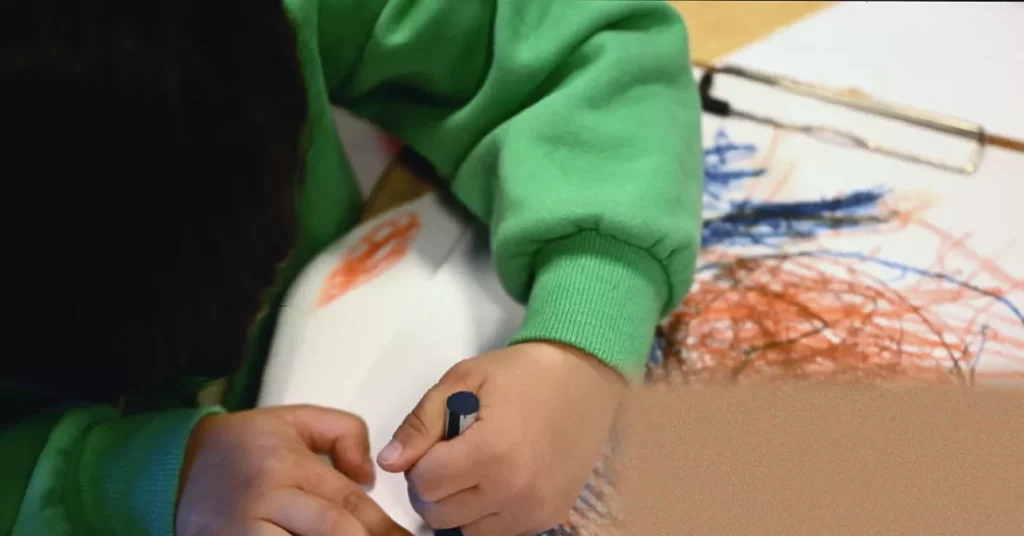
Creative arts ‘significantly boost wellbeing and combat disengagement’
Engaging with the creative arts has a demonstrable impact on both mental and physical health, and a growing body of evidence – including a new study from University College London – shows it can even slow the pace of biological ageing. Yet the benefits are far from equally shared. Charities working on the frontline with children and disadvantaged adults warn that unless the government treats arts participation as a core part of public health and education policy, it risks becoming yet another driver of inequality.
Children’s Engagement
Paula Briggs, founder of the visual arts charity AccessArt, said teachers repeatedly report that creative experiences help children feel “connected, empowered and engaged”. In a letter to the Guardian, she argued that England’s persistently high levels of school absence are linked to a sense of not belonging, and that a rich creative education can “help schools become places where children feel seen, valued and motivated to participate”.
Research supports this view. Studies show that students who take part in arts courses have increased average daily attendance and reduced chronic absenteeism. Participation in structured arts activities can boost cognitive abilities by 17% and improve attainment in Maths and English, particularly among children from low-income backgrounds. The government has pledged a “decade-long mission” to reform education and promised a “refreshed and broad” national curriculum that re‑emphasises the arts, alongside plans for a new National Centre for Arts and Music Education. However, recruitment targets for art, music and drama teachers have not been met in recent years, raising concerns about delivery.
Briggs warned that the arts have been “undervalued in many schools for years”, with pressure to narrow the curriculum and “prioritise measurable outcomes over meaningful engagement”. She added: “We cannot keep treating arts education as an optional extra while also worrying about children’s mental health, wellbeing and disengagement from school.”
Societal Access
The gap in access to cultural opportunities is wide and widening. Between 2022/23 and 2023/24, the difference in attendance at live music performances between middle‑class and working‑class individuals grew by nine percentage points; the gap for art exhibitions widened by seven points. People from lower socioeconomic groups are far less likely to participate in arts activities or to feel that cultural spaces are “for them”. Barriers include ticket prices, travel costs, lack of transport, and a perception of exclusion.
Geographical disparities are also stark, with higher engagement in affluent areas and London boroughs compared with more deprived regions. Ethnic minorities participate at markedly lower rates: in 2023/24, 23% of Black people and 19% of Asian people had attended live music, compared with 42% of White people. The cultural sector workforce itself is unrepresentative – only 5.2% of workers in museums and libraries have working‑class roots, and 90% of workers in arts, culture and heritage are white. Disabled individuals face disproportionate barriers, including discrimination and a lack of accessible provision.
Nicky Goulder, founding CEO of the charity Create, said that people from disadvantaged backgrounds “have far fewer opportunities to engage with the arts than those who are better off”. Her organisation runs artist‑led creative workshops entirely free of charge in locations already familiar to participants, targeting eight priority groups including children in care, disabled individuals, schoolchildren in deprived areas, and vulnerable older people.
Health Inequality
Over two decades, Create has collected evaluation data showing that giving excluded people the chance to “paint, sing, dance, write or engage in any other artform significantly enhances their wellbeing and confidence”. Goulder noted that the positive changes are often greatest among the most disadvantaged individuals – yet these are precisely the people who would otherwise lack access.
The health case for creative engagement is now backed by robust scientific evidence. The UCL study, published in the journal Innovation in Aging, analysed survey responses and blood test data from 3,556 UK adults. Using seven “epigenetic clocks” to measure DNA changes associated with ageing, researchers found that people who engaged with arts and culture at least weekly aged approximately 4% more slowly than those who rarely did – an effect comparable to the benefits of regular exercise. The positive associations were generally stronger in middle‑aged and older adults (those aged 40 and above). The study’s authors suggested that arts and cultural engagement could be recognised as a health‑promoting behaviour, similar to exercise, noting that arts activities can reduce stress, lower inflammation, and improve cardiovascular disease risk.
Beyond biological ageing, a mountain of evidence from decades of academic studies conclusively shows that the arts boost both physical and mental wellbeing. Creative engagement can alleviate symptoms of depression, anxiety and stress, activating neurological pathways similar to those targeted by medication. It protects against cognitive decline, reduces the risk of dementia, fosters social connections and combats loneliness. For older adults, it strengthens community ties and enhances quality of life.
Yet the very people who stand to benefit most – those in lower socioeconomic groups, ethnic minorities, disabled individuals, and those living in deprived areas – have the least opportunity to participate. Goulder warned that if this stark imbalance is not addressed at a societal level, “creative arts access (or lack thereof) becomes yet another driver of health inequality instead of what it could be: a vehicle for improving wellbeing and opportunity for marginalised people.”
The All‑Party Parliamentary Group on Arts, Health and Wellbeing has published a Creative Health Review arguing for creative activity in education to improve pupils’ mental health and reduce healthcare burdens. Charities and researchers alike are urging the government to be “much braver in joining up policy across education, culture and health” – something the current fragmented approach fails to deliver.