

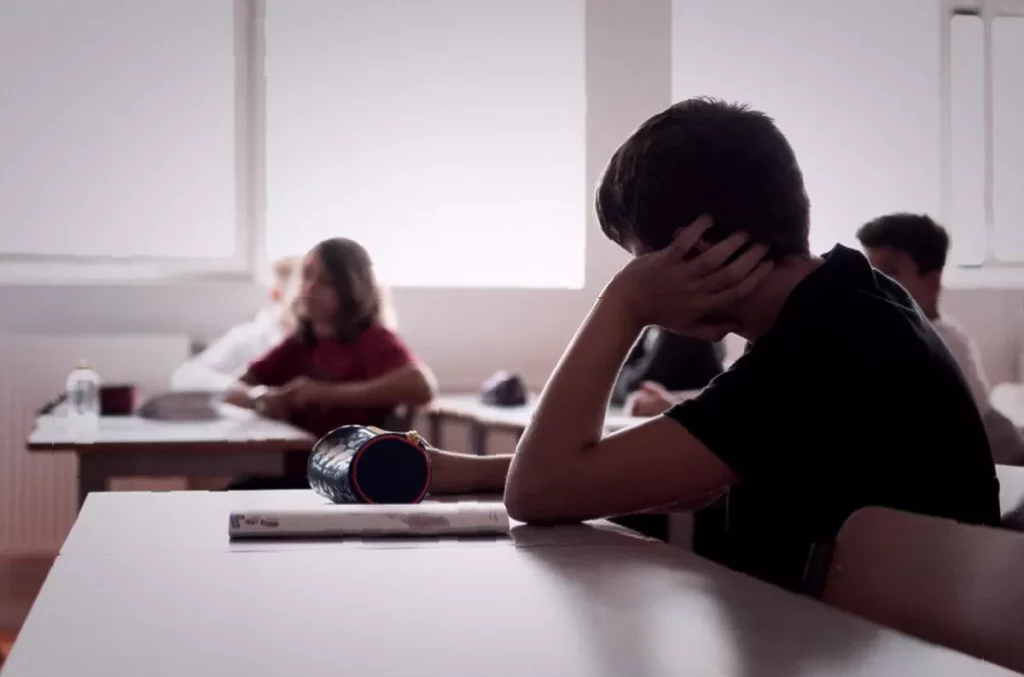
Half a million children and teenagers have been taken to emergency departments across England suffering mental health crises since 2019, according to new figures released by the Royal College of Nursing (RCN). The estimate, based on Freedom of Information requests to NHS trusts, reveals a system under extreme strain, with frontline nurses describing the situation as “catastrophic” and “absolutely soul-destroying”.
The RCN sent FOI requests to 130 NHS trusts; 80 responded. The true number is likely higher, as some trusts failed to provide data for all years. The figures show that the number of mentally ill children waiting more than 12 hours in A&E for admission to a mental health unit has more than tripled, from 237 in 2019 to 802 last year – a rise of 238 per cent. In the most extreme cases, children have been left waiting up to three days. Three trusts – Barts Health, Lewisham and Greenwich, and Morecambe Bay – reported these prolonged delays.
Official NHS data confirms the scale of the surge in demand for child and adolescent mental health services (CAMHS). The number of children receiving treatment or assessments from CAMHS has risen by a third since 2021, from 649,340 to 863,472 in 2025. Yet children are also facing waits of up to three years for CAMHS treatment. New analysis from the charity YoungMinds indicates a 52 per cent increase in young people waiting more than a year for mental health support: 78,577 young people experienced such delays in 2023/24, of whom 34,191 waited more than two years. In 2022/23, nearly one million children were referred to CAMHS, but 39 per cent – 372,800 – had their referral closed before they could access support. Nearly 40,000 children waited more than two years.
Nurses working on paediatric A&E wards described the daily reality of the crisis. One senior children’s nurse said: “My job is to look after poorly children but we simply don’t have the capacity or the training to deal with seven or eight mentally ill children a day. I so often feel powerless. It is absolutely soul-destroying.” A London paediatric A&E nurse called the long waits “frankly barbaric”, adding: “It should never happen, but they’re becoming far more normal.”
Several nurses reported that children are routinely sedated because overcrowded hospitals have nowhere safe to care for them. “It is absolutely heartbreaking for both the patient and staff,” one said. “But often we don’t have a choice.” Another senior nurse warned of the dangers of keeping teenagers in psychotic distress alongside toddlers in brightly lit, noisy emergency departments: “You can have teenagers in heightened distress, potentially in psychosis, waiting to be seen while one- or two-year-olds are toddling around. We’ve had some real near misses. It is utterly unsuitable.” A nurse in London added: “A&E is just seen as this big receptacle for all children who are dysregulated or in crisis. But A&E is not respite for children with mental health concerns. It can often exacerbate their trauma.”
Why are more children reaching crisis point?
Experts point to a combination of factors that have driven the explosion in anxiety, depression, self-harm and eating disorders among young people since the pandemic. One in six children aged six to 16 had a probable mental health problem in July 2021, up from one in nine in 2017, according to NHS data. Research shows a 42 per cent rise in eating disorder diagnoses and a 38 per cent rise in self-harm episodes among teenage girls since March 2020. The Royal College of Paediatrics and Child Health (RCPCH) has warned that problems are becoming “more severe and complex”, with younger children affected and rates of self-harm and eating disorders continuing to rise. Dr Sam Jones of the RCPCH said: “Yet services remain dangerously underfunded, leaving healthcare professionals unable to meet growing demand.”
Poverty is repeatedly cited as a central driver. Approximately 4.3 million children in the UK were living in poverty after housing costs in 2022/23, a sharp increase from 3.6 million in 2010/11. Financial strain affects housing, food, schooling and friendships, leading to stress, anxiety and depression. NHS data shows that children in households with reduced income are more likely to experience mental health issues, with one in four affected children showing probable mental disorders. The number of children living in temporary accommodation in England has reached 176,130. Research by Shelter found that 60 per cent of parents believe temporary housing has damaged their children’s physical or mental health; almost a third of households in temporary accommodation have lived in three or more places, and nearly two-thirds were given less than 48 hours’ notice when moved.
The RCN’s general secretary, Professor Nicola Ranger, said the figures are evidence of “a catastrophic system-wide failure”. She called for specialist mental health emergency departments to be rapidly rolled out across the country, arguing that “busy and stressful A&Es are wholly unsuitable places for anyone in mental distress, let alone vulnerable children”. She also warned that the Government’s promised new mental health strategy would “die on the page” unless it tackles root causes such as poverty, insecure housing and social isolation. “Nursing staff give their all in the most difficult circumstances,” she added.
Individual trust data shows the scale of the increase at local level. At University Hospitals Bristol and Weston NHS Foundation Trust, A&E attendances for child mental health crises rose 76 per cent between 2019 and 2025. At University Hospitals Birmingham NHS Foundation Trust, numbers jumped by more than a third. At Barts Health NHS Trust, cases climbed 27 per cent.
A Government spokesperson acknowledged that “too many children and young people are reaching crisis point with their mental health, and far too often they are ending up in A&E as a result – that must change”. They said a new mental health strategy will be published this year, focused on earlier intervention and faster access, backed by more staff, more community support and new facilities. The Government is also increasing inpatient capacity, delivering 8,500 more mental health workers three years ahead of schedule, and investing more than £400 million in specialist mental health departments, centres and wider capital projects. Mental Health Support Teams are being rolled out in schools and colleges, aiming for full coverage by 2029, and grants have been provided for senior mental health leads in over 14,400 educational settings. A further £95 million has been committed to Young Futures hubs, intended to provide open-access mental health support.
Yet the stark figures from A&E and the testimonies of nurses on the frontline paint a picture of a service struggling to hold. In 2022/23, of the nearly one million children referred to CAMHS, 28 per cent – 270,300 – were still waiting for support, and 39 per cent had their referral closed before accessing it. Nearly 40,000 children experienced waits of over two years.