

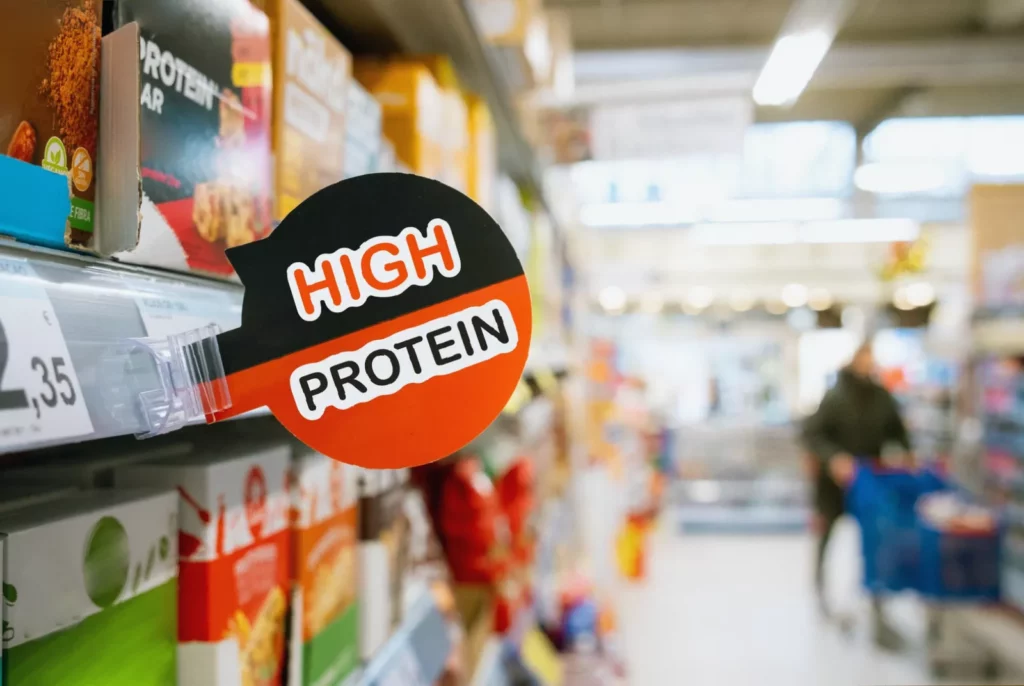
Marketing tactic gives products a ‘health halo’
Many products carrying a “high protein” label are not automatically healthier, nutritionists have warned, as a marketing tactic known as “protein washing” exploits growing consumer interest in the macronutrient to make items appear more nutritious than they are. The phenomenon has become widespread across UK supermarket shelves, with everything from yoghurt and bread to chocolate milkshakes and even Starbucks coffee foam being sold with prominent “high protein” or “protein-packed” claims. Yet behind the labels, a number of these products are also loaded with sugar, heavily processed, or contain only marginally more protein than everyday whole foods.
The term “protein washing” refers to a strategy in which brands add protein to existing products or create new “high protein” versions to capitalise on the health-conscious trend. Registered nutritionist Rob Hobson said the problem is that protein has become such a “health halo” that consumers see the word and assume a product is automatically healthy, when that is not always the case. “Some high-protein products can also be high in sugar, heavily processed or contain a long list of ingredients,” he told The Independent.
Examples illustrate the gap between marketing and reality. Shaken Udder Chocolate Flavoured Protein Milkshake contains 20g of protein but also 32g of sugars – well above the NHS recommended daily limit of 30g of free sugar for adults, equivalent to about seven teaspoons. Arla Strawberry Protein Yogurt delivers 20g of protein alongside 12.6g of sugars. Meanwhile, GetPro Vanilla Protein Yoghurt provides 9.4g of protein per 100g, only a marginal increase over 100g of 10 per cent fat Greek yoghurt, which contains 6.5g per 100g. Jason’s Protein Sourdough Sunflower Seeded Bread has 20.3g of protein per 100g, compared with 13.4g in Allinson’s Scandalous Seeds Wholemeal Batch Bread. FUEL10K Chocolate Chunks Protein Granola offers 15.8g of protein per 100g, while Jordans Super Nutty Granola provides 12.7g. Cathedral City’s high-protein cheddar contains 30.7g per 100g, versus 25.4g in its standard cheddar. Even some “high protein” porridge can fall short: FUEL10K Chocolate Protein Porridge Oat Cereal Sachets, when prepared with semi-skimmed milk, provides 10.9g of protein in a 201g portion, while a 40g serving of regular Quaker porridge oats with 300ml semi-skimmed milk delivers 15g.
In the UK, a product can legally carry the claim “high protein” if at least 20 per cent of its energy value comes from protein. A “source of protein” claim requires 12 per cent. Nutritionist Kim Pearson, who specialises in weight loss, noted that many whole foods naturally meet this threshold without any marketing spin. “Many whole foods fit this criteria, such as eggs, meat, fish and tofu,” she said. “These are the types of foods we should focus on getting the majority of our protein from, rather than processed foods marketed as high protein.” One egg, she pointed out, contains around 13g of protein.
Nutritional concerns: sugar, processing and manipulation
The “health halo” effect is compounded by the fact that many high-protein products are ultra-processed foods (UPFs). Professor Chris Van Tulleken, professor of infection and global health at University College London, said companies often add protein to UPFs to improve the product’s health score in the official UK calculation system. “Lots of companies add protein to certain products because of the way we calculate whether a product is unhealthy in the UK,” he told The Independent. “It’s a way of improving the health score of a product.” The scoring system awards penalties for fat, salt and sugar, and subtracts points for fibre and protein – meaning a product that is high in sugar can improve its score by adding protein, even if the overall nutritional quality remains poor.
Ms Pearson warned that consumers who are “time-poor” and make fast decisions when shopping are particularly vulnerable. “More savvy consumers are becoming aware of how to identify ultra-processed foods, including those that boast health claims like ‘high protein’. However, it’s easy to be misled,” she said. Products advertised as high protein can also carry a significant price premium, sometimes costing up to three times as much as standard equivalents, according to market observations.
The trend is being amplified by social media, where health influencers promote high-protein diets and recipes as the ultimate way to build muscle and lose weight. Nearly half of UK adults have increased their protein intake over the past year, with the figure rising to two-thirds among 16- to 34-year-olds, driven in part by platforms such as TikTok and Instagram. This surge in demand has moved beyond traditional protein bars and shakes towards more “natural” sources and everyday products with added protein.
A Department of Health and Social Care spokesperson urged people to consider the overall nutritional content of foods, not just protein. “People should be able to trust the information provided on food packaging. Labelling and nutrition claims must be clear, accurate and not misleading, and any authorised claims must meet strict legal requirements,” a spokesperson said.
How much protein do we actually need?
Protein is essential for growing and repairing tissues, maintaining muscle mass, supporting the immune system and providing a feeling of fullness. However, most people in the UK already get enough without needing fortified products. The NHS recommends 0.75g of protein per kilogram of body weight per day – roughly 45g for a 60kg woman and 55g for a 75kg man. Data from the National Diet and Nutrition Survey shows that men in the UK typically consume around 85g daily and women around 67g, well above the reference nutrient intake. “Older adults, people who exercise regularly and those trying to build or maintain muscle may benefit from more, but that doesn’t mean everyone needs to be chasing ever-higher protein intakes,” Mr Hobson said.
Consuming excessive protein can have downsides. Experts warn that too much can strain the kidneys, lead to dehydration, and displace other vital nutrients such as fibre and antioxidants. “People consuming too much protein are effectively flushing their money down the toilet as the excess is excreted,” one health professional noted. There is also growing concern that the focus on protein is overshadowing the UK’s dire shortage of dietary fibre, with only a small fraction of the population meeting recommended intake levels. An over-reliance on processed “protein-washed” products can result in a diet high in protein but low in fibre, vitamins and minerals, contributing to broader health risks including obesity and type 2 diabetes.
While the marketing of high-protein foods shows no sign of slowing, experts insist that whole foods remain the best source. “Even one egg contains 13g of protein,” Ms Pearson reiterated. “These are the types of foods we should focus on getting the majority of our protein from.” The Department of Health and Social Care has stressed that authorised claims must be accurate, but the onus remains on shoppers to look beyond the label. As Mr Hobson put it: “The national diet and nutrition survey shows that most people in the UK already achieve the reference nutrient intake for protein.”